A behind-the-scenes documentary pieced together from over 100 hours of footage showing not just the preparation that went into Katy Perry's Super Bowl performance but the nerve it took to pull off such a massive, career-defining performance.
When NFL superstar Barry Sanders vanished at the height of his career, he left the NFL world in shock. He was still in his prime, chasing the all-time NFL rushing record when he boarded a flight to England and never stepped foot on the field again. Now, 24 years later, Barry retraces his steps through the streets of London to finally confront the mystery.
In September 1987, for the first time in U.S. history, replacement football players took the field amidst a union strike. Seen as a second chance for these "scab" players, the '87 season became a memorable one for the Washington Redskins.
From 1981-1984, a small private school in Dallas owned the best record in college football. The Mustangs of Southern Methodist University were riding high on the backs of the vaunted "Pony Express" backfield. But as the middle of the decade approached, the program was coming apart at the seams. Wins became the only thing that mattered as the University increasingly ceded power of the football program to the city's oil barons and real estate tycoons and flagrant and frequent NCAA violations became the norm. In 1987, the school and the sport were rocked, as the NCAA meted out "the death penalty" on a college football program for the first and only time in its history. SMU would be without football for two years, and the fan base would be without an identity for 20 more until the win in the 2009 Hawaii Bowl. This is the story of Dallas in the 1980's and the greed, power, and corruption that spilled from the oil fields onto the football field and all the way to the Governor's Mansion.
Ricky Williams does not conform to America’s definition of the modern athlete. In 2004, with rumors of another positive marijuana test looming, the Miami Dolphins running back traded adulation and a mansion in South Florida for anonymity and a $7 a night tent in Australia. His decision created a media frenzy that dismantled his reputation and branded him as America's Pothead. But while most in the media thought Williams was ruining his life by leaving football, Ricky thought he was saving it. Through personal footage recorded with Williams during his time away from football and beyond, filmmaker Sean Pamphilon takes a fresh look at a player who had become a media punching bag and has since redeemed himself as a father and a teammate.
In 1983 the upstart United States Football League (USFL) had the audacity to challenge the almighty NFL. The new league did the unthinkable by playing in the spring and plucked three straight Heisman Trophy winners away from the NFL. The 12-team USFL played before crowds that averaged 25,000, and started off with respectable TV ratings. But with success came expansion and new owners, including a certain high profile and impatient real estate baron whose vision was at odds with the league’s founders. Soon, the USFL was reduced to waging a desperate anti-trust lawsuit against the NFL, which yielded an ironic verdict that effectively forced the league out of business. Now, almost a quarter of a century later, Academy Award-nominated and Peabody Award-winning director Mike Tollin, himself once a chronicler of the league, will showcase the remarkable influence of those three years on football history and attempt to answer the question, “Who Killed the USFL?”
In 1982, the Raiders and owner Al Davis captivated black and Latino fans with swagger and charisma that matched the rapidly changing city.
In late March of 1984, a moving company secretly packed up the Baltimore Colts’ belongings and its fleet of vans sneaked off in the darkness of the early morning. Leaving a city of deeply devoted fans in shock and disbelief. What caused owner Robert Irsay to turn his back on a town that was as closely linked to its team as any in the NFL? Academy Award-winning filmmaker Barry Levinson, himself a long-standing Baltimore Colts fanatic, will probe that question in light of the changing relationship of sports to community. Through the eyes of members of the Colts Marching Band, Levinson will illustrate how a fan base copes with losing the team that it loves.
“The NFL Today” on CBS was one of the preeminent sports programs on television in the early 1980s. It was a perfect combination of reporting, analysis, predictions, humor and talent. But there was no personality on the show more popular than Jimmy “The Greek” Snyder. Born in Steubenville, Ohio, to Greek immigrants, Jimmy overcame childhood tragedy, moved to Las Vegas, and eventually became the biggest name in the world of sports handicapping. When CBS added him as an “analyst” on “The NFL Today,” “The Greek” not only further increased his stature as a sort of national folk hero, but he also gained an air of respectability never before associated with gamblers. Peabody Award-winning filmmaker Fritz Mitchell, who broke in as an intern on “The NFL Today,” will examine Snyder’s impact on the growth of sports gambling, while also taking a fresh look at The Greek’s tragic downfall.
Throughout the 1980s, Miami, Florida, was at the center of a racial and cultural shift taking place throughout the country. Overwhelmed by riots and tensions, Miami was a city in flux, and the University of Miami football team served as a microcosm for this evolution. The image of the predominantly white university was forever changed when coach Howard Schnellenberger scoured some of the toughest ghettos in Florida to recruit mostly black players for his team. With a newly branded swagger, inspired and fueled by the quickly growing local Miami hip hop culture, these Hurricanes took on larger-than-life personalities and won four national titles between 1983 and 1991. Filmmaker Billy Corben, a Miami native and University of Miami alum, will tell the story of how these “Bad Boys” of football changed the attitude of the game they played, and how this serene campus was transformed into “The U.”
In some ways, Barry Switzer and Brian Bosworth were made for each other. The Oklahoma coach and the linebacker he recruited to play for him were both out-sized personalities who delighted in thumbing their noses at the establishment. And in their three seasons together (1984-86), the unique father-son dynamic resulted in 31 wins and two Orange Bowl victories as Bosworth was awarded the first two Butkus Awards. But then Bosworth's alter ego: "The Boz," took over both their lives and ultimately destroyed their careers. In "Brian and The Boz," Bosworth looks back on the mistakes he made and passes on the lessons he learned to his son. It's a revealing portrait of a man who had and lost it all, and a trip back to a time when enough just wasn't enough.
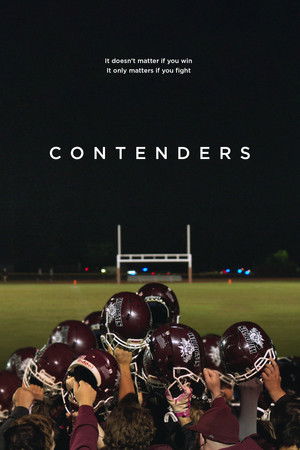
Across Texas, small communities are struggling to keep their schools and towns alive. For one, the bell has tolled as they graduate their last class, ending generations of local pride and continuity. For another, a Cinderella football season promises to keep hope alive
In 1963 at Michigan State University, Head Coach Duffy Daugherty chose 23 black men to play on the college team. From this move came legends Gene Washington, Bubba Smith, George Webster and Clinton Jones. Director Maya Washington, Gene Washington’s daughter, charts the legacy of her father’s career and influence, along with the impact the events of 1963 have shown in the present day.
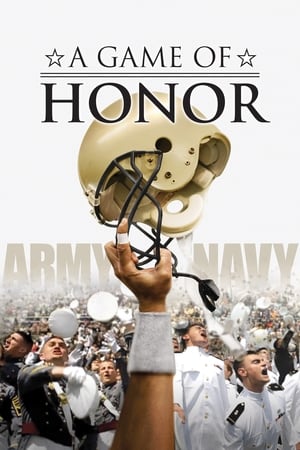
A never-before-seen look at the incomparable Division I football programs at The U.S. Military Academy at West Point and The U.S. Naval Academy at Annapolis revealing the dedication, discipline and determination required to make the journey from military training, to an elite classroom education, and onto the football field.
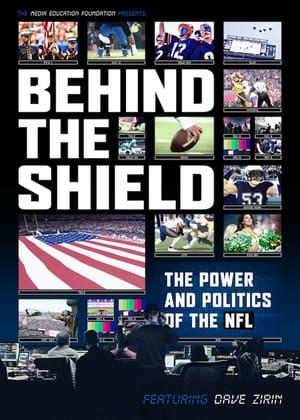
Celebrated author and Nation magazine sports editor Dave Zirin tackles the myth that the NFL was somehow free of politics before Colin Kaepernick and other Black NFL players took a knee.
A comprehensive reminisce at each chapter of former NFL quarterback Michael Vick’s saga–the incredible rise, shocking fall and polarizing return.
Explores the history of "The Game," the annual football matchup between bitter rivals Ohio State and Michigan
THE BIKINI OPEN is a special-event, retro series featuring the best swimsuit, fitness, bikini, and modeling competitions from the early 90s.
Set against the backdrop of a high school football season, Dan Lindsay and T.J. Martin’s documentary UNDEFEATED is an intimate chronicle of three underprivileged student-athletes from inner-city Memphis and the volunteer coach trying to help them beat the odds on and off the field. For players and coaches alike, the season will be not only about winning games — it will be about how they grapple with the unforeseeable events that are part of football and part of life.
Red Fever is a witty and entertaining feature documentary about the profound -- yet hidden -- Indigenous influence on Western culture and identity. The film follows Cree co-director Neil Diamond as he asks, “Why do they love us so much?!” and sets out on a journey to find out why the world is so fascinated with the stereotypical imagery of Native people that is all over pop culture. Why have Indigenous cultures been revered, romanticized, and appropriated for so long, and to this day? Red Fever uncovers the surprising truths behind the imagery -- so buried in history that even most Native people don't know about them.