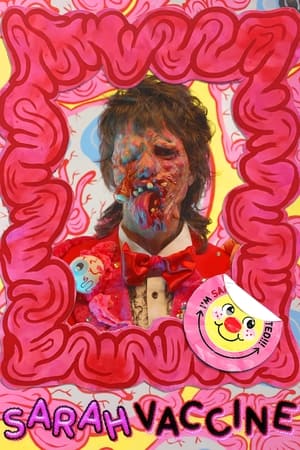
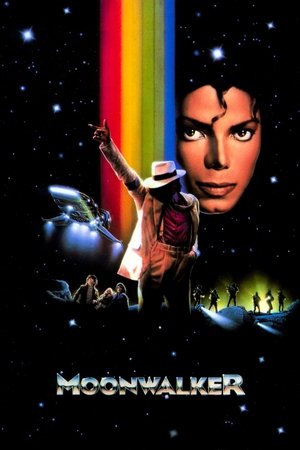
This fantastical movie inspired by the music of Michael Jackson features imaginative interpretations of hit tracks from the iconic 1987 album “Bad”.
"'Rote Movie' is part of a series of works examining aspects of the traumatic experience. It is an examination of decay and forgetting, where what both distance and time can bring to one's private feelings of belonging and home. Highly immersed in a fragmented and disjointed haptic space of its own materiality, this film stutters out its thoughts frame by frame" - Steven Ball, 'Mesh' 3, Autumn 1994.
Hallo Mabuse captivates through its reduction, in which a conspiratorial narrative takes place, but even more so, the images themselves appear ambiguous, obscure, untrustworthy. A nod of the head, which seems treacherous in its mechanical repetition, meets the profile of a bearded man who does not appear to react at all in a suggested counter shot. The slight flickering of the image further intensifies the impression of an illicit agreement, of witnessing a crooked handshake. The ringing of the unseen telephone and the constant ticking of a clock lend the events a limited temporality. Something is running out, and in doing so, is also already reaching its end, a ghostly final act, which is anticipated by an explosion and breaks off with the sound of a falling guillotine.
All images were shot on 16mm film in the shadow of the Ryman Auditorium on Lower Broadway, a section of Nashville that has for decades attracted country music fans to its honky tonk bars. The visual effects were composed in-camera, while shooting on the street. This film was supported in part by the Tennessee Art Commission.
Collage from 35 mm trailers.
The Boyg is the voice within that whispers go around, preventing you from facing yourself, suffocating progress and initiative. A six minute visual and musical remix of Ibsens Peer Gynt, Norwegian Folklore, Edvard Griegs composition, paralyzing panic attacks and The Great Boyg itself who finds us all.
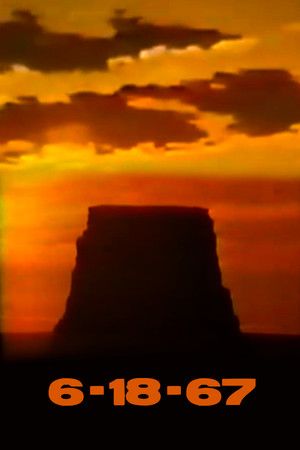
Filmed during the production of the Columbia Pictures western "Mackenna’s Gold," this short work presents a non-narrative visual study of the Arizona desert. Rather than documenting the film set itself, "6-18-67" assembles landscape images, time-lapse photography, and ambient sound into an abstract record of place and duration.
Shelter is a multi-layered experimental film that cleverly weaves archival social commentary and recent political activism in a playful analysis of our culture’s misplaced priorities. The film blends a variety of appropriated material — including a homeless demonstration during the gala premiere of an Atom Egoyan film at the Toronto Film Festival — with archival footage of circuses, westerns, and Pierre Burton discussing the pros and cons of building a bomb shelter. Shelter also celebrates the inherent qualities of the film medium, qualities that have quickly become marginalized through the current obsession with digital technology.
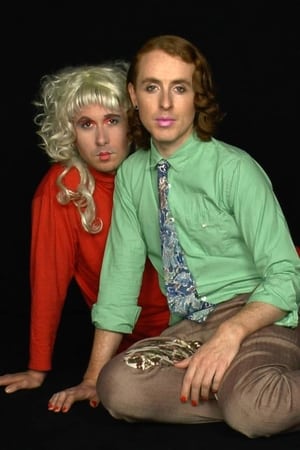
The quasi-fictional story of transgender sex workers living in Rio de Janeiro's swampy red light district, who are joined by a group of hippies and a runaway stockbroker, "Mangue-Bangue" is the paradigmatic expression of the post-1968 spirit of desbunde, the Brazilian slang catchword for "sex, drugs, and rock 'n' roll".
A bohemian painter named Artist and a guitarist named James meet at a concert and have an instant connection. They start a philosophical discussion at her apartment, but they are interrupted by strange occurrences which reveal they are no longer in reality but an ominous dream world. Both Artist and James are confronted by characters and situations from their past, and they must work together to put the memory pieces together and escape to reality, if they can.
In the small town of Kansk, the Krasnoyarsk Territory many years in a row there is an international festival of short experimental films, which has a strong reputation throughout the world. "Russia as a dream" is an international project, shot by a team of authors and united directors, artists, poets. Each of the guests of the 14th International Kan Video Festival held in 2015 was invited to participate in the creation of a general film, the theme of which was the relationship of man and landscape, civilization and nature, reality and sleep.
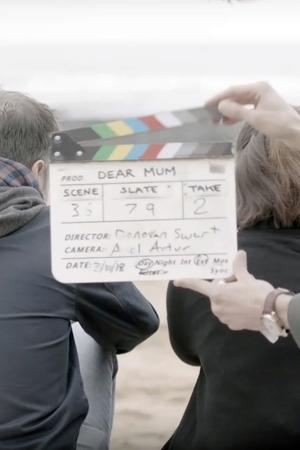
A filmmaker recalls his youth in the town of Onomichi. In the present, he shoots a film in Onomichi alongside his cast, crew and family.
An audio collage of snippets of narration culled from true crime TV shows, juxtaposed against serene Super-8 nature footage.
After ending a very close relationship, Manuel falls into melancholy and begins to rethink his way of loving. Within his thoughts are the social problems that surround him. He realizes that with these comes a rethinking of what love is. An idea that we have been carrying for a long time: the idea that to love is to possess.
YOU ARE BORING! discusses the troublesome nature of “looking” and “being looked at” in larger contexts including labour within the new economy, performer/spectator relations, participatory culture, contemporary art display and queer representational politics.
Experimental 8mm film.
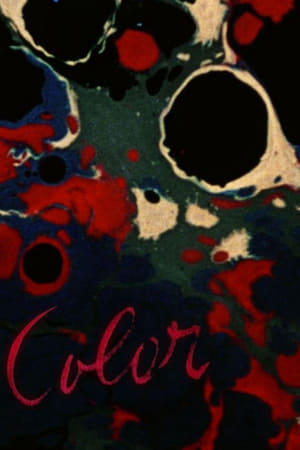
Perhaps the first experimental color film made in Uruguay, Color was the work of a pioneering woman filmmaker, still a teenager at the time of the film's completion. Millán had a number of vérité shorts under her belt by this point, but none in such gorgeous color.
A watchman at an apartment complex in Assam, India, spends an ordinary evening. A surreal, expressionistic landscape unfolds.
As technology accelerates, our species' collective imagination of the future grows ever more kaleidoscopic. We are all haunted by temporal distortion, perhaps no more than when we attempt to remember what the future looked like to our younger selves. As the mist of time devours our memories, the future recedes; each of us burdened by the gaping mouth of entropy. Yet, emerging technology provides a glimmer of hope; transhumanism promises a future free from mortality, disease and pain. Does our salvation lie in digital simulacra? We're here to sell you the answer to that question, for the low, low price of four hundred and seventy seconds.
Emerging from a period of withdrawal, a social recluse or ‘hikikomori’ relates her inner experiences against the backdrop of an illuminated and restless urban environment that never sleeps.