Noche de agosto sin luz
Blue-collar Paulie prepares for fatherhood and his forthcoming wedding to Sue by hanging out with his groomsmen. Brother Jimbo, cousin Mike, and his pals fill the reunion with drinking, boys-will-be-boys antics and a few unexpected personal confessions. But, when the bonding devolves into accusations and regret, Paulie has to decide whether he's ready to tie the knot and take this big step into adulthood.
'Ad Meliora' (translation: Towards Better Things) is an experimental short film about the struggles girls go through growing up in a male dominated society.
Ahmet is a young man struggling with inner conflicts and loneliness; while planning to end his life, a potted flower and his memories accompany him in his search for meaning. At the same time, Umay, reading a book that uncovers secrets about her mother's past, receives Ahmet's letter. This letter takes Umay on a profound journey of reflection and establishes an unexpected connection between two different lives.
Some time after her death, film director Jill Craigie (1911- 99), re-opens an old suitcase, prompting memories of the extraordinary life and loves of this forceful, charismatic woman, whose work has been long neglected. Craigie was one of the first women to direct documentaries. Working outside the British Documentary Movement in the 1940s and early 1950s, her films such as To Be Woman (1951), on equal pay, and Out of Chaos (1944), the first film about artists at work, featuring Henry Moore and Paul Nash, tackled new subjects for the cinema through a unique blend of drama, polemic and humour. Independent Miss Craigie uses the director’s unseen papers, and her films, to reveal her energetic struggles to get her radical projects made and distributed, including her last one, on the Yugoslav conflict, made when she was 83, with her husband, former Labour leader, Michael Foot.
On the evening of April 30, 1971, a standing room only audience of local literati and feminists packed New York City’s Town Hall to watch Norman Mailer, who had just written “The Prisoner of Sex,” grapple with a panel of passionate feminists. The subject was Women’s Liberation, an issue on which Mailer seemed like the devil’s own advocate.
Two actresses take us through a series of 'raps' and sketches about what it means to be beautiful and black.
A young man returns to the beach that holds meaningful memories, both good and bad.
The 43rd edition screens Neighbors, with five segments about the theme “neighbors”: not only about physical proximity, but also about relationships. In Brazil, Olga is a 90-year-old black woman who lost her husband one year ago; her neighbors, who come from different parts of the world, interrupt her grief. In Russia, an employee tries so hard to please his boss that he becomes inconvenient. An Indian woman, with the help of her male friend, decides to learn how to drive, an uncommon practice for women in the country. In China, an elderly, owner of an old and decadent barbershop, argues with his son, who wants to change the business. In South Africa, a group of homeless fights for the right to housing.
A poetic exploration of the multi-generational affects of Canada's Indian Residential School system, based on the personal trials of Aboriginal playwright Yvette Nolan.
A documentary about the sea and memory. Its movement is its form. Its strength.
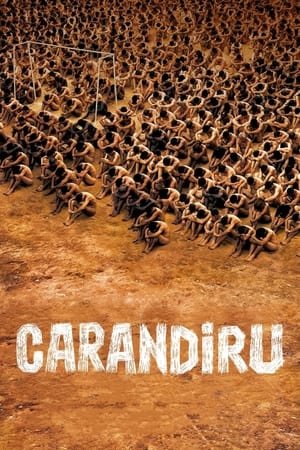
The true story of João Guilherme Estrella ("Johnny"), a young middle-class bon vivant who became a big-time cocaine dealer in Rio de Janeiro in the early 1990s.
Matthew, a college freshman, meets his dream girl in a dorm elevator during a blackout. He never sees her face, but instantly falls in love. In the morning, the power is restored, but the "dream girl" has vanished. All Matthew knows is that she lives in an all-girls dorm. He sets out on a semester-long journey to find his mystery girl among a hundred female suspects. Could it be Wendy? Dora? Arlene? Patty? Cynthia? Or the 95 other girls, any of whom could have been in that elevator with Matthew.
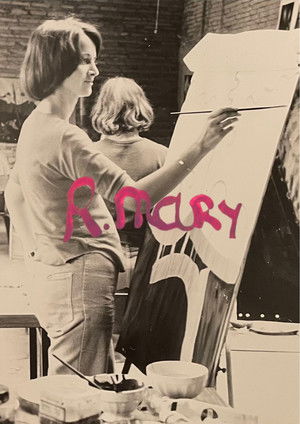
Emma, a 70-year-old woman, lost the woman she loved and all the memories of their life together in a fire. Every day, she paints in the hope of rediscovering the face of her beloved. But one morning, she wakes up covered in mysterious paint stains.
For the last quarter century, Houston native Arden Eversmeyer journeyed across the country to record hundreds of oral "herstories" with a mostly invisible population that is rapidly disappearing. Old Lesbians honors Arden's legacy by animating the resilient, joyful voices she preserved in the Old Lesbian Oral Herstory Project, from first crush to first love, from the closet to coming out, and finally from loss to connection.
Migo, a Linguistic student, goes back to his hometown to annotate the language in the area. He finds out that the place was not what it used to be. He traverses around the place and sees fragments of his childhood friend Ami, who speaks a different language. The deeper he goes into the memories of the place, the more something in him echoes why he has returned.
Triggered by congressman Jair Bolsonaro’s homage to the torturer Carlos Alberto Brilhante Ustra, during president Dilma Rousseff’s impeachment hearing in 2016, Inês, a 70 year-old actress, starts a fragmented narrative of her own history, transforming the memories of her youth as an artist and guerrilla fighter during the military dictatorship into performances. Using as a starting point her participation in Teatro Oficina's 1967 production of the play "King of The Candle", by Oswald de Andrade, Inês creates a manifesto in defense of art's political strength, intertwined with memories of lost love and resistance.
Mato Grosso do Sul, Brazil, the present. When a young Guarani-Kaiowá woman commits suicide, Nádio leads his community to form a protest camp on the borders of a local farm that sits on their ancestral burial ground.
The documentary goes through the 23 years of MTV Brazil, taking stock from the avant-garde to the ostracism of the broadcaster that was the main guide for the musical, cultural and social formation of young people in the 90's and 2000's with interviews and testimonials from former VJ's and artists that emerged and became popular in the country because of the channel.
As America's first international woman concert pianist, renowned lecturer, author, music critic, famous conductor's wife and champion for equal rights for women in music, Olga Samaroff was at the center of a musical life that to this day embodies the imprint of her artistry and achievements. Her life story also portrays an era in our American cultural heritage that has largely been underserved in the documentary film genre. Texas-born Olga Samaroff a.k.a. Lucy Hickenlooper lived at a time when music was dominated by men and Old World prejudices----and she emerged as a leader among many. Against tremendous odds she rose from complete obscurity to be the most successful American woman concert pianist of the early 20th Century.