This pioneering documentary film depicts the lives of the indigenous Inuit people of Canada's northern Quebec region. Although the production contains some fictional elements, it vividly shows how its resourceful subjects survive in such a harsh climate, revealing how they construct their igloo homes and find food by hunting and fishing. The film also captures the beautiful, if unforgiving, frozen landscape of the Great White North, far removed from conventional civilization.
On September 11, 2004, filmmaker Robert Morin shot Que Dieu bénisse l'Amérique, set on September 11, 2001. For artistic reasons, he decided to shoot the feature in a single day. Philippe Falardeau witnessed this tumultuous day, which ended tragically. At the same time, filmmaker Louis Bélanger criticizes Robert Morin's working methods.
A documentary feature film which aims to expand the usually one-sided conversation between students and teachers. During its runtime, raw experiences heard from all sides of the conversation are laid bare during its 77 minute runtime. From all of these interviewees, including a student, a school psychiatrist, and five teachers, the viewer shouldn't expect to be confronted with a narrow perspective but rather a question: "where do I stand?"
In an effort to understand where she came from, Fabiola asked a question that became the central phrase of the film: what would my life have been like if I'd stayed in Haiti? Taking as her starting point her biological mother's precarious economic situation, she had no choice but to entrust her daughter to her care. Fabiola could have ended up restavek, or in a loving foster family, or on the streets abandoned to her fate, or adopted abroad.
Revised 1998 version. When you're ready to tackle advanced calculus, The Standard Deviants are ready to help! Part 2 covers applications of the derivative, antiderivatives and the definite integral. By combining a relaxed and enjoyable format with computer graphics and animation, the Standard Deviants enhance understanding and increase retention of difficult subjects. The key to a better grade in calculus is only a play button away.
Revised 1998 version. Beginning with a review of functions and graphing, Part 1 jumps into the world of calculus by covering limits, vertical and horizontal asymptote, slopes and derivatives. The Standard Deviants take students by the hand and walk them through the most difficult topics with a relaxed and approachable format, step-by-step illustrations and plenty of examples.
This short documentary visits the 3 Quebec border towns of Rock Island, Stanstead and Beebe, and the Vermont town of Derby Line to see how residents and officials cope with a civic life that is cut down the middle by an international boundary.
A low budget, comedic documentary following a young man trying to take a deeper look into water, its purpose, and how we, as a society have chosen to use it.
A look at the issue of high-quality early care and education in America, from home to childcare to preschool; the tragic cost of getting it wrong; and the huge payoff - for our kids, our families and our country - of getting it right.
Geometry Part 2 goes into detail on perimeter, circumference and area for 2-dimensional and 3-dimensional figures. This DVD is also helpful for students who need extra help understanding the Pythagorean Theorem. Difficult concepts are made crystal clear with easy-to-follow examples and graphic presentations. With the Standard Deviants by your side, you'll be calculating the surface of a sphere or the volume of a cylinder in no time!
When one thinks of the American Deep South, the image of veiled Muslim students strolling the University of Alabama campus is the last thing that comes to mind. VOICES OF MUSLIM WOMEN FROM THE US SOUTH is a documentary that explores the Muslim culture through the lens of five University of Alabama Muslim students. The film tackles how Muslim women carve a space for self-expression in the Deep South and how they negotiate their identities in a predominantly Christian society that often has unflattering views about Islam and Muslims. Through interviews with students and faculty at Alabama, this film examines representations and issues of agency by asking: How do Muslim female students carve a space in a culture that thinks of Muslims as terrorists and Muslim women as backward?
In the vast expanse of desert East of Atlas Mountains in Morocco, seasonal rain and snow once supported livestock, but now the drought seems to never end. Hardly a blade of grass can be seen, and families travel miles on foot to get water from a muddy hole in the ground. Yet the children willingly ride donkeys and bicycles or walk for miles across rocks to a "school of hope" built of clay. Following both the students and the teachers in the Oulad Boukais Tribe's community school for over three years, SCHOOL OF HOPE shows students Mohamed, Miloud, Fatima, and their classmates, responding with childish glee to the school's altruistic young teacher, Mohamed. Each child faces individual obstacles - supporting their aging parents; avoiding restrictions from relatives based on traditional gender roles - while their young teacher makes do in a house with no electricity or water.
In a Europe traumatized by the First World War, educationalists point the finger of blame: the school, which produced “brave soldiers”. The task now is to build peace and develop a new education for a generation of children who, it is hoped, will never wage war again. How can we educate them without surveillance and punishment? How can we help them to emancipate themselves? To make children happy is to make them better adults, according to those who embarked on the adventure. Their names are Rudolf Steiner, Maria Montessori, Célestin Freinet, Alexander S. Neill, Ovide Decroly, Paul Geheeb or Janusz Korczak, each of them inventing educational methods. A Swiss pedagogue, Adolphe Ferrière, brought them together in the Ligue internationale de l'éducation nouvelle.
Young members of 3 New Orleans school marching bands grow up in America's most musical city, and one of its most dangerous. Their band directors get them ready to perform in the Mardi Gras parades, and teach them to succeed and to survive.
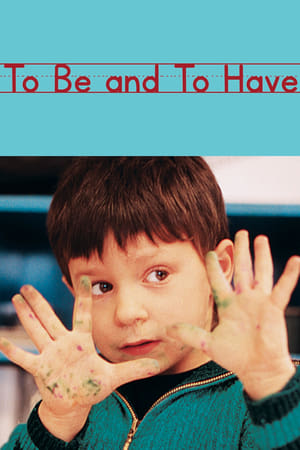
The documentary's title translates as "to be and to have", the two auxiliary verbs in the French language. It is about a primary school in the commune of Saint-Étienne-sur-Usson, Puy-de-Dôme, France, the population of which is just over 200. The school has one small class of mixed ages (from four to twelve years), with a dedicated teacher, Georges Lopez, who shows patience and respect for the children as we follow their story through a single school year.
In an age when misinformation, alternative facts, and conspiracy theories have become mainstream, UFOs have risen to become one of the most-talked about pop culture phenomena. With all of this noise, how can we expect anyone to know how much of this is true? What is in our skies? What do we know, and how do we know it? And most importantly: Are we being visited?
The Movie Movie shows how the camera, editing techniques, make-up and sound can be used in film and video to deliberately manipulate our perceptions and emotions. Drama, action and slapstick humour are combined in a simple, family-oriented plot. There is no dialogue, but there is an explanatory song. Behind-the-scenes vignettes highlight the message that in a movie everything is not quite as it seems.
The documentary explores the education system in Andhra Pradesh & Telangana, focusing on why students primarily choose careers as engineers or doctors. It delves into the reason behind this trend and features interviews with students, educators and parents. The film aims to uncover the underlying issues and shed light on the realities of the educational system.
Les Feux de la Saint-Jean
In American Sign Language (ASL) with subtitles available in English, Spanish and Canadian French. This powerful documentary uses real life experiences from Deaf people of varied social, racial, and educational boundaries showing how this form of oppression does lasting and harmful damage. Bonus materials include directors' comments from Ben Bahan and H-Dirksen Bauman and additional scences. Teachers: This film is a wonderful tool for beginning ASL students, as an introduction to a side of Deaf culture that cannot be found in any textbook.