Jean-Luc Godard brings his firebrand political cinema to the UK, exploring the revolutionary signals in late '60s British society. Constructed as a montage of various disconnected political acts (in line with Godard's then appropriation of Soviet director Dziga Vertov's agitprop techniques), it combines a diverse range of footage, from students discussing The Beatles to the production line at the MG factory in Oxfordshire, burnished with onscreen political sloganeering.
Journalist Alvaro Alvarez travels with former porn-star and men’s rights activist Philipp Tanzer to a Conference on Men’s Issues, shedding light on the controversial movement.
A tribute to legendary black lesbian feminist poet Audre Lorde, one of the most celebrated icons of feminism's second wave.
Peaches - artist, feminist, rock star. She has been challenging gender stereotypes for over 20 years and is on par with the icons of the pop and rock world. With exclusive private archive material and current footage of preparations and concerts of her 2022 jubilee tour “20 Years of Teaches of Peaches”, we learn how the Canadian Merrill Nisker became the internationally celebrated musician and electro-clash icon Peaches.
"Nobody told us that they would kill us, but neither did they tell them they would not silence us". Women journalists from several parts of Mexico who cover the beat of hard news, reveal the challenges they face when doing their work with various actors: their sources, law enforcement officers, drug trafficking and the state. Mexico is one of the most dangerous countries in which to practice journalism. Several reporters have been assassinated since 2000. Within this context, female journalists face a double challenge: firstly, to work in a country with a high level of anti-press, violence, and, secondly, the state and situation of their gender in a country riddled with femicide.
A portrait of the leading female Bolshevik (and later Worker’s Opposition) revolutionary leader Alexandra Kollontai using her own words.
Considered one of Canada's most important women artists of the second half of the 20th century, Joyce Wieland's art embodies the essence of her homeland, feminism, and ecology. Artist on Fire: Joyce Wieland captures the vibrant spirit of this painter, collagist, quilt maker, and filmmaker. In the early '70s, Wieland was involved in filmmaking, producing movies with a political message. In her 30-year career, she worked in a variety of mediums, including cloth, pastels, colored pencil, oils, bronze, and watercolor. Her works and her influence are examined in this detailed video portrait.
At the beginning of winter, a filmmaker retires for six months to a hermit's cabin in the middle of the forest, cut off from the world and its means of communication. Through the words of four women she has filmed previously, all of whom have dedicated their lives to different forms of spirituality, she embarks on a mysterious inner adventure, on the edge of solitude and nature. A journey that invites us to connect with the world in a different way.
In this video series an individual confronts fears and, through the process of confessing directly to the camera, transcends trauma. It is also about agin, longing, the delusions and misconceptions we are encumbered with as we mature towards self-awareness, and the masks we assume to deny or hide understanding. The tapes rupture, fracture, and use digital effects to mirror the psychological changes of the protagonist.
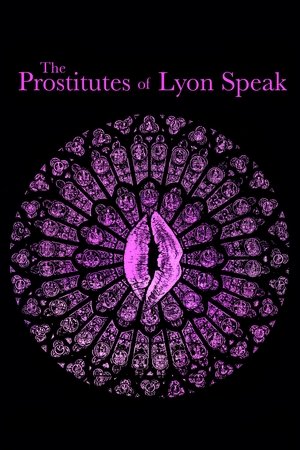
Documentary about the Lyon sex workers who occupied the church of St. Nizier on June 3, 1975.
A unique hybrid of documentary, silent film, drama and dance, 'Breaking Plates' puts revolutionary women of the past on the screen with present day filmmakers. Contemporary women talk to characters from 100 years ago, reanimate their antics and emulate their mayhem moves. As early 21st century performers step into the clothes of their early 20th century counterparts, battling their haywire machines, exploding gags, and eruptive bodies, they learn to wield humour as a weapon against the structures that contain them today.
"Subversivas" is a documentary that reveals the brazilian military dictatorship from the perspective of women. Teresa Angelo, Gilse Cosenza, Thereza Vidigal, Angela Pezzuti and Delsy Gonçalves joined the resistance to the military regime in different ways. Their memories bring out events that marked that time and their life. These statements reveal their effort for freedom and democracy not only in political actions, but also in their family, work and everyday relationships, imbued with a belief and search for a fair and free country.
"Granddaughters of Witches"? A discussion about the reality of the modern woman. Featuring anthropologist Carla Cristina Garcia and artist MC Tha.
Rock'n'roll was a man's world they say. The film documents the often ignored female impact on rock's history, from the groundbreaking guitar stylings of Memphis Minnie and Sister Rosetta to the gnarly singing of Big Mama Thornton. Musicians as different as Suzi Quatro and Kristin Hersh tell about their experiences on and off the grid of stardom and the music industry.
Four people - Brittany, Hannah, Nick, and Ylonda - tell their stories about how access to abortion in their community helped them empower themselves to lead lives they want to live.
Shere Hite’s 1976 bestselling book, The Hite Report, liberated the female orgasm by revealing the most private experiences of thousands of anonymous survey respondents. Her findings rocked the American establishment and presaged current conversations about gender, sexuality, and bodily autonomy. So how did Shere Hite disappear?
Quatro em Linha
Shut Up and Sing is a documentary about the country band from Texas called the Dixie Chicks and how one tiny comment against President Bush dropped their number one hit off the charts and caused fans to hate them, destroy their CD’s, and protest at their concerts. A film about freedom of speech gone out of control and the three girls lives that were forever changed by a small anti-Bush comment
Following the death of Amina Filali, a 16 year-old girl who killed herself after she was allegedly forced to marry the man who raped her, a young woman carries a personal investigation into the representation and perception of rape in Morocco. Here rapists are offered to marry their victims as a means to save the "honour" of the family. By liberating the voices of these victims, 475 : Break the Silence gives an unprecedented view of family, the deceit of love, relationships, marriage and honour in urban deprived areas of a country seeking to find its identity between modernity and tradition.
Rome, 1968. A football passionate PE teacher formed the first woman team. Thirty eight years later, these women players remember with proud and a tinge of nostalgia how they stood up against all prejudices at a time when a woman wearing shorts was absolutely outrageous.