In a decaying Soviet-era retirement home, a vibrant group of elders cling to life by staging Shakespeare. Yet loneliness lingers beyond the theater’s doors, until drama begins to blur with reality.
François Delisle draws an intimate portrait of his mother in a nursing home. A chronicle of the daily life and medical care of a woman approaching the end, treated with love, respect and dignity.
Swingtij (Blue Notes & Higher Grounds)
A documentary portrait of elderly women living in a Kraków nursing home, observing daily rituals, illness, and waiting, shaped by recurring symbolic images of time and decline.
Shot over the course of 18 months in New York City's Lower East Side, METHADONIA sheds light on the inherent flaws of legal methadone treatments for heroin addiction by profiling eight addicts, in various stages of recovery and relapse, who attend the New York Center for Addiction Treatment Services (NYCATS).
Herbert Fingarette once argued that there was no reason to fear death. At 97, his own mortality began to haunt him, and he had to rethink everything.
Mary Bauermeister is considered the mother of the Fluxus movement. In an attic on Cologne's Lintgasse, she made art history in the early 1960s alongside personalities such as Karlheinz Stockhausen and Nam June Paik. Today, at the age of 85, she has no intention of stopping. From morning till night, this extraordinary artist works in her studio near Cologne: a magical place.
Is there any way to slow or even prevent the ravages of time? Veteran presenter Johnny Ball looks back over the 45 years that Horizon, and he, have been on air to find out what science has learned about how and why we grow old. Charting developments from macabre early claims of rejuvenation to the latest cutting-edge breakthroughs, Johnny discovers the sense of a personal mission that drives many scientists and asks whether we are really any closer to achieving the dream of immortality.
Alzheimer's: Every Minute Counts is an urgent wake-up call about the national threat posed by Alzheimer's disease. Many know the unique tragedy of this disease, but few know that Alzheimer's is one of the most critical public health crises facing America. Because of the growing number of aging baby boomers, and the fact that the onset of Alzheimer's is primarily age-related, the number of Alzheimer's case is predicted to skyrocket in the United States. This will not only be a profound human tragedy, but an overwhelming economic one as well. Due to the length of time people live with the illness and need care, it's the most expensive medical condition in the U.S. Future costs for Alzheimer's threaten to bankrupt Medicare, Medicaid, and the life savings of millions of Americans.
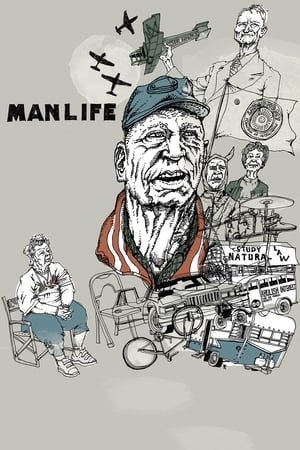
For over 80 years, Merle Hayden has crusaded to recruit members to the utopian movement Lawsonomy. Founded by aircraft pioneer Alfred Lawson, Lawsonomy advocates for economic reform and clean, communal living that transforms followers into a "New Species" that will benefit the human race either in this life or the next. Merle joined Lawson as a teenager and never looked back. His high school sweetheart Betty Kasch, however, is tired of Lawson coming between them. Reunited after over 60 years apart, non-believer Betty wants Merle to join her in Florida. Merle's commitment to preserving Lawson's legacy, artifacts currently rotting in a barn alongside a Wisconsin highway, has Betty worried Merle may leave her for Lawson once again.
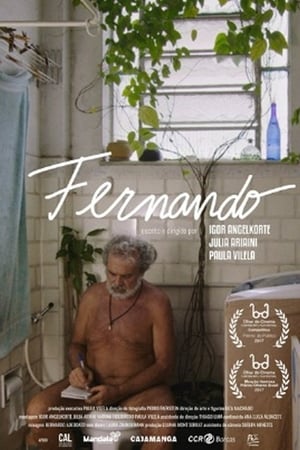
Fernando is an actor and theater teacher who, at the age of 74, is impelled to be the protagonist of himself in an experience that blurs the boundaries between the documentary and the fictional. Faced with a delicate problem in his heart, he follows a life full of love for art, where education emerges as a powerful transforming element of reality.
When a daughter becomes concerned about her mother's well-being in a retirement home, private investigator Romulo hires Sergio, an 83-year-old man who becomes a new resident—and a mole inside the home, who struggles to balance his assignment with becoming increasingly involved in the lives of several residents.
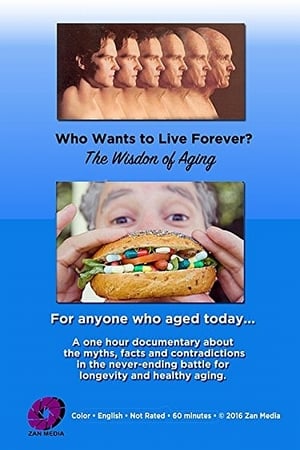
Director Mark Wexler embarks on a worldwide trek to investigate just what it means to grow old and what it could mean to really live forever. But whose advice should he take? Does 94-year-old exercise guru Jack LaLanne have all the answers, or does Buster, a 101-year-old chain-smoking, beer-drinking marathoner? What about futurist Ray Kurzweil, a laughter yoga expert, or an elder porn star? Wexler explores the viewpoints of delightfully unusual characters alongside those of health, fitness and life-extension experts in this engaging new documentary, which challenges our notions of youth and aging with comic poignancy. Begun as a study in life-extension, How To Live Forever evolves into a thought-provoking examination of what truly gives life meaning.
Hardly could anybody tell that 87 years old Lou has had Alzheimer’s disease. Over the years, Lou has forgotten almost everyone but firmly believes that 88 years old Feng is the one she is going to spend the rest of her life with.
Claes is a pensioner whose greatest wish is to finally make it to the nearby cinema. What if it rains? What if his sweater doesn’t match the shirt he is wearing? It's probably better to stay in the safety of his own home and switch on the television. In the total isolation of his solitary life, and out of an entirely unfounded fear of stepping outside his flat, Claes has turned his tidy home into a prison. This is a film that demonstrates what loneliness can do to a person.
An adult man decides to take a substance that makes him feel like a child again.
This sparkling, irreverent, and deeply emotional piece of creative nonfiction announces the arrival of a standout filmmaking partnership. When their father is hauled away, a colorful trio of brothers — a sibling team to rival Moe, Larry, and Curly — step up to take care of América, their grandmother, in Colima, Mexico. Rodrigo, Diego, and Bruno are stilt-walkers and acrobats and Elvis impersonators and unicycle riders — when not running the family's agriculture warehouse. With a loose, offhanded charm, Stoll and Whiteside capture the family’s natural performative streak in a way that makes even the most explosive, dramatic moments feel organic. The endearing, genuine scenes between Diego and his grandmother celebrate the possibility of multigenerational connection.
Every week, two friends born 67 years apart share their life stories in a senior home's living room. The younger friend convinces the 107-year-old lady to join her in an adventure: a road trip to the sea.
For the past 40 years, Bruce Beach has been preparing for a nuclear disaster. A bunker of 42 school buses is buried on his property, designed to save humanity. Curious onlookers and interested preppers regularly visit the site named Ark Two, but it's clear that the creator of this decaying shelter is the only one truly convinced of its practicality in the event of an apocalypse. Now that Bruce is in his 80s, he and his wife Jean need to spend more time taking care of their immediate needs than worrying about the future. What could easily be dismissed as evangelical paranoia becomes a tragic yet uplifting story about a risk-taking inventor who has lived without regrets. Sometimes outside-the-box thinkers become millionaires and are recognized for their genius ability to guide us into the future, while others are pushed to the margins. There’s a lot to be learned from both
What happens after death? Lila Ribi's 100-year-old grandmother Greti always has the same answer: There is nothing after death. The filmmaker sees things differently.