The Zurich Opera gathered a superb cast for this production: Italian soprano Eva Mei sings the Countess Violante, known as Sandrina, the feigned gardener of the title. Spanish soprano Isabel Rey is her opponent Arminda, and Arminda's former lover, the melancholy Cavaliere Ramiro, is sung by Romanian mezzo Liliana Nikiteanu. Moretti's staging presents the action in a modern villa in a hierarchical world of the rich and famous.
Twenty-two year old Neuroscience student Wendy is in the midst of a transition from pre-med to performance when she is thrown into quarantine with her 17 year-old sister, April. Suddenly sharing a full-sized bed, the sisters struggle to make peace with their newfound living quarters. But, while editing April’s college essays, Wendy discovers her purpose–to help April find hers. Over fourteen days, the girls grow from acquaintances to artistic allies as they realize their unstoppable potential to pursue their passion. Based on a true story, this film was shot in Houston with an entirely Texan cast & crew. Creator Abby Tozer donated $2500 to the Cynthia Woods Mitchell young performing artists' scholarship.
Part of the celebrations for the 150th anniversary of the death of the Pesaro composer, Il Barbiere di Siviglia staged in Lugano, is the result of a virtuous collaboration that involved Swiss Radio and Television, LuganoInScena and LuganoMusica. The musical part was entrusted to Maestro Diego Fasolis who, together with his Barocchisti ensemble, was involved in the project from the very beginning. Internationally renowned soloists such as Edgardo Rocha (who embodies the Count of Almaviva), Riccardo Novaro (Bartolo), Lucia Cirillo (Rosina), Giorgio Caoduro (Figaro), Ugo Guagliardo (Basilio) and Alessandra Palomba (Berta) performed on stage.
Lucia di Lammermoor, dramma tragico in three acts by Gaetano Donizetti (1797 - 1848). Libretto by Salvadore Cammarano, after Walter Scott's 'The Bride of Lammermoor'. First performance in Naples, Teatro San Carlo, 26 September 1835 Recording: December 23 2015 - Gran Teatre del Liceu | Barcelona Director: Fabrice Castanier Conductor: Marco Armiliato Orchestra & Chorus of the Gran Teatre del Liceu
"La Bohème" is one of Giacomo Puccini's most popular and timeless works and the second-most performed opera at New York's Metropolitan Opera. This production, directed by the legendary Franco Zeffirelli, features José Carreras, Teresa Stratas, Renata Scotto and Richard Stilwell. The opera is replete with extraordinary visual beauty as it presents the tragic story of young bohemians struggling to make it in the world.
“And, 'twixt the shadows and frights of nocturnal splendors, My beloved will secretly be hiding. Say what you will, say what you may.” The sound of a distant whistle and theorbo calls a sleeping singer through the empty streets of Stuttgart in a midnight journey to the opera house. ‘dei notturni splendori’ is an experimental opera film made for the Staatsoper Stuttgart in the early months of the Coronavirus pandemic lockdown. Anderson Matthew captures the singer Helene Schneiderman through a midnight dream with a hand-cranked kino camera in an ecstatic 35mm photo roman, in search for her own performance of the Tarquinio Merula madrigal Folle é ben chi se crede from 1638.
Recorded at the Glyndebourne Festival Opera in 1995, this acclaimed presentation of composer Gioachino Rossini's epic opus ERMIONE is based on Jean Racine's play "Andromache." Set in Troy after the city fell to the Greeks, the production recounts the rancorous battle between widow Andromache and Helen of Troy's green-eyed daughter, Ermione for the love of Pyrrhus
In Benjamin Britten's operatic adaptation of Henry James' masterwork, a naive governess (Helen Field) arrives at a country manor and soon discovers that it holds a murky secret involving her charges and two ghostly servants who wield a sinister influence on them. The taut, atmospheric production also stars Sam Linay, Machiko Obata, Menai Davies and Phyllis Cannan, with the Stuttgart Radio Symphony Orchestra providing accompaniment.
Lovely but lethal, the evil Princess Turandot comes to life through the performance of Luana De Vol in this visually stunning production of Giacomo Puccini's Peking-set opera directed by Nuria Espert and conducted by Giuliano Carella. In this 2004 performance at the Gran Teatre del Liceu in Barcelona, Spain, all the subtleties of Puccini's unique tonality and unconventional instrumentation are in ample evidence.
The oratorio concerns the Christian martyr Theodora and her Christian-converted Roman lover, Didymus.
The grand scale and magnificent acoustics of the Roman arena in Verona are ideally suited to the pageantry of Verdi's Egyptian opera, presented here in a staging that is true to the original 1913 production, framed by obelisks and sphinxes and filled with chorus and dancers. Chinese soprano Hui He has won international acclaim for her portrayal of the eponymous slave girl whose forbidden love for the war hero Radamés (Marco Berti, the experienced Verdi tenor) brings death to them both.
Based on Ruggero Leoncavallo's opera Pagliacci. The film recounts the tragedy of Canio, the lead clown (or pagliaccio in Italian) in a commedia dell'arte troupe, his wife Nedda, and her lover, Silvio. When Nedda spurns the advances of Tonio, another player in the troupe, he tells Canio about Nedda's betrayal. In a jealous rage Canio murders both Nedda and Silvio. The only actor in the cast who also sang his role was the celebrated Italian baritone, Tito Gobbi, but the film is largely very faithful to its source material, presenting the opera nearly complete.
A burnt-out young opera singer resorts to using a hyper-intelligent A.I. to aid her work, leading to unforeseen consequences.
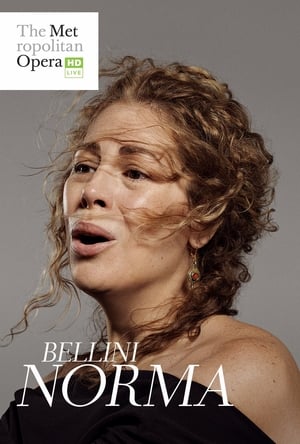
Deep in a forest where druids and warriors seek revenge against the conquering Romans, Norma is scorned by the Roman proconsul Pollione, with whom she has two children. Her kindness turns to fury when she discovers that Pollione has taken Adalgisa, a novice priestess, as his new lover. When Pollione loses his high rank in the army and is offered as a sacrifice, Norma promises him freedom under one condition.
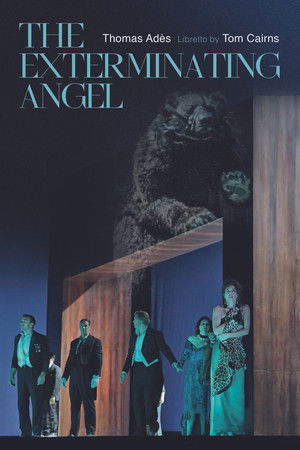
After the acclaimed Met premiere of Thomas Adès's "The Tempest" in 2012, the composer returned with another masterpiece, this time inspired by filmmaker Luis Buñuel's seminal surrealist classic "El Ángel Exterminador", during the 2017–18 season. As the opera opens, a group of elegant socialites gather for a lavish dinner party, but when it is time to leave for the night, no one is able to escape. Soon, their behavior becomes increasingly erratic and savage. The large ensemble cast tackles both the vocal and dramatic demands of Adès's opera with one riveting performance after another. Tom Cairns, who also penned the work's libretto, directs an engrossing and inventive production, using a towering wooden archway to trap the characters onstage. And Adès himself takes the podium to conduct the frenzied score, which features a host of unconventional instruments, including the eerie electronic ondes Martenot.
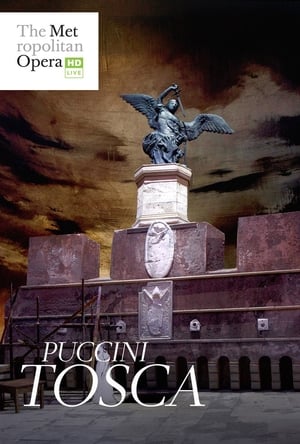
Sir David McVicar’s bold new staging of Tosca, Puccini’s operatic thriller of Napoleonic Rome, thrilled Met audiences when it rang in the New Year in 2018. Only weeks later, the production was seen by opera lovers worldwide as part of the Met’s Live in HD series of cinema presentations. In this performance, Bulgarian soprano Sonya Yoncheva is the passionate title diva, opposite charismatic tenor Vittorio Grigolo as her lover, the idealistic painter Mario Cavaradossi. Baritone Željko Lučić is the menacing Baron Scarpia, the evil chief of police who employs brutal tactics to ensnare both criminals and sexual conquests. On the podium, Emmanuel Villaume conducts the electrifying score, which features some of Puccini’s most memorable melodies.
The director, Roland Schwab, has created his version of Hell. The set is like a high iron walled hanger and the stage is continually occupied with people who look like fugitives from Mad Max and who interact with Mefistofele. The orchestra and choir are wonderful. Rene Pape gives a nuanced interpretation with a certain amount of sardonic humour under the evil. His singing and acting are first rate, as is that of Kristine Opolais and Joseph Calleja.
This live version of Puccini s superbly dramatic opera was recorded in Rome in the exact locations and at the precise times of day as Puccini had written into his score. The action opens in Rome's beautiful 16th-century church of Sant Andrea della Valle, where Cavaradossi (Plácido Domingo) is innocently painting, moves to the Farnese Palace where Tosca (Catherine Malfitano) dramatically stabs the lustful Scarpia (Ruggero Raimondi), and finally to the battlements of the Castle Sant Angelo at dawn the following day where Cavaradossi is cruelly killed, and Tosca takes her own life.
A tribute to marriage coming from a bachelor is a tad suspicious. But for Beethoven the idealization of the woman-bride was heartfelt and sincere. It has always been a unique opera starring a courageous wife who wows audiences. Fidelio is a moral title, associated with the ideals of liberty of the French Enlightenment. Nobility and commoners are united in their thirst for justice against the oppression of power. For once the faithful consort of a desaparecido wins her battle against a treacherous tyrant, and the collective joy truly is “nameless”, as is sung on the stage. Especially because the “our heroes to the rescue” finale is recounted by the triumphant symphonic flair of the quintessential musician. Beethoven really does bring the world to collapse at the conclusion of this opera, which begins like a delightful little comedy, but which scales and transcends all the summits of the dramatic-musical art.
Piero Cappuccilli and Shirley Verrett lead Verdi’s sombre masterpiece, drawn from one of Shakespeare’s most celebrated tragedies. Filmed for television at Teatro alla Scala in 1979, Claudio Abbado conductes a night to remember.