When producer Kees Rijninks, the husband of filmmaker Carmen Cobos, is diagnosed with Parkinson's disease, their world is falling apart. Yet after months of sadness, anger and denial, it appears that they have sufficient resilience to find a new balance in their lives. In TOGETHER they follow for a year a group of incurably ill patients, their partners and their neurologist to find an answer to the question how people deal with the knowledge that they are incurably ill. Do they find the resilience to give their lives a positive meaning in hopeless circumstances?
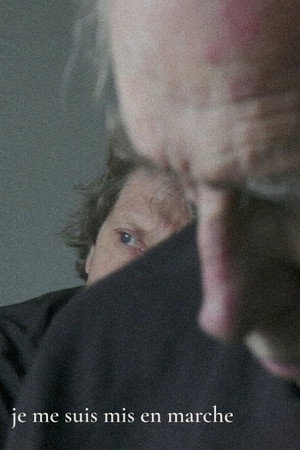
In the 1980s, writer, poet, radio personality and football enthusiast Franck Venaille is diagnosed with Parkinson's disease. He decides to travel the length of the Scheldt river, to dip his hands in its source, and brings back the long epic poem La Descente de l'Escaut. Today, the disease has progressed, but Venaille still spends much of his time working in the study where he wrote the text. Je me suis en marche is both a road movie weaving together the poem, Venaille now and during his journey, and a documentary adaptation of the epic odyssey of a sick man retracing a river across 450 kilometres.
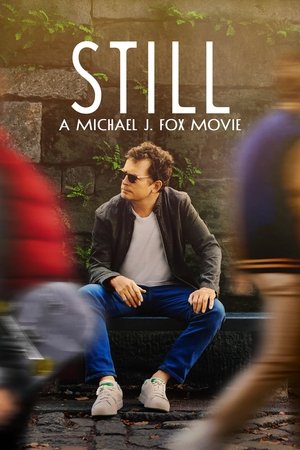
A short kid from a Canadian army base becomes the international pop culture darling of the 1980s—only to find the course of his life altered by a stunning diagnosis. What happens when an incurable optimist confronts an incurable disease?
The Faces of Parkinson shows the people who suffer from Parkinson's disease and the impact it made on their life and people around and close to them. As it also asks the question how one continues to stay positive with such a destructive disease.
Kees suffers from Parkinson's disease. This puts pressure on his relationship with his beloved Carmen. If a cure is not forthcoming, an almost inhuman, devilish dilemma presents itself.
Christian Kjærs sidste vilje
Párkison de cerca: Crónicas de un ritmo compartido
It seems like two disparate realms. One occupied by some of the most acclaimed dancers in the world, people who move for a living. The other occupied by people who often struggle to move, people who have Parkinson's disease. This is the story of what happens when those worlds intersect. We followed individuals with Parkinson's as they prepared to stage a first ever dance performance, under the tutelage of two long time dancers at the Mark Morris Dance Group. It's a story about determination, adversity, contending with doubt, the transformative power of art and the strength of the human spirit. This is the story of a remarkable community of dancers who have come together to rediscover the meaning of grace.
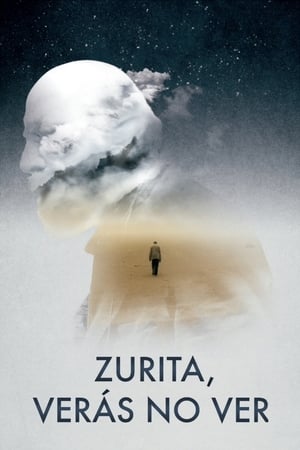
An account of the experiences by poet and National Literature Award laureate Raúl Zurita, during his travels and his daily life, as he reflects on topics such as state terrorism and death
Brian Hall has been living with Parkinson's since he was 14. He is now in his 60s. How do you fill the well of optimism when it's been drained progressively and constantly for well over 40 years?
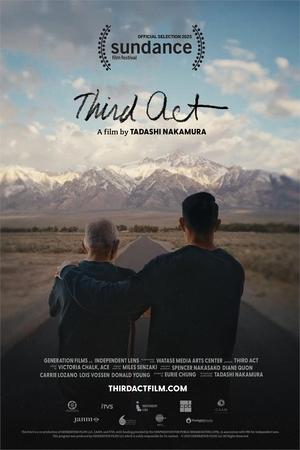
Filmmaker Tadashi explores his father Robert A. Nakamura's life as an influential Asian American artist and activist, while grappling with Robert's Parkinson's diagnosis, navigating themes of art, grief, and their father-son relationship.
It is late 2004, and 34-year-old Englishman Alistair Appleton is about to fly from London to the Brazilian coast, where he will drink ayahuasca for the first time. With wit, insight, and sensitivity, Alistair shares this experience with us, and chats with some fellow participants before and after the ayahuasca ceremonies. For the past few years, Alistair had been working as a television presenter. In 2000, he started making trips to the Centre for World Peace and Health in Scotland to learn how to meditate. When clinical psychologist Silvia Polivoy opened an ayahuasca healing center in Bahia in 2004, Alistair faced his fears and seized the opportunity to attend.
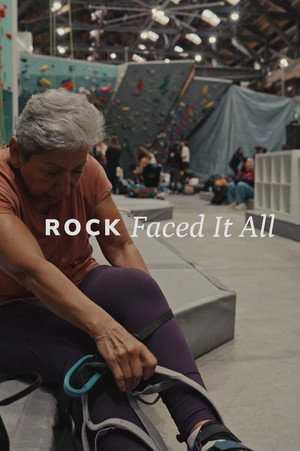
When Teresa Bennett was diagnosed with Parkinson’s disease, she never imagined that a year later, she’d be scaling 60-foot walls with the grace and determination of a seasoned climber. With the knowledge that exercise helps improve symptoms, Bennett has been integral to the expansion of Up Ending Parkinson’s, a non-profit that provides guided rock climbing for people with Parkinson’s. Bennett transforms her battle with the disease into strength and endurance.
As their bodies give way to Parkinson's disease, two New York actors put their hearts into one final Off-Broadway production of Beckett's "Endgame," the play that posits, "there's nothing funnier than unhappiness."
Ricardo, Natalia's father, suffers from Parkinson's disease; in that condition he stopped producing Dopamine. Surviving a very strong family crisis, Natalia told them her sexual orientation. She does not understand why after being left-wing militants and fighting for equality and freedom, they could not accept her choice.
Uje, a pop star in the 1990s, gets diagnosed with Parkinson's. This is a film about his everyday struggles.
As her Parkinson's disease intensifies, a National Parks Ranger struggles to accept her new limitations.
Buddy Joe
A mother struggles to take control of her life in the face of advanced Parkinson's disease, while her son battles his sexual and emotional identity amongst the violence of Alberta's oil field work camps.
The porn star Moon spends her time working, nursing her widowed father that has Parkinson disease and with her friends Jessie and Martine. Her boss Aronson gives a new contract to Moon to be signed. Moon has a blind date with Jessie's friend Kip and they feel a great attraction for each other. When Jessie asks Moon to test the fidelity of her boy-friend, Moon decides to offer the service to other customers. But when she meets the dangerous Terry, she reevaluates her life and her relationship with Skip.