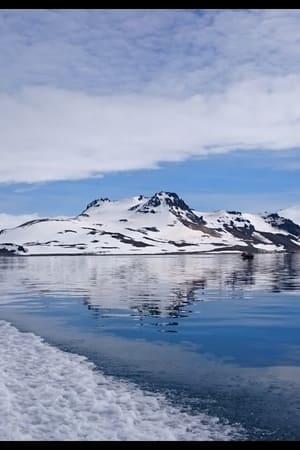
A study of the psychology of a champion ski-flyer, whose full-time occupation is carpentry.
Drazen Petrovic and Vlade Divac were two friends who grew up together sharing the common bond of basketball. Together, they lifted the Yugoslavian National team to unimaginable heights. After conquering Europe, they both went to USA where they became the first two foreign players to attain NBA stardom. But with the fall of the Soviet Union on Christmas Day 1991, Yugoslavia split up. A war broke out between Petrovic's Croatia and Divac's Serbia. Long buried ethnic tensions surfaced. And these two men, once brothers, were now on opposite sides of a deadly civil war. As Petrovic and Divac continued to face each other on the basketball courts of the NBA, no words passed between the two. Then, on the fateful night of June 7, 1993, Drazen Petrovic was killed in an auto accident. This film will tell the gripping tale of these men, how circumstances beyond their control tore them apart, and whether Divac has ever come to terms with the death of a friend before they had a chance to reconcile.
Joseph Vallot, geographer, naturalist and mountaineer born in 1854 in Lodève, was a visionary man, full of humor and whose curiosity was insatiable. He had spent some forty years of his life studying the Mont Blanc massif, sacrificing a good part of his fortune to this multifaceted passion. He was notably the first to demonstrate that one could sleep, work and even do science at an altitude of over 4000 meters, at a time when ascents to the summit of Western Europe were still adventurous expeditions. This documentary tribute follows in his footsteps, via the route taken at the time, on foot from Chamonix via the Grands Mulets refuge to the summit of Mont Blanc to the Joseph Vallot observatory nestled at an altitude of 4400m, with a team of guides, journalists and scientists.
A documentary about punk and subculture scene of Pula, Croatia from 1978 to 1991, the city that gave birth to one of the most vivid punk and alternative rock scenes in former Yugoslavia, despite having population of just over 60,000 residents.
A New Yorker journeys to the jungle in the Darien Gap of Panama to reconnect with an indigenous tribe he met and photographed 20 years ago. Their reunion highlights the profound power of photos and the human connection that transcends cultural barriers.
For Serbian filmmaker Mila Turajlic, a locked door in her mother's apartment in Belgrade provides the gateway to both her remarkable family history and her country's tumultuous political inheritance.
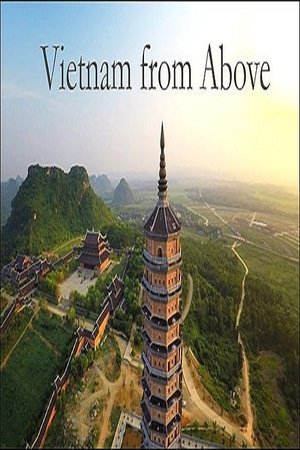
Země jihu – Vietnam
This two-part documentary reveals how al-Qaeda used Bosnia as a training-ground, money-laundering centre and forward operating base during the brutal civil war of 1992-95. The veterans went on to attack New York, Washington DC, London, Madrid, Mombasa and Bali. The story also reveals how the people of Srebrenica were betrayed by the Sarajevo government in advance of the massacres of July 1995.
Bosnian Croat writer Miljenko Jergović and Serbian writer Marko Vidojković replace one another by the steering wheel of Yugo, a symbol of their common past while driving on the Brotherhood and Unity Highway that stretched across five of six republics of Yugoslavia.
Can a language save your life? Yes it can, even an ancient one from the 15th century. Saved by Language tells the story of Moris Albahari, a Sephardic Jew from Sarajevo (born 1930), who spoke Ladino/Judeo-Spanish, his mother tongue, to survive the Holocaust. Moris used Ladino to communicate with an Italian Colonel who helped him escape to a Partizan refuge after he ran away from the train taking Yugoslavian Jews to Nazi death camps. By speaking in Ladino to a Spanish-speaking US pilot in 1944 he was able to survive and lead the pilot, along with his American and British colleagues, to a safe Partizan airport.
Many geneticists and archaeologists have long surmised that human life began in Africa. Dr. Spencer Wells, one of a group of scientists studying the origin of human life, offers evidence and theories to support such a thesis in this PBS special. He claims that Africa was populated by only a few thousand people that some deserted their homeland in a conquest that has resulted in global domination.
The most popular children's magazine in Yugoslavia was called Modra lasta (Blue Swallow). In 1969, it created Lastan. For hundreds of thousands of children Lastan was a mythical hero who helped unhappy and confused little souls. Each child imagined him differently and felt confident to share with him what they could not confess to anyone else: Dear Lastan, I kissed him, am I pregnant?; Dear Lastan, I fell in love with a boy from my class... For decades Lastan was a legend and the best kept secret in journalism. This film, for the first time after almost five decades, reveals his true identity.
"Skoplje '63" is a 1964 Yugoslavian documentary film directed by Veljko Bulajić about the 1963 Skopje earthquake (Skoplje, per film title, is the Serbo-Croatian spelling of Skopje). The filming started three days after the earthquake and lasted for four months. After that, Bulajić spent 12 months editing the footage at Jadran Film studios.
In 2013, the world's media reported on a shocking mountain-high brawl as European climbers fled a mob of angry Sherpas. Director Jennifer Peedom and her team set out to uncover the cause of this altercation, intending to film the 2014 climbing season from the Sherpa's point-of-view. Instead, they captured Everest's greatest tragedy, when a huge block of ice crashed down onto the climbing route...
This eye-opening and bittersweet chronicle of the Yugoslavian film industry recounts how the cinema was used—often with direct intervention from President Josip Broz Tito—to create and recreate the young nation’s history, replete with heroes and myths that didn’t always hew closely to reality.
Echoes from the Tian Shan
Petar Peca Popović is one of the greatest, most famous, most authoritative and for sure, the best, connoisseur of Rock and Roll in the former Yugoslavia. He promoted Rock and Roll in those heroic times. We are going on a peculiar kind of trip with him, along an "emotional homeland", of ex-Yu, "searching for the lost times" and dear friends, the most significant representatives of this culture - rock'n'roll legends.
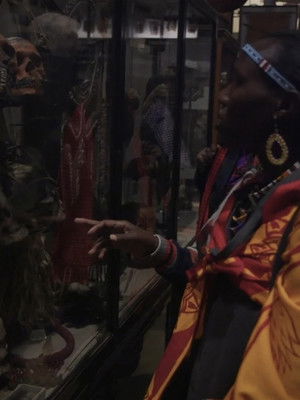
Decolonising the Curatorial Process is a forty-minute documentary which explores decolonial strategies in an academic and curatorial context. The film features academics, activists and practitioners, and contains case studies of institutions that are deploying critical, self-reflective forms of curatorial practice. The Museum of London Docklands exhibition on slavery and the sugar industry is examined as an example of how an institution can decolonise the curatorial process, utilise the work of artists in a museum context, and critically examine East London's imperial history. The Pitt Rivers museum in Oxford, who are working with Maasai activists from Kenya and Tanzania on a project centred on repatriating the museum's collection of sacred Maasai artefacts, also features in the film.
The protagonists of this docudrama are old farmers who migrated to Banat after the First World War, in 1922. The film is focused on a couple of important events in their impressive lives, which are woven into lively scenes and stories full of wise instances. Their statements become spontaneous recounts of the lives of people in this region.
The Weight of Chains is a Canadian documentary film that takes a critical look at the role that the US, NATO and the EU played in the tragic breakup of a once peaceful and prosperous European state - Yugoslavia. The film, bursting with rare stock footage never before seen by Western audiences, is a creative first-hand look at why the West intervened in the Yugoslav conflict, with an impressive roster of interviews with academics, diplomats, media personalities and ordinary citizens of the former Yugoslav republics. This film also presents positive stories from the Yugoslav wars - people helping each other regardless of their ethnic background, stories of bravery and self-sacrifice.