A 16mm experimental film that analogizes the discourse of racialized criminality and the carceral apparatus, which surveils and delimits the movements of Black people’s bodies, with the conventions and mechanics of the cinematic apparatus which regulates and standardizes the movement of the filmstrip through the motion picture camera and projector. Equal parts essay and visual art, Speaking in Tongues embodies the cinematic Black ecstatic that simultaneously re-envisions resistance defiance in the face of anti-Black state violence and subverts the conventions of cinematic realism through a manually and optically altered collage of original documentary and archival film sourced from Hollywood movies, television commercials, educational films, cartoons, European art cinema and miscellaneous ephemera.
X-ray images were invented in 1895, the same year in which the Lumière brothers presented their respective invention in what today is considered to be the first cinema screening. Thus, both cinema and radiography fall within the scopic regime inaugurated by modernity. The use of X-rays on two sculptures from the Bilbao Fine Arts Museum generates images that reveal certain elements of them that would otherwise be invisible to our eyes. These images, despite being generally created for technical or scientific purposes, seem to produce a certain form of 'photogénie': they lend the radiographed objects a new appearance that lies somewhere between the material and the ethereal, endowing them with a vaporous and spectral quality. It is not by chance that physics and phantasmagoria share the term 'spectrum' in their vocabulary.
Exploring the duality between friendship and loneliness, this intimate narrative short tells the story of David, a bright young boy struggling with a broken home life, as he tries to reconnect with his childhood best friends as they search for something to do in their small suburban town.
August 2019. Frank recognizes his own story of twenty years ago in a recently published book. He remembers Marie, with whom he had a relationship before she moved to the United States and disappeared from his life. Frank sets out in search of her and finds himself in a USA petrified by a heat wave and lost in suspicion and political paranoia. He heads into the desert in pursuit of Marie.
An anthology of one-minute films created by 51 international filmmakers on the theme of the death of cinema. Intended as an ode to 35mm, the film was screened one time only on a purpose-built 20x12 meter public cinema screen in the Port of Tallinn, Estonia, on 22 December 2011. A special projector was constructed for the event which allowed the actual filmstrip to be burnt at the same time as the film was shown.
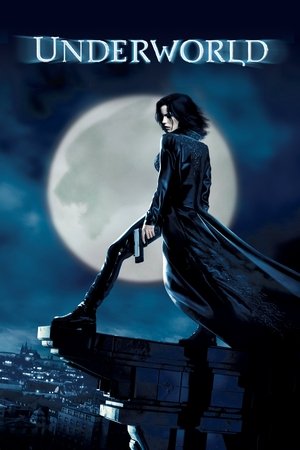
A gang of women wreak havoc in the city, killing various men who have treated women poorly. And sometimes they do it just for fun.
Lacking a formal narrative, Warhol's mammoth film follows various residents of the Chelsea Hotel in 1966 New York City. The film was intended to be screened via dual projector set-up.
A filmmaker recalls his youth in the town of Onomichi. In the present, he shoots a film in Onomichi alongside his cast, crew and family.
Working-class British housewife Myra Savage reinvents herself as a medium, holding seances in the sitting room of her home with the hidden assistance of her under-employed, asthmatic husband, Billy. In an attempt to enhance her credibility as a psychic, Myra hatches an elaborate, ill-conceived plot to kidnap a wealthy couple's young daughter so that she can then help the police "find" the missing girl.
This is a time when we learn afresh that nothing lasts forever and that the variability is an integral part of everyday life. What is a river today does not mean that tomorrow will not become a sea. Life itself is one large metamorphosis, and the human being is its variable shape...
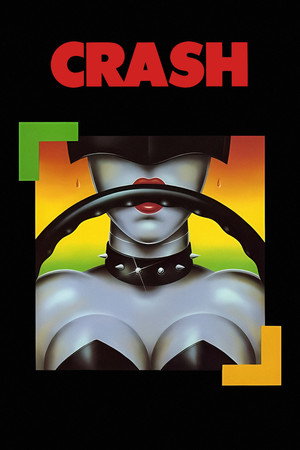
Short film produced by the BBC about JG Ballard's Crash. “The film was a product of the most experimental, darkest phase of Ballard’s career. It was an era of psychological blowback from the sudden, shocking death of his wife in 1964, an era that had produced the cut-up ‘condensed novels’ of Atrocity plus a series of strange collages and ‘advertisers’ announcements. After Freud’s exploration within the psyche it is now the outer world of reality which must be quantified and eroticised. Later there were further literary experiments, concrete poems and ‘impressionistic’ film reviews, and an aborted multimedia theatrical play based around car crashes. After that came an actual gallery exhibition of crashed cars, replete with strippers and the drunken destruction of the ‘exhibits’ by an enraged audience.” (from: http://aaaaaaaaaaaaaaaaaaaargh.blogspot.de/2013/01/short-film-adaptation-of-jg-ballards.html)
Rather pointless, rather stilted, fetid; not what we want us going after.
Industrialist François Delambre is called late at night by his sister-in-law, Helene, who tells him that she has just killed her husband. Reluctant at first, she eventually explains to the police that he invented a matter transportation apparatus and, while experimenting on himself, a fly entered the chamber.
Here I am. A mind backed up by delusion of previous condition. Free or humiliated? Who is ashamed? Me or you? It is so hard to share one's secret.
A take it or leave it auteur-experimental fiction exercise: two women are monitoring their dreams, dreams that may of course also be stark naked reality, at least to the dreamers, as they come and they go like bubbles, rising, floating, bursting. A man appears out of nowhere. Poet Peter Laugesen co-wrote the script with Tom Elling, who was Lars von Trier's director of photography on "The Element of Crime".
Alban lives in a castle that he has just inherited in a small village in Charente-Maritime. Inside, the dilapidation has long since taken hold. He meets Jérôme, a young gypsy from the neighbouring town, with whom he has a sexual relationship. In this space that is impossible to rebuild, a strange intimacy is gradually invented, barely disturbed by the interruption of a young woman who has come to spend a few days in this residence.
Return to 'burn' only to find out you're already in that urn.
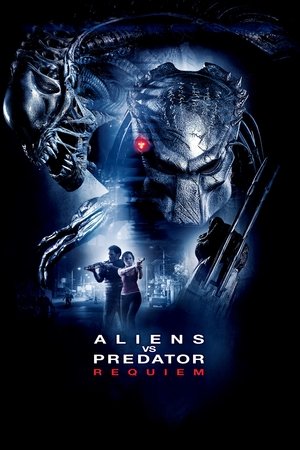
After a horrifying PredAlien crash-lands near a small Colorado town, killing everyone it encounters and producing countless Alien offspring, a lone Predator arrives to "clean up" the infestation.
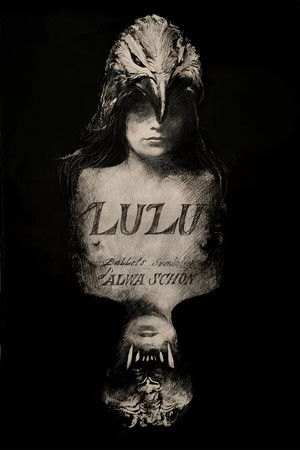
This highly stylized, critically acclaimed film from the 70's mixes silent film cards, a soundscape, color, opera music and atmosphere to explore the Freudian truths about men's fear of women that Wedekind powerfully exposed. A kinetic melodrama of the rise of a femme-fatale and her fate at the hands of Jack-the-Ripper. Rethinking Pabst's silent film and Alban Berg's opera.
Rosso Fiorentino's painting "The Deposition of the Cross" comes to life. The Christ is gradually removed from his cross by the biblical characters who surround him.