This short celebrates the 20th anniversary of MGM. Segments are shown from several early hits, then from a number of 1944 releases.
In the summer of 1961, a group of young Italian anthropologists made a clandestine journey through Spain, in order to record popular songs that supported anti-Franco resistance. As a result of their work, they were prosecuted and their recordings were censored. Sixty years later, and guided by Emilio Jona, aged 92, the last living member of that group of travellers, we recover the unpublished recordings and reconstruct the journey, today, across an emotional and political landscape, regaining historical memories through these songs, as relevant today as they were then.
A detailed account of one of the bloodiest battles of World War I. Between February and December 1916, the French and German armies relentlessly fought in the devastated camps around the village of Verdun.
A personal biography of the leader of the PCP (Portuguese Communist Party) seen through the eyes of those who were close to him and those who studied his trajectory and thought.
Documentary about the merging of the Communist Party of Germany and the Socialist Unity Party of Germany in the Soviet occupation zone, a merger that would lead to the creation of the Socialist Unity Party that would rule the soon-to-be-created East Germany until 1989.
The film explores the campaign waged by the Hindu right-wing organisation Vishva Hindu Parishad to build a Ram temple at the site of the Babri Masjid in Ayodhya, as well as the communal violence that it triggered. A couple of months after Ram ke Naam was released, VHP activists demolished the Babri Masjid in 1992, provoking further violence.
The documentary "Juanas, bravas mujeres", by Sandra Godoy, portrays the life of Juana Rouco Buela and her fight for women's rights.
On May 1st, unions all over Japan celebrate May Day, the international day for workers. Workers gather together at parks and hold demonstrations and parades. May Day has its origins in a strike that occurred in the United States on May 1, 1886, a strike that called for an eight-hour workday. Prokino recorded the May Day every year from 1927 to 1932. Among these films, this work is the only one that has survived. However, only its first part has survived. The original film depicts the march to the Ueno Park where the rally was dismissed. Iwasaki Akira coordinated the entire Tokyo Prokino organization as it photographed the 1931 May Day celebrations. They shot in both 16mm and 35mm (other 35mm productions were planned, but this is the only one that achieved completion). A 16mm print was circulated around the countryside by mobile projection units, and a 35mm print was shown at Soviet film nights in Tokyo and Osaka.
Exploring the rise of anti-abortion groups in Canada, the filmmaker also presents the feminist and pro-choice response that is being organized across the country.
Passionate about ocean life, a filmmaker sets out to document the harm that humans do to marine species — and uncovers an alarming global conspiracy.
Obsessively referring to the traumas and wounds that the Spanish civil war (1936-39) and Franco's dictatorship (1939-75) caused in their day no longer serves to explain the impassable abyss of incomprehension and hatred that the abject policies and radical positions adopted by both the right and the left in recent decades have opened up before the citizens of a country that is barely known beyond hackneyed cultural clichés.
A Dutch documentary about the history of the anarchist punk band Crass. The film features archival footage of the band, and interviews with former members Steve Ignorant, Penny Rimbaud and Gee Vaucher.
In this remarkable journey, Planet Food travels the world to see how control of the spice trails, over the last five millennia, has made great cities and destroyed ancient civilizations. Our guides travel from the Molucca Islands of Indonesia, the original home of cloves and nutmeg, to the Indian province of Kerala, with its native pepper and cardamom. Additional stops include Venice, Beirut, Cairo and other significant places in the spice trade that created and toppled empires.
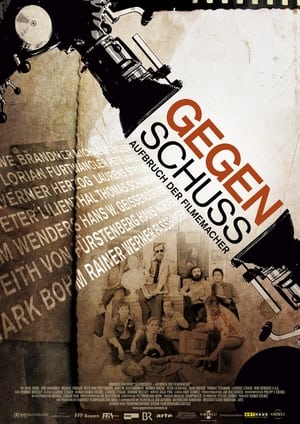
Documentary about filmmakers of the New German Cinema who were members of the legendary Filmverlag für Autoren (Film Publishing House for Authors). Among them are Werner Herzog, Rainer Werner Fassbinder, and Wim Wenders.
The world knows the image of the good Canadian. But what if there was a dark secret behind a national identity? THE GOOD CANADIAN exposes the truth behind the idea of a True North strong and free. In this unflinching and eye-opening documentary, directors Leena Minifie and David Paperny move us through the corridors of systemic inequity, from the Indian Act to residential schools, to modern-day family separation. Fusing shocking footage with detailed interviews with experts, advocates, whistleblowers and politicians, THE GOOD CANADIAN challenges national myth-making, while offering Canadians the chance to forge a new identity from the truth.
In Pakistan, veils hide one of the country's most terrible secrets. Driven by revenge, jealousy or sexual non-co-operation some men subject their wives to horrific attacks with acid that is freely available in the street. Completely disfigured, the victims are often ostracized by their families and become prisoners in their own home. This chilling documentary is a terrifying insight into the shattered lives of these women.
Who were the men and women of Project Apollo? Where are they today? What do they think of the extraordinary effort they helped make possible? Coinciding with the 50th anniversary of the first moon landing in 2019, When We Were Apollo is an intimate and personal look at the Apollo Space Program through the lives and experiences of some of its most inspiring behind-the-scenes figures: engineers, technicians, builders and contractors who spent the better part of a decade working to get us to the moon and back.
La Ballade des sans-papiers
A personal essay which analyses and compares images of the political upheavals of the 1960s. From the military coup in Brazil to China's Cultural Revolution, from the student uprisings in Paris to the end of the Prague Spring.
What began as a document of trades, traditions, cultures and home environments in contemporary England evolved and expanded to become an all-consuming project. Mirrors is a witness to unprecedented events as they unfolded on this singular isle over seven extraordinary years. From volatile public demonstrations to intimate domestic scenes, the film reveals the experience and emotions of living in England, explored through the lives of total strangers as well as family and friends. Shot exclusively on 16mm film, Mirrors is both lucid diary and poetic map - a meditation on human resilience in the most challenging era of our lifetime.