How to Fix the World? is a comprehensive and informative documentary about direct action in the 1990s and 2000s, directed by Jouko Aaltonen. In the documentary, anarchists, climate activists, and squatters openly describe their experiences and link them to mainstream phenomena in society. A wide range of archive material sheds a light on the history of direct action and activism in the Finnish society.
A feature-length documentary that explores the lives of four remarkably different people who share a common thread - they're all vegan. The movie traces the personal journeys of an ultramarathon runner who has overcome addiction to compete in one hundred mile races, a cattle rancher's wife who creates the first cattle ranch turned farmed animal sanctuary in Texas, a food truck owner cooking up knee-buckling plant-based foods, and an 8-year-old girl who convinces her family of six to go vegan.
In Abby Martin's second feature documentary, Earth’s Greatest Enemy reveals a hidden truth behind the climate crisis: the role of the U.S. military as the world’s largest institutional polluter. Drawing on powerful testimonies from veterans, scientists, and frontline communities, it uncovers how military operations poison ecosystems, accelerate global warming, and sacrifice the future for endless expansion. From Alaska’s melting glaciers to contaminated bases across the U.S. and toxic battlefields abroad, Earth’s Greatest Enemy delivers a provocative and unflinching examination of the untouchable institution playing an outsized role in the climate crisis.
Jewish people - and a few Gentiles - muse on what it means to be Jewish in 1960s Britain. The challenges of maintaining faith and culture outside Israel, and in a society where ‘Jewish’ and ‘English’ are seen as mutually exclusive identities are perceptively explored in this astute documentary. Some secular Jews are keen to distance themselves from traditional Judaism and especially Zionism (one defines himself simply as a Marxist). Gentiles are on hand to cheerfully perpetuate some of the old stereotypes, and we’re treated to colourful snapshots of the Jewish community in London: the rag trade, a kosher butcher and restaurant.
When temporary solutions become the status quo, who gets left behind? A Stop Gap Measure follows disability activist Luke Anderson in his fight for accessibility to be a right, not a privilege.
Morgan Spurlock subjects himself to a diet based only on McDonald's fast food three times a day for thirty days without exercising to try to prove why so many Americans are fat or obese. He submits himself to a complete check-up by three doctors, comparing his weight along the way, resulting in a scary conclusion.
Ningwasum follows two time travellers Miksam and Mingsoma, played by Subin Limbu and Shanta Nepali respectively, in the Himalayas weaving indigenous folk stories, culture, climate change and science fiction.
The story of life on our planet by the man who has seen more of the natural world than any other. In more than 90 years, Attenborough has visited every continent on the globe, exploring the wild places of our planet and documenting the living world in all its variety and wonder. Addressing the biggest challenges facing life on our planet, the film offers a powerful message of hope for future generations.
2 Degrees is about nothing less than the fight for the health of the planet we call home. The abstract idea of climate change is explored through the weaving of real and emotional journeys an audience can relate to. Our characters battle to mitigate the potential disasters of climate change and fight for climate justice, for it will be the developing world that bears the brunt of our profligacy and short sightedness. While An Inconvenient Truth alerted us to the problems facing the earth, 2 Degrees is the gripping and vital fight for a solution.
The ongoing relationship between the worlds of punk rock and animal rights and how the music became a breeding ground for vegan activism.
Amidst the storm of Ferguson, 7 St. Louis college students evolve into advocates and activists as they demand change through policy and protest
"Climate: The Movie" highlights a different perspective on the climate change debate and is supported by scientists who have signed the Clintel's World Climate Declaration. This group of researchers seeks to present an alternative narrative in the face of the dominant discourse.
In the years since New Zealand politicians began to grapple with climate change our greenhouse gas emissions have burgeoned. Alister Barry’s doco draws on TV archives and interviews with key participants to find out why.
A documentary account by award-winning filmmaker John Ferry of the events that led up to the 1969 Native American occupation of Alcatraz Island as told by principal organizer, Adam Fortunate Eagle. The story unfolds through Fortunate Eagle's remembrances, archival newsreel footage and photographs.
How does a nation survive being swallowed by the sea? Kiribati, on a low-lying Pacific atoll, will disappear within decades due to rising sea levels, population growth, and climate change. This exploration of how to migrate an entire nation with dignity interweaves personal stories of survival and resilience.
This documentary focuses on the Green Gabon program in the Congo Basin and explores rainforest conservation efforts as a way to stem climate change.
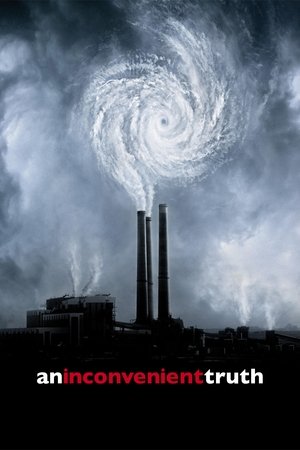
A documentary on Al Gore's campaign to make the issue of global warming a recognized problem worldwide.
This film tries to blow the whistle on what it calls the biggest swindle in modern history: 'Man Made Global Warming'. Watch this film and make up your own mind.
Thule, Greenland, also called Qaanaaqis, one of the northernmost towns in the world. As the climate warms and the ice caps begin to melt, the gentle balance of life for the people of this community is in jeopardy. On the other side of the globe, the melting ice caps are raising sea levels around the Polynesian island nation of Tuvalu, threatening to wipe the island right off the map. Though a world apart, these two communities are intricately connected as environmental balance begins to tip and traditional ways of life are threatened. 'ThuleTuvalu' is a stunning documentary addressing the high price of a hundred years of development and how two very different communities are now bound together in facing an uncertain future.
Mixing archival footage with interviews, this film celebrates one of Los Angeles's most influential painters and Chicano art activists from the 1970s.