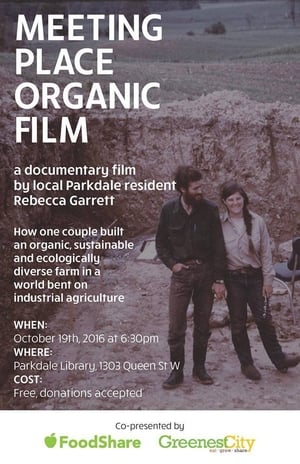
Local, organic, and sustainable are words we associate with food production today, but 40 years ago, when Fran and Tony McQuail started farming in Southwestern Ontario, they were barely spoken. Since 1973, the McQuails have been helping to build the organic farming community and support the next generation of organic farmers. This is a documentary about the McQuails that explores the very real ways their farm has contributed to the long term ecological viability of agriculture in Ontario. It is a call to action for all those who believe there is a better way to take care of our planet and feed the world.
Dans la peau des premiers paysans français
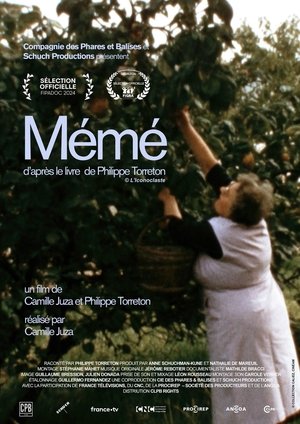
Adapted from famous French actor Philippe Torreton’s best-seller, GRANDMA is the portrait of the actor’s grandmother: a modest, unique but universal Norman peasant. Enriched with amateur films, nourished by major historical events, GRANDMA also tells the story of the end of a world, that of the countryside of our grandmothers, before the abyss of modernity.
Nepřítel v týlu
Nejlepší na světě
Pěstování semen
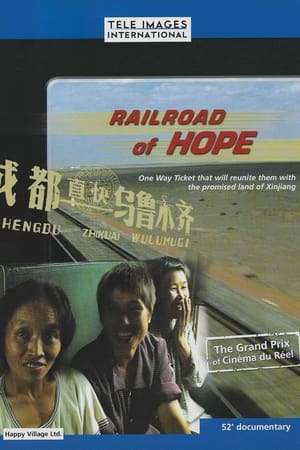
Railroad of Hope consists of interviews and footage collected over three days by Ning Ying of migrant agricultural workers traveling from Sichuan in China's interior, to the Xinjiang Autonomous Region, China's northwest frontier.[1] Through informal interviews aboard the cramped rail cars, Ning Ying explores the hopes and dreams of the workers, many of whom have never left their homes before.
A picture promoting collective farming and the use of tractors in agriculture. It introduces the work of the state tractor station in Chlumec - from the development of a uniform deployment plan to the departure of tractor drivers for specified tasks.
Plán nese ovoce
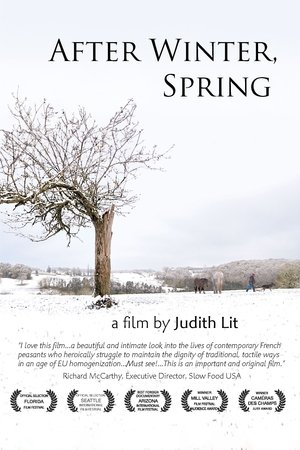
Family farmers in southwest France practice an ancestral way of life under threat in a world increasingly dominated by large-scale industrial agriculture.
Dobrá úroda
Vlna je na horách
Terres nourricières
In rural Scotland, a flock of sheep is sheared to survive the summer while a shepherd finds protection during the winter thanks to the wool. Are the clouds above them simply witnessing the process or do they actually take part in it? Shot on Super 8 with its characteristic unexpected light leaks, Passing Clouds explores a different possibility to the birth of clouds. Throughout the film, the sheep, the shepherd and his dogs guide us towards understanding the mystery of this mythical cycle based on what happens once a fleece is no longer attached to a sheep's body.
The second part of a trilogy on the subject of farming in which an attempt is made to look at the existence of farmers at the end of the 20th century.
Être paysan·ne
How did it come about that we no longer see living beings in farm animals, but objects? Every year, 70 billion farm animals are slaughtered for consumption around the world. 80 percent are kept on large farms. They live crammed together in overcrowded stables, are fattened and finally slaughtered without ever having been in nature. In less than two generations, intensive husbandry has become established worldwide. Researches in Poland, the USA, Germany and Vietnam gets to the bottom of the system and those responsible. The meat industry is subsidized by the state. Corporations, governments and consumers tacitly support a deregulated and dehumanized economic system that makes unlimited consumption of animal products the norm - and with it, animal cruelty. The documentary film describes the triumph of industrial agriculture, in which the animal has to endure unimaginable suffering, becomes a commodity, a raw material that is always available and can be slaughtered and processed at will.
A fascinating compilation of scenes showing diversity and disparity in 1940s China. The ancient Forbidden City and Great Wall are followed by Shanghai’s metropolitan skyline; primitive farming methods are juxtaposed with mechanised factories; children in rags are contrasted with models wearing the latest fashions; Nationalist commanders and Communist leaders vie for support.
Moi, agricultrice
Shot in Southern England over the course of six weeks by a crew of three American filmmakers, CircleSpeak offers a nuanced look at the passions and beliefs of the people immersed in the crop circle phenomenon during the season of 2001. This feature-length documentary presents interviews with serious “researchers”, self-proclaimed “hoaxers”, local farmers and villagers who are all, in one way or another, involved in this strange and compelling summer spectacle taking place year after year.