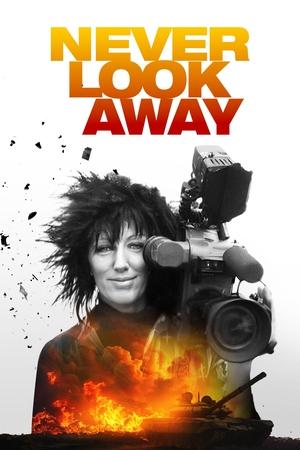
September 2016: Stacey Dooley embeds herself on the frontline with the extraordinary all-female Yazidi battalion, who are fuelled to take revenge against the so-called Islamic State. As the battle to take Mosul from ISIS advances in Northern Iraq, in this extraordinary film for BBC Three, Stacey finds these young women's lives have been transformed by a desire to avenge their loved ones who were murdered by Isis.
On September 16, 2022, in Teheran, the murder by police of the young Mahsa Amini, arrested for "wearing a headscarf contrary to the law", sparked off an unprecedented insurrection. Within hours, a spontaneous movement formed around the rallying cry: "Woman, life, freedom". For the first time, women, joined by men and students, took the initiative and removed their veils, the hated symbol of the Islamic Republic. The Iranian population, from all regions and social categories, rose up in protest. Social networks went wild. The diaspora (between 5–8 million Iranians) took up the cause, and the whole world discovered the scale of this mobilization: could the theocratic regime be overthrown this time?
This documentary by Léa Clermont-Dion and Guylaine Maroist plunges us into the vortex of online misogyny and documents hatred towards women. This bleak opus, reminiscent of a psychological thriller, follows four women across two continents: former President of the Italian parliament Laura Boldrini, former Democratic representative Kiah Morris, French actor and YouTuber Marion Séclin, and Donna Zuckerberg, a specialist in online violence against women and the sister of Facebook’s founder. This tour de force reveals the devastating effects such unapologetic hatred has on victims, and brings to light the singular objective of cyber-misogyny: to silence women who shine. Some targets of cyber-violence will crumble under the crystallizing force of the click. Others, proud warriors, will stand tall and refuse to be silenced.
In Pakistan, veils hide one of the country's most terrible secrets. Driven by revenge, jealousy or sexual non-co-operation some men subject their wives to horrific attacks with acid that is freely available in the street. Completely disfigured, the victims are often ostracized by their families and become prisoners in their own home. This chilling documentary is a terrifying insight into the shattered lives of these women.
In this evocative meditation, a disturbing link is made between the resource extraction industries’ exploitation of the land and violence inflicted on Indigenous women and girls. Or, as one young woman testifies, “Just as the land is being used, these women are being used.”
When Tehran hosts visiting foreign dignitaries, the local authorities clean up the city’s urban image through the controversial process of ‘urban beautification’. Those who are deemed unsavoury are rounded up – drug users, prostitutes and the homeless who sleep in cardboard boxes on sidewalks and who they would rather remain unseen. When these very important people leave, the men are released but the women are kept as wards of the state. An animated documentary made using hand-crafted cardboard miniatures and the voices of women to tell their story, one that has been five years in the making. A story that shows how the face of a city can change, but what is underneath often does not.
More than twenty sports journalists – working mainly on television (BeIN Sports, RMC Sport, France Télévisions, Canal+, TF1) but not only (L'Équipe, Radio France) – testify to the anger, despondency and helplessness they felt when they had to endure the “Yucky jokes”, the « culture de boy’s club » and degrading insults on social networks, while at the same time the presence of women in these programs and in the press has increased. Without forgetting the misogynistic comments, the heaps of small sentences on the physique or the competence, the sexual innuendos… until the moral or sexual harassment.
Rescue of the life story of feminist activist from the 1930s, Almerinda Farias Gama, participant in the struggle for the right to vote for women in the 1934 Constitution, and activist of the Brazilian Federation for Female Progress, together with Bertha Lutz.
Vivante(s)
This documentary offers a rare look at domestic abuse through the concept of coercive control. With exceptional access to hearings in Poitiers, Colmar, and Paris, Karine Dusfour captures the first French trials to address this form of psychological violence. The film shows how coercive control traps partners through constant monitoring, a hidden terror affecting hundreds of thousands of women and children in France.
An examination of the issue of missing and murdered Indigenous women, the film explores the reasons why Indigenous women are uniquely vulnerable to violence by juxtaposing the stories of some missing or murdered women with the personal testimonies of women who are doing activism on the issue and women who have personally survived incidents of violence.
A hybrid feature film that investigates contemporaneity through the body and its countless possibilities of expression and meanings. The film puts the body and the idea of the body in evidence, through metalanguage, articulation and confrontation of documentary, fictional and performative languages. The film follows the trajectory of the main character who uses her own body to formulate universes and investigate the meanings that are drawn in it. In a kind of subjective diary written on her skin, she records sensations and reflections, building relationships with thinkers, performances and archival materials, which lead her to other bodies and other stories.
Mariam, Asiya, and Anissa were 11, 7, and 5 years old when they were raped. The attackers were their paternal uncle, a neighborhood youth, and the nanny's son. They have no memory of the event. To protect them, their bodies developed traumatic amnesia. Years later, the memories returned, and they decided to file a complaint.
The women of the first Garífuna community in Honduras work hard for the future of their daughters. Surrounded by a dazzling landscape, they celebrate their identity and the importance of maternal figures.
In a mix of 2D animation and live action, through their voices and acting, two actresses recount the lives of imprisoned women that opposed the Russian Regime and their emotional stories of suffering and anguish.
Using the camera as a weapon to defend their ancestral land in Brazil, three women of the Daje Kapap Eypi audiovisual collective lovingly record their Munduruku traditions and their mythology of humans transforming into forest plants and animals.
The #MeToo movement has shined much-needed light on the pervasiveness of sexual harassment and abuse and created unprecedented demand for gender violence prevention models that actually work. THE BYSTANDER MOMENT tells the story of one of the most prominent and proven of these models - the innovative bystander approach developed by pioneering scholar and activist Jackson Katz and his colleagues at Northeastern University's Center for the Study of Sport in Society in the 1990s.
[ÒDIO]
Short documentary about the lives of three girls and the women who rescued them from retrogressive cultural practices in their own Maasai community at the AIC Girls School and Rescue Center in Kajiado, Kenya. It is an intimate portrait of these women as they sacrifice everything to make a stand against female genital mutilation and early forced marriage happening within their own culture.
Documentary on the work of the Garda Síochána to combat anti-social behaviour on the streets of the capital. We hear the stories of victims of verbal and physical abuse.