According to the official history of Afghanistan, ruthless destruction has always prevailed over art and creation; but there is another tale to be told, the forgotten account of a diverse and progressive country, seen through the lens of innovative filmmakers, a story that survives thanks to a few brave Afghans, a small but very passionate group that secretly fought to save a huge film archive that was constantly menaced by war and religious fanaticism.
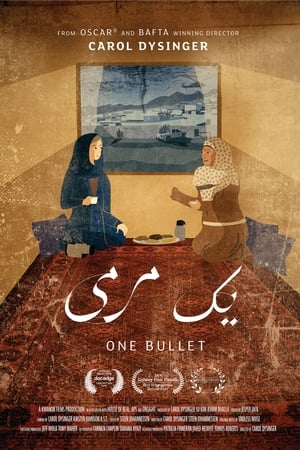
Recounted mostly through animation to protect his identity, Amin looks back over his past as a child refugee from Afghanistan as he grapples with a secret he’s kept hidden for 20 years.
An in-depth look at the torture practices of the United States in Afghanistan, Iraq and Guantanamo Bay, focusing on an innocent taxi driver in Afghanistan who was tortured and killed in 2002.
This documentary on the effect the talent competition "Afghan Star" has on the incredibly diverse inhabitants of Afghanistan affords a glimpse into a country rarely seen. Contestants risk their lives to appear on the television show that is a raging success with the public and also monitored closely by the government.
The four Afghan refugees who have applied for asylum in Austria strike up the song, “The caravan moves on” again and again. Encouraged by the journalist Lucy Ashton to record their lives on their smartphone cameras as a video diary, the friends film their precarious daily routine between visits to authorities, small jobs, and changing accommodations. Yet even when hope is lost, one certainty remains: the power of friendship.
This film - without commentary and simply accompanied by local music - relates the 1969 ascent of the north face of Kohe Shakhawr, a Himalayan peak located on the border with Afghanistan, by mountaineers Benoît Mathieu, Jacques Soubis, René Thomas, Jean-Paul Paris, Isabelle Agresti, Henri Agresti, Roger Dietz, Jean-Pierre Frésafond, Paul Gendre, Claude Jager and Félix Magnin. As is often the case in Henri Agresti's films, there is an encounter with other peoples, other cultures, documented at length in the introduction. Then, after the interminable approach, the ascent begins: distribution of camps, successive assaults on the mountain, walking on steep scree and snowy slopes, climbing on icy walls... The arrival at the summit, without the aid of oxygen devices, seems to take place in slow motion: exhaustion mixes with the joy of the victorious mountaineers who will celebrate their success on their return to base camp on August 24, 1969.
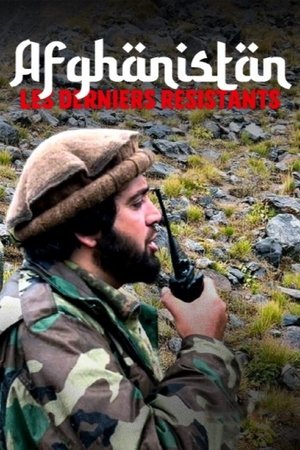
The friendship between Christophe de Ponfilly and Commander Massoud, a legendary figure of the Afghan resistance against the Soviet invader, goes back to the filmmaker's first film, "A Valley Against an Empire", made in 1981. Fifteen years later, weakened, isolated, betrayed by many of his own, the "Lion of Panshir" has not surrendered to his new and implacable enemies, the Taliban. While preparing his next offensive, he evokes his commitment and his fights, and bears witness to a history in which he has been one of the main actors for twenty years. At the same time, the director questions the role and power of the media, as well as his own approach as a filmmaker. Commander Massoud was killed in an attack in September 2001.
A journey through the parts of Afghanistan that don't normally feature in news coverage to meet some amazing people and see fascinating places. Lyse Doucet uses her many years experience in Afghanistan to show a different side of a country which has been at war for 30 years.
Documentary exploring the experience of Soviet soldiers during the Soviet war in Afghanistan.
Mina Bakhshi, Haniya Tavasoli and Rabia Hussain had a fair amount of latitude for women in Afghanistan, able to pursue their education, go to work, and explore hobbies and interests. Joining Ascend, a nonprofit organization teaching leadership and rock climbing to women, gave them the chance to test their personal and cultural limits and explore the mountains of their home country. But when the Taliban took over in August 2021, Ascend became their one chance to escape a regime that would restrict their freedoms and future.
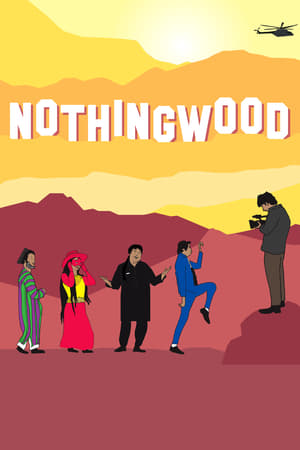
A wild and funny documentary showing how the progressive youth of Afghanistan are rejecting the use of armed force and see film production as an alternative means of bringing peace and social change to their war-torn and occupied country.
A group of Kuchi children are living in a minefield around Bagram airfield, Afghanistan. They dig out anti-personal mines in order to sell the explosives to child workers mining in a Lappis Lazulli mine. The trajectory of the blue precious stones goes towards Tajikistan and China, through an area controlled by child soldiers. When they are not waging their own mini-wars in the daily madness of life in Afghanistan, the children are fleeing away in their personal fantasies and dreams, while the American soldiers are planning their retreat...
An Iranian diplomat who miraculously survived Taliban's raid on the Iranian consulate in Mazar E Sharif (Afghanistan) narrates his 19 days of hide and escape to reach Iran's borders meanwhile on the other side, the Iranian troops are preparing for retaliation.
Immediately after the US pullout from Afghanistan, Taliban forces occupied the Hollywood Gate complex, which is claimed to be a former CIA base in Kabul.
A documentary that reveals the underbelly of the global aid and investment industry. It's a complex web of interests that span the earth from powerful nations and multinational corporations to tribal and village leaders. This documentary offers unique insights into a multi-billion dollar world by investigating how aid dollars are spent.
In the summer of 2001 the Taliban strategically captured 24 Shelter Now International Aid hostages that captured the attention of the world for more than three months. With representatives from the United States, Australia, Germany and Afghanistan, the Taliban set out to create an insurance policy against the pending attacks of September 11th. What transpired through their story was an overwhelming journey of faith, grace and endurance. Based on the true story as told by the captives, Kabul 24 captures the gantlet of their 105 days in captivity and the cruel treatment of the Muslim co-workers at the hands of the Taliban who accused them of converting to Christianity. Revisit their journey from the grueling interrogation to their sham "trial" before the Taliban Supreme Court, to the dangers endured during the bombing of Kabul and a crushing sense that the world had abandoned them.
Stand up comedian Graham Elwood's journey physically, and emotionally, as he travels through Afghanistan's war zones to entertain the embattled U.S. troops.
Marzia, My Friend is the story of an Afghan woman in her twenties, who like all young people dreams of love, freedom and an interesting job. She dreams of peace and independence, but because she lives in Afghanistan, her dreams are revolutionary. Ultimately Marzia’s story becomes a symbol of the wider struggle of Afghan women: it is about the right to make decisions about your own life. The film follows Marzia’s life from spring 2011 to the end of 2014, when international troops were due to leave Afghanistan.
Afghan documentary maker Najiba Noori offers not only a loving and intimate portrait of her mother Hawa, but also shows in detail how the arduous improvement of the position of women is undone by geopolitical violence. The film follows the fortunes of Noori’s family, who belong to the Hazaras, an ethnic group that has suffered greatly from discrimination and persecution.
In the year following the 9/11 terrorist attacks, young journalist Claude Baechtold finds himself in the war zone of Afghanistan. Not entirely voluntarily, the avowed anti-militarist is dragged by two fearless reporters on a round trip through the entire country.