A Short Film focusing on the urge to escape from the rabbit hole of depression
Childhood memories of the author's life using images of dance performances with music from a genre she discovered in her adolescence. Both marked her formative years in different ways. By replacing the original sound with the music she began listening to in her adolescence and which had a great influence on the construction of her personal identity, the author seeks to transform the memory of traumatic times of rivalry and body shaming between girls, which in some way affects her to this day.
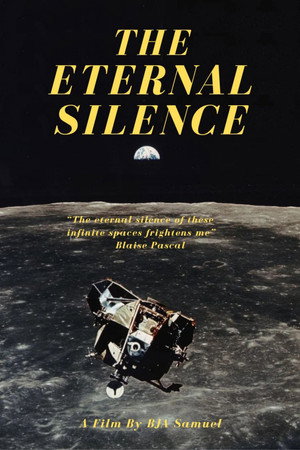
An philosophical film assembled from archival NASA footage exploring humanity’s search for meaning in the silence of space.
Shot in black and white, Invisible merges performance art and personal documentary to reflect personal and shared experiences during the military coup. Set in an abandoned building where many young revolutionists sought refuge, the seemingly invisible experiences of displacement, loss, suffering and anger are made visible through words and subtle movements.
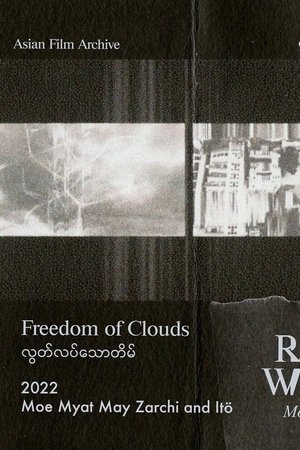
Informed by Taoist notions on the flow of nature, Freedom of Clouds is an experimental audiovisual poem composed of two visual languages which shift in tandem with the sonic landscape. The first involves abstract audio-reactive particles imitating the movement of dust, while the second is composed of Myanmar’s urban scenes which blur and morph as the piece moves away from form and definition.
Set against an operatic soundscape, period@period is a sensual interplay of sound and image that focuses on the anonymous protagonist’s monthly period and the rituals associated with it.
Begotten is the creation myth brought to life, the story of no less than the violent death of God and the (re)birth of nature on a barren earth.
1977 Czech experimental short by Petr Skala
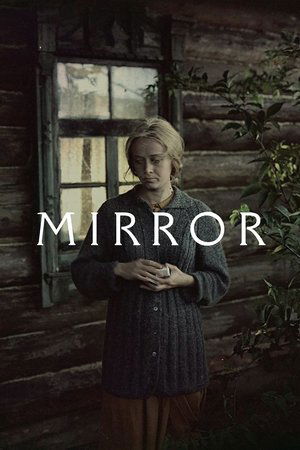
A dying man in his forties recalls his childhood, his mother, the war and personal moments that tell of and juxtapose pivotal moments in Soviet history with daily life.
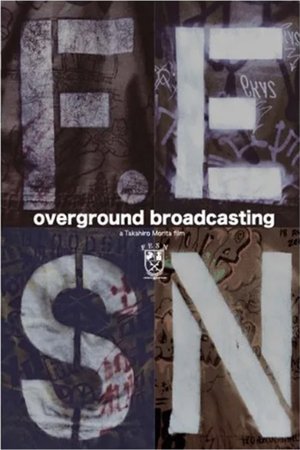
This film is a sequel to 'Underground Broadcasting' that was released in 06, and the theme is the World. Morita traveled and filmed the local scenes of the world for about 8 years since 2001.
when a double agent finds out he is going to be killed, he operates a series of murders.
X-hale
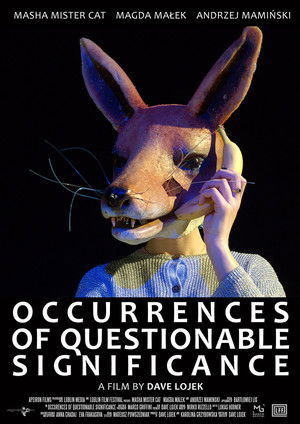
When forest animals invade our cities, the world is in disarray. Office vixen Fiona struggles with her banana phone addiction. Will she succumb to it? Temperamental bunny Barbara only gives her stag sugar daddy Nestor his special massage, after he dines her and plays the big spender. This obscure short film pinpoints postmodern tropes of consumerism, eroticism, and art with an homage to the theater stage and references to literature. This work uses a fantasy language and needs no subtitles.
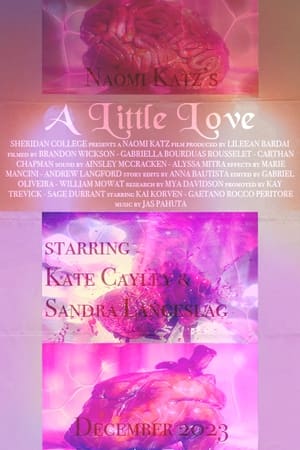
Through interspersed conversation and prose, this experimental documentary follows a poet and a neuroscientist as they explore the definition of love, what it means, and why it matters.
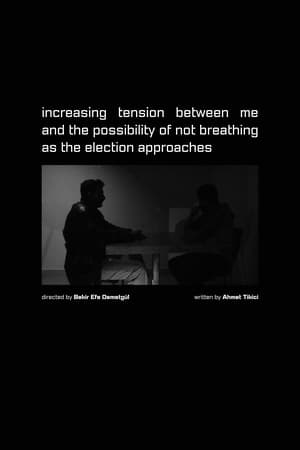
I'm invited into a room. Someone is talking to me. I keep getting sucked into another place.
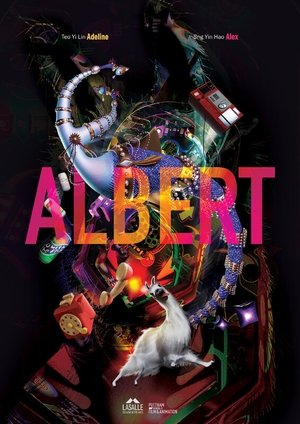
Capturing life through the lens of a dream, Albert explores the evocation of the subconscious mind through the vivid visualism and dynamism of images.
A Photographer enamored with a lone tree tries to take a picture. He falls down to a rabbit hole of perspectives as he take the Sisyphean task of taking a photograph of the tree
In his contribution to the On Art and Artists interview series, Nathaniel Dorsky (b.1943) begins by discussing his childhood love of the John Ford film Stagecoach and its influence upon his decision to make films while attending Antioch College. Describing the affinity he developed for work operating at the intersection of film materiality and personal language, Dorsky explains how he developed his philosophy of the “devotional film” and the “microcosmic viewer.” Dorsky likens his practice to Buddhist sculpture, referring to himself as a “Japanese poet continuing aspects of the ethos of the Marxist revolution.” In the interview, the artist describes his use of the screen as an “altarpiece for the image” and emphasizes his use of editing to create works which “harmoniously coalesce.” Interview conducted by Jeffrey Skoller in May 2000, edited in 2014.
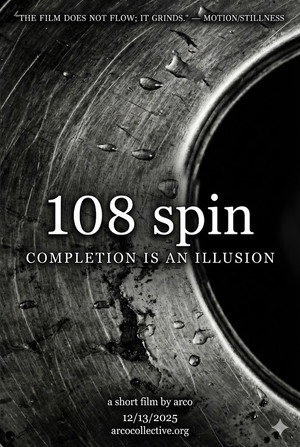
A kinetic prayer and structuralist intervention. Shot entirely on an iPhone 11 in a desolate Midwest laundromat, 108 spin documents the mechanics of impermanence. The film shifts from heavy turbulence to suspended repetition—not as a path to completion, but as a study of the loop itself. Featuring a layered soundscape, the work asks the viewer to stare into the rotation until the noise becomes a mantra.
An intimate reading experience of voice messages from my grandmother‘s sleepless moments. A portrait of personal memory as it is reimagined and lingers for an instant. My phone camera documents wandering figures by a lakeside at night. Across from the lake, the sight of the dissolving cityscape appears to be both infinitely close and extremely remote. This film attempts to reconstruct the forgotten and the marginalized parts of individual beings in the scope of time. The film explores what’s beyond the visual expression and flows out of the flat screen to co-inhabit the space of the audience’s reality. The viewers would find themselves roaming through the ontological existence of film, confronted with sound, light, darkness, time and rhythms, transitioning between positive space and negative space, and approaching the very ambiguity of memory.