King Charles VI declares that Knight Jean de Carrouges settle his dispute with his squire, Jacques Le Gris, by challenging him to a duel.
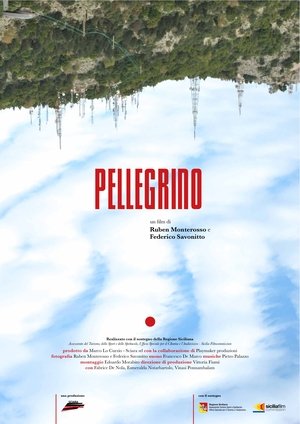
Palermo, Sicily, Italy, 2017. Twenty-five years after the murders of anti-mafia judges Giovanni Falcone, on May 23, 1992, and Paolo Borsellino, on July 19, 1992; and on the occasion of the tributes held in memory of both heroes, skeptical photographer Letizia Battaglia, chronicler of their titanic combat, criticizes the opportunism of shady characters who, like businessman Ciccio Mira, profit from the commemoration of both tragedies.
A contrast between two kinds of attitudes to gay liberation in Adelaide.
In Pompeii in the year 79, Lycias and Helen fall in love. Helen's guardian, the high priest of Isis, wants to separate them. To do so, he tries to make Lycias drink a love potion, but a young slave threatens to reveal everything. The high priest, unable to silence her, kills her and arranges to have Lycias accused...
A documentary that takes an in depth look at a government sanctioned art school in Cuba and its students. Interviews of various artists attending the school allow viewers a glimpse into their personal and professional lives.
A documentary about the United States Military Academy at West Point that conveys the vibrancy, sense of fraternity and fierce loyalty that mark the West Point experience.
A look at the Black revolution in 1970s cinema, from genre films to social realism, from the making of new superstars to the craft of rising auteurs.
An animated motion picture about a real-life Buddhist monk and renowned poet, Ryoukan who lived in 18th century Japan, during the Edo Period. Though born to a wealthy family in Izumozaki, Ryoukan chooses to abandon the easy life he would have inherited in order to understand the true meaning of life through the teachings of Buddhism. From his early adulthood, he undergoes a series of harsh training that demands a solitary and meager lifestyle. Throughout it all, he remains an extremely modest and humble person, a true humanitarian who accepts every individual for who they are while rejecting all worldly fame and wealth. Ryoukan found true peace in life through nature and spending time with children. His pure mind and affable personality have captivated many, and his legacy and the wisdom of his teachings live on today.
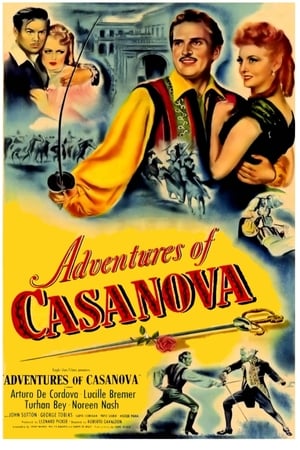
Casanova, a young patriot in 18th-century Sicily, upon learning that his father and sister have been murdered, returns to Palermo and engages in guerilla tactics against the forces of the Governor. Lady Bianca, the Governor's daughter, is in love with one of the patriots, Lorenzo, and desires to escape from the palace. Her lady-in-waiting, Zanetta, enlists the aid of Casanova and he rescues them and takes them to the partisan's camp. The rebels are victorious. Lady Bianca makes plans to marry Lorenzo, and Casanova and Zanetta have similar plans.
In the summer of 1900, the first film camera was purchased by Mozaffar ad-Din Shah Qajar for Iran, and immediately the first Iranian moving images were captured by this camera. These images, in an obsessive manner, have embodied the mesmerized gaze of people. In the span of 79 years since the purchase of this camera, Iran has undergone two revolutions and two coups, and throughout all these moments, the camera has been present as the recorder of people's mesmerized gazes. These mesmerized gazes are in a way as if they are the ones looking at us, not the other way around. It seems like these gazes are trying to convey something, but what? No one knows. Now, we gaze at those who have gazed at us from a distant time.
A poignant drama set in 1970s Australia about a newly-single father’s efforts to weather the turbulence of change – in his life and in the world around him – while a new immigrant endeavours to find her place in a foreign land.
Maria Callas, the world's greatest opera singer, lives the last days of her life in 1970s Paris, as she confronts her identity and life.
As curfew approaches, an everyday heroine risks it all in a smuggling operation from Nazi-occupied Poland.
The true story of the inseparable Von Erich brothers, who made history in the intensely competitive world of professional wrestling in the early 1980s. Through tragedy and triumph, under the shadow of their domineering father and coach, the brothers seek larger-than-life immortality on the biggest stage in sports.
A documentary covering the tragic sinking of the RMS Lusitania.
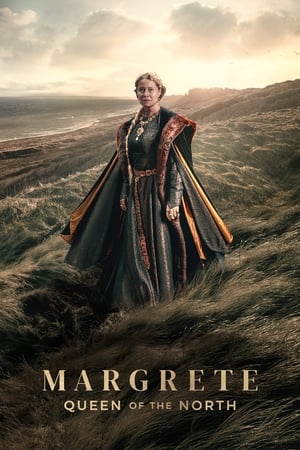
1402. Queen Margrete I has gathered the Nordic kingdoms in a union, ruled through her adopted son, Erik. But a conspiracy is in the making and Margrete finds herself in an impossible dilemma that could shatter her life's work: The Kalmar Union.
Italian adaptation of the historical novella of the same name by Nikolai Gogol.
The fascinating story of knighthood, told through the extraordinary life and times of William Marshal, whom many consider the world's greatest knight. From Europe's medieval castles to the holy city of Jerusalem, presenter Thomas Asbridge explores William's incredible life, revealing a rip-roaring adventure story in the spirit of King Arthur's Knights of the Round Table. In a career that spanned half a century, this English soldier and statesman served some of Christendom's greatest leaders, from Eleanor of Aquitaine to Richard the Lionheart. Marshal fought in battles across Europe, survived court intrigue and exile, put his seal to the Magna Carta and proved to be the best friend a king could have, remaining loyal to those he served through disaster and victory. Then at the age of 70, despite all the odds, he saved England from a French invasion.
Working men and women leave through the main gate of the Lumière factory in Lyon, France. Filmed on 22 March 1895, it is often referred to as the first real motion picture ever made, although Louis Le Prince's 1888 Roundhay Garden Scene pre-dated it by seven years. Three separate versions of this film exist, which differ from one another in numerous ways. The first version features a carriage drawn by one horse, while in the second version the carriage is drawn by two horses, and there is no carriage at all in the third version. The clothing style is also different between the three versions, demonstrating the different seasons in which each was filmed. This film was made in the 35 mm format with an aspect ratio of 1.33:1, and at a speed of 16 frames per second. At that rate, the 17 meters of film length provided a duration of 46 seconds, holding a total of 800 frames.
Polvere in Sala