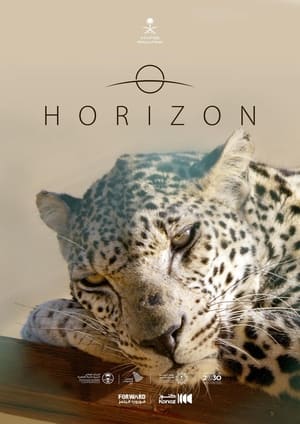
From the turtles of the Farasan Islands to the ibex that dot the Asir Mountains, this documentary captures Saudi Arabia's diverse wildlife and scenery.
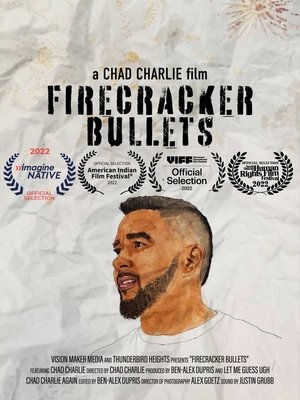
In this personal documentary, Indigenous comedian Chad Charlie goes to participate in the Standing Rock occupation and has a transformative experience. The film takes us on Charlie’s powerful passage of self-discovery, from the irreverent jokester to the culturally aware poet whose powerful spoken word piece encapsulates his realizations at the close of the film. In this blend of cinema, vlog, and social media with tons of humour, Charlie uses a real mix of formats (phone streaming, news footage, fly-on-the-wall documentary style) very effectively, and doesn’t try to work in a huge narrative or have a tidy conclusion. Like many who were there and endured violence by police against their peaceful marches, Charlie is still working through trauma and mental health issues he experienced from it. In his case, this journey has left him with a greater awareness of the ongoing injustices that Indigenous people must still contend with.
Longyearbyen, Svalbard, is the northernmost settlement in the world. About 3000 polar bears and 400 snow scooters outnumber its 2700 inhabitants. It is a place where you can actually see climate change and social diversity.
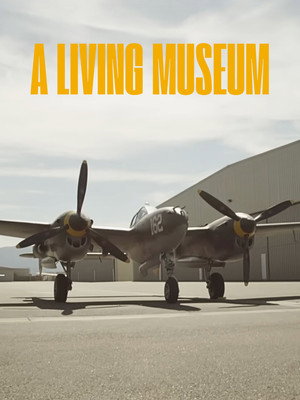
The Planes of Fame Air Museum has always been, and continues to be a "volunteer-driven" organization. Volunteers are the life-blood of most of their activities and the Museum is constantly on the lookout for new volunteers. This short documentary film looks closer at the role volunteers play at the Museum and how their contributions make a difference.
A son makes a surprising discovery on his elderly parents' answering machine after his father's passing.
Filmmaker Peter Hegedus embarks on the challenging journey to make Sorella's Story, an immersive 360° film set on the beaches of Latvia in December 1941, when thousands of Jewish Women and children perished at the hands of Nazi collaborators. Along the way Peter teams up with Jewish-Australian 90-year-old Ethel Davies whose family was also killed in the same massacre.
Soon enough humankind will ascend to space. Who can join that mission? Who has to stay behind? In some places it has already started. Men and machine taking flight, leaving for the unknown future. For the endless void. That’s where they meet. The People using machines to clean machines and the people sheltered inside those machines. Destined to collide, never to engage. Welcome to Europes biggest car wash.
Visiting the home of Marija Janeković in Petrinja on 24th April 2013.
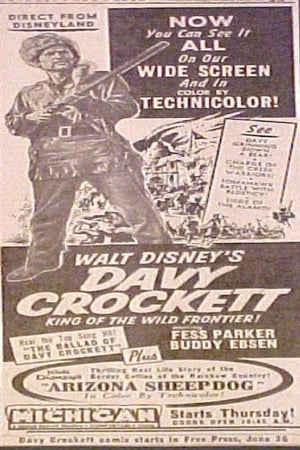
Arizona Sheepdog is a documentary film that was originally released to theaters by Buena Vista Distribution on May 25, 1955 as a double-bill with Davy Crockett, King of the Wild Frontier.
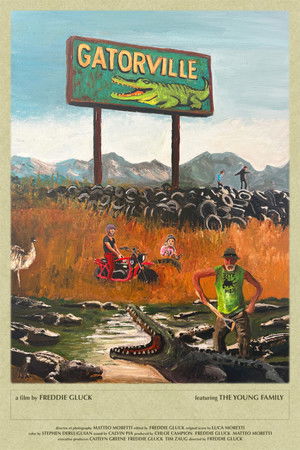
Gatorville
Documentary gathers together portraits of craftspeople in Stolipinovo - a large, racially segregated urban district in Bulgaria. The film shows a cross-section of a community: young, old, modern, traditional - all with something in common, the desire to live and work in a dignified way, through hand-worked crafts. People in the film are both fragile and powerful in their raw honesty against the backdrop of increasingly precarious conditions of labor. "Inherited Crafts" carries a self-reflective style, being made by Osman Yuseinov, himself a craftsman, a master jeweler, working and living in Stolipinovo.
A depiction of a girl’s uneasy state of mind as it wavers between life and death.
An Editor recounts the diaries of a failed film production as they attempt to construct a new narrative from the remaining footage.
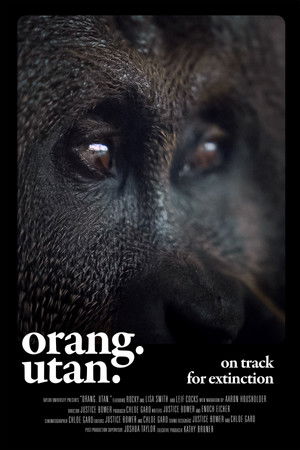
Through the story of Rocky, a rescued orangutan whose intelligence and empathy rival our own, Orang. Utan. explores the radical question of whether great apes should be considered persons. The film ultimately reframes that question into an urgent plea to save orangutans from disappearing forever.
Documentary on the making of the film featuring interviews with distributor Julian Schlossberg and actor Joyce Van Patten.
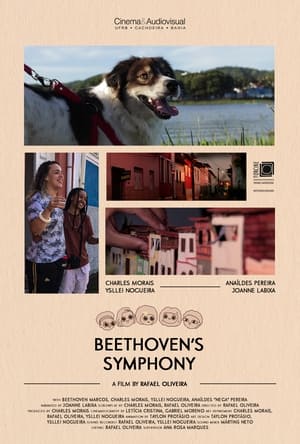
After constantly moving, two students finally find the opportunity to start a family by adopting a stray dog.
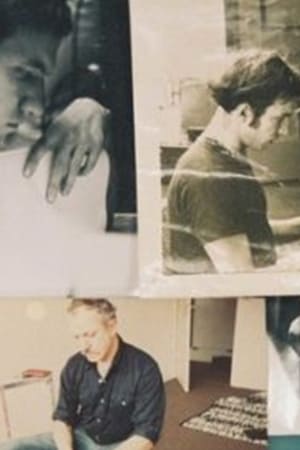
Electro-Pythagorus is an intimate and subjective portrait of the late Martin Bartlett, the Canadian electronic music pioneer who studied with Pauline Oliveros, David Tudor, John Cage, and Pandit Pran Nath. His contribution as an interdisciplinary composer, educator, and founding member of Western Front, though undoubtedly extensive, is in danger of being erased from cultural memory since his death from AIDS in 1993. Navigating an array of archival materials including letters, correspondences, notebooks, personal photos, and a huge body of unreleased music and field recordings held at the archives of Simon Fraser University, Electro-Pythagoras is a journey through the evolution of Bartlett’s musical time and space, softly guided by Luke Fowler’s insightful camera and montage—creating an experimental portrait that defies one-dimensionality.
At the end of summer 2021 boys spend their last lazy days together in a small town by the Volga River. Their childish routine of roaming streets, riding scooters and vaping will change so soon — only Slava stays in Yuryevets with his foster family, most of his friends are leaving to study or work in a week. Vlad dreams about a military career. He wants “to save lives” just like characters in his favorite computer games and to earn enough money for his poor parents who work in a local supermarket. At his birthday party the teens argue and try to dissuade Vlad but he has already made his choice. Hope there will be no war in the future — they say.
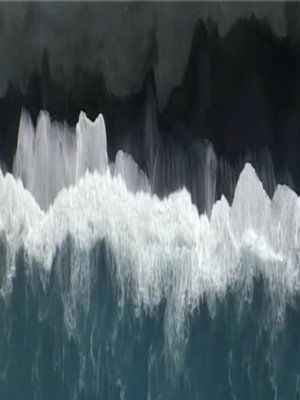
The passing time is displayed as a series of still frames, or a rapid sequence of moments, ever flowing like the waves that break on the shore, like a repeated chant with no beginning, middle or end.
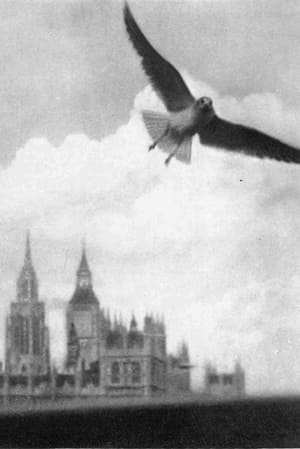
The film takes us to the North of England to follow the migration of the black-headed gull down to London. There, the narrator asks viewers to "listen to their gossip", before demonstrating the bird’s flight in slow motion. We see a polecat feasting on gull eggs, and then a man collecting the eggs for human consumption, with the film telling us that they are considered a “delicacy” in London. Indeed, according to the British Trust for Ornithology, around 300,000 gull’s eggs were sold every year in Leadenhall Market in London during the 1930s, when London Visitors was made.