Estado de Excepção is a documentary about CITAC (Coimbra Theater Initiation Circle), a university theater group, revealing history since it was constituted in 1956 until the aftermath of the 1974 revolution. It is the history of the theater group university and, through it, the history of theater in Portugal, revealing two remarkable decades of the History of Portugal. Through the Academy of Coimbra, the documentary reproduces student life, the position of women in society, and the change in mentalities of being and being in the world. It reproduces the existing censorship and the fight against the dictatorship, the resistance to an exhausted regime, as well as the emerging contradictions of the democratic revolution. CITAC has a heritage of 50 years of experience in Coimbra. It carries with it the possibility of the theatrical and civic formation of thinking bodies, constituting a proper ball of a possible model, generation by generation, between studies, theater, and social drama.
Memórias de Izidora
This film explores the Biligiri Rangaswamy Temple (BRT) Tiger Reserve in Karnataka, home to the Soliga adivasis, highlighting their deep connection with the forest and the impact of exclusionary conservation policies since 1974. Documenting five decades of Soliga resistance and the ecological effects of restricted practices, it challenges forced eviction models and advocates for recognizing Soliga rights. This work is the result of a two-decade collaboration between researchers and filmmakers.
Giraffe-like construction cranes are avid eaters. They forage around in the woods and fields for their feeds: the collective longing for development and prosperity. As they crane their necks longer, they make the fantasy of progress more alluring. And that is what Chung-Ming Wang steps forward to fight. Left his stable life behind, he devoted himself into local environmentalism in his hometown Tamsui(Danshui), tried to keep it distant from developmentalism that Taipei had been suffered for long. Few years later, he decided to change his way of political participation. This documentary film depicts his third attempt to run in the City Council Election in 2014, including the difficulties and conflicts he encounters and the diverse imaginations toward progress. The film also tries to brings up an important question: do we need more edifices in our city, or we need to find a way to edify ourselves?
Today, against a backdrop of sharply increasing demand, growth in the world population and the growing impact of an unsettled climate, water has become one of the most precious natural resources of our planet.
This documentary provides an in-depth examination of protest activities surrounding the Democratic National Convention in Chicago. It documents draft resistance, the growth of G.I. coffee houses, the development of alternative media and the early days of Newsreel itself. It is particularly useful in its exploration of the problems the movement faced in using mainstream media to broadcast its message. It is also a document of the philosophies, tactics, and problems of the student movement in the crucial year of 1968. It is most useful when background information can also be provided.
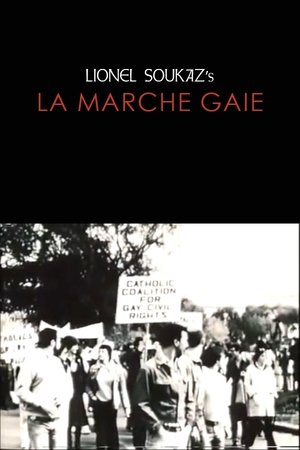
Over the course of a year, film follows Vancouver Pride Society president Ken Coolen to various international Pride events, including Poland, Hungary, Russia, Sri Lanka and others where there is great opposition to pride parades. In North America, Pride is complicated by commercialization and a sense that the festivals are turning away from their political roots toward tourism, party promotion and entertainment. Christie documents the ways larger, more mainstream Pride events have supported the global Pride movement and how human rights components are being added to more established events. In the New York sequence, leaders organize an alternative Pride parade, the Drag March, set up to protest the corporatization of New York Pride. A parade in São Paulo, the world's largest Pride festival, itself includes a completely empty float, meant to symbolize all those lost to HIV and to anti-gay violence.
Lee Yunjeong, my mother, who was devoted to church, stopped attending after the Sewol ferry disaster. Instead, she started going to work at the office of a human rights group for migrants in Ilsan. As her daughter and a film director, I began filming her surprising and unfamiliar transition.
Cambada
Indigenous chief Juma Xipaia fights to protect tribal lands despite assassination attempts. Her struggle intensifies after learning she's pregnant, while her husband, Special Forces ranger Hugo Loss, stands by her side.
In light of jailed activist Umar Khalid withdrawing his petition from the Supreme Court amid repeated adjournments, journalist Ravish Kumar captures the contours of Delhi in a video letter addressed to him. What comes out is a critical piece reflecting on the cowardice and the deafening silence of Delhi on the whole matter.
South Africa, July 11th, 1963. Several members of the African National Congress, an organization declared illegal, are arrested in Rivonia, a country house near Johannesburg. The detainees, along with Nelson Mandela, imprisoned since 1962, are charged with serious crimes for their radical activism against the apartheid regime.
STATE OF FEAR takes place in Peru, yet serves as a cautionary tale for a world engaged in a "global war on terror." It dramatizes the human and societal costs a democracy faces when it embarks on a "war" against terror, a "war" potentially without end, all too easily exploited by unscrupulous leaders seeking personal political gain.
A Hazara film director follows a gravestone maker, a water girl and a man who buried his limb, as their daily lives unfold in a graveyard.
The Film revisits the event, when 1800 Bengali Muslims were killed in Nellie and surrounding villages in Assam. It is an exploration of how the survivors remember the violence, over three decades later, and how the spaces that witnessed this violence continue to mark people’s relationship to history and memory.
A reflection on the concept of invisibility, narrated by women who clean public spaces in Mexico City. Combining documentary, fiction and still photography, the film is an intimate mosaic of testimonies and experiences that highlight the precariousness of work in the cleaning industry, in a world where subcontracting rules.
The arrival of the mining company Osisko creates a lot of excitement in Malartic, a small community of 3600 souls in Quebec, Canada. Faced with the implacable Mining Act, which prioritizes the right to exploit subsoil resources rather than the right to property, many families and seniors need to write off certain elements of their heritage plus a part of their lifestyle to make room for the largest open-pit gold mine in Canada. The characters in Others' Gold experience in their own way this major change that will affect their lives and urban environment.
Albert Einstein - Comment je vois le Monde
Le mouvement
Andy is a loyalist of the Ka'bah Youth Movement (GPK) which is one of the 'civil militias' under the United Development Party (PPP) based in Yogyakarta. In 2019, Andy decided to support Prabowo Subianto to become the President of Indonesia. During the unstable political tension in Indonesia, Andy was required to maintain the condition in Yogyakarta.