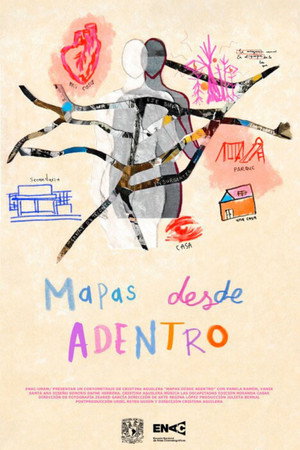
During a drawing workshop, a girl traces on the wall of her room the memory of her sexual abuse; a young woman recalls the night in which the deception of those she once called friends turned into harassment. By sharing the stories with other girls and women, they realise that these are not isolated events but fragments of a shared wound.
Polio is a viral infectious disease that can cause paralysis. The disease is almost eradicated today, but there are still people among us who suffer lifelong consequences after a polio epidemic.
The film poem about pesticides reflects on the return to the natural food chain, in which insect pest serve as food for the higher order. The harmonic cycle of life and death, the temple that is the wildflower field resounding with the inebriating sound of crickets chirping and wheat spikes rustling in the wind, is invaded by the human, the ultimate consumer with no natural predator.
Director Tereza Tara fell ill at the age of twenty-five. She captured her ten-year-long journey to recovery, which took her deep into the past and to the edge of the abyss, in the form of a personal and poetic video diary. With her weakened kidneys, she visited doctors, psychosomatic experts, and an alternative healer who urged her to surrender herself into the hands of God. Gradually, she began to see the condition of her dual organs as a reflection of her unbalanced relationship with her mother, her partner, and her own body. She finally understood that if she wanted to find a cure for her diseased kidneys and start living a better life, she needed to understand herself better first.
The film portrait of a face made of shit thematizes the individual's ideas about his own freedom. Antonín dolák, philosopher and YouTuber, feels free when he gets rid of all social conventions. He loses his face, takes off his mask and talks openly about the socially taboo topics that line his life. However, a conflict arises between him and the staff, when Dolak loses control over the depiction of himself.
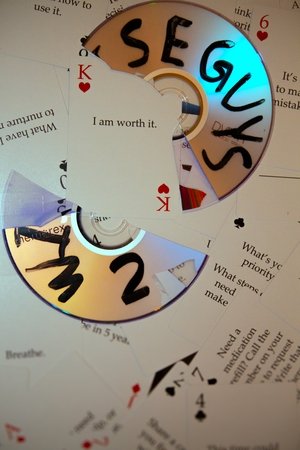
After the release of his debut film, documentarian Richard Chase journeys down a rabbit hole to uncover the lost second episode of his initial film's subject: Wise Guys.
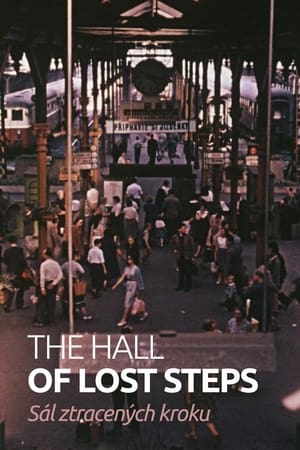
26 April 1986: Chernobyl’s reactor number 4 explodes and provokes the biggest nuclear disaster in history. Pripyat, where the plant is located, becomes a ghost city. Guided by former inhabitants, Eliška Cílková takes us in her quest of the town’s memory. Gracefully shot, the film reminds us the power of music where less expected.
In 1971, Sharon witnessed a glowing cross in her Bronx apartment, sparking belief and skepticism. "The Sight Unseen" explores her memories and Melvin Tapley’s writings, investigating whether the phenomenon was divine or a hoax.
"Yellow. It's a colour we all know and love. We see it every day - In the gardens, in the trees, even in the sky. But very few know the hidden dangers behind such a bright colour."
Thesis film about three friends (director, violinist and a sex-shop owner) who are addicted to computer games.
Florin Iepan's unsettling film documents the famous case of a student who, due to the lack of light in the corridors of the Cișmigiu Hotel - a student dormitory at the time- and a malfunction of the elevator, fell into the elevator shaft and died. The camera, which flies over the exterior and interiors of the Cișmigiu Hotel with extraordinary mobility, suggesting an extracorporeal perspective, captures the desolate poverty the residents of the dormitory used to live in during the first years after the Revolution.
The story of the Semănătoarea factory in Bucharest, Romania.
Children at UK schools with individual special educational needs (SEN) make up 14.9% of the student population (a figure that is predicted to rise). So it raises questions to why the education system isn’t adapting to meet these needs? And, how does it feel to be one of these kids stuck in an institution which isn’t accommodating you? Teach Me as a documentary sets out to understand these experiences in the present moment from children who are at the age when school makes up a large portion of their daily experiences. The documentary interviews four children all ages 12 and 13 and each of them with individual and overlapping SEN. Using childlike paper cut-outs and school supplies to form a stylish stop motion that transports you into the world/mind of Dan, Lydia, Martha and Annie.
Set during the 30th LGBTTTIQ+ Pride March in Tijuana, this short documentary presents a queer archivist whose career as a journalist has documented key moments in the region’s queer history, alongside an activist who uses drag performance and outspoken advocacy to challenge the stigma surrounding people living with HIV. Through archival imagery and alternative spaces like Enclave Caracol, located in the city’s historic downtown, the film reflects on memory, erasure, and the urgent need to tell our own stories.
Documentary film about apprentice youth about to enter real life.
Odjezd branců
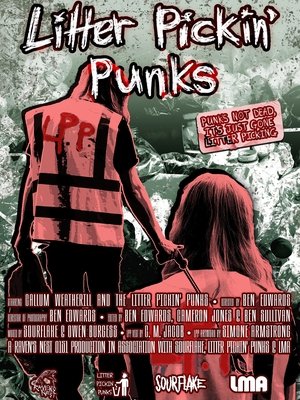
Feeling disgruntled, a group of punks start a litter picking group to counter the amount of litter their community faces.
This documentary about the people of Blšany is seen through the eyes of Mr. Tříska, the local one-room school principal and an amateur filmmaker, creator of a movie about “the smallest community in the world with a first league soccer team.” He guides us through an eerie village marked by Communism, a hamlet awakened from its lethargy once every two weeks by a first league soccer match. “Meetings were also held in the country,” claims Tříska, “but executions and trials took place in town. A person had to be careful in the country if he didn’t want to be denounced, but when he went to the doctor he knew he wouldn’t pay for prescriptions; and the bus cost a crown fifty, not ten like today.”
An interplay of horizontal and vertical lines, as well as other types of lines, found in in the public space, evokes a lyrical narrative combining them into a visual continuity in one image. Among found objects, events, and spaces, new relationships and continuations are created.
In a series of juxtaposed images and sounds, Jaromil Jireš comments on the tragic premature death of thousands as well as their posterity due to the atomic bomb.