An experimental documentary engaging with decades of DIY activist media, two death bed/legacy videos, and the wisdom of many living AIDS workers, as we all sit together in one (changing) format, video—VHS, hi-8, digital, Zoom—to address these and other questions: How do neighborhoods, sweaters and scarves, videotapes and queer bars hold ghosts? How do we let them go?
Today, analogue video is attractive primarily thanks to the distinctive aesthetic quality of its pixelated image and raster errors. But for Czech artists who first explored the possibilities offered by video art in the late 1980s, this medium represented a path towards freedom. Through a portrait of her grandfather Radek Pilař, one of the pioneers of Czech video art, the director explores her own legacy of imperative creative fascination. Her film’s main story, i.e., the process of reconstructing the 1989 exhibition Video Day, contrasts this enchantment with life in the final days of the totalitarian regime, which different sharply with the adventures of those who decided to emigrate – whom the filmmaker also visits in order to discover forgotten works, get to know their creators, and re-establish broken ties.
Seven strangers are interviewed to talk about the relationship they have with their mother.
"Surrounded by dozens of soldiers like me, I was led by bus to a remote camp in the desert, a place I knew nothing about. As a military photographer, I collected fragments of moments in my photos, serving as solid evidence for me." Shivtown is the story of an ordinary soldier who, in an intimate and courageous act, revisits memories from his military service through the still images he captured with an analog camera.
In the streets of Marseille, René Allio encounters, once again, the spaces of his childhood, and remembers his family history.
One of Paik’s most overtly political and poignant statements, Guadalcanal Requiem is a performance/documentary collage that confronts history, time, cultural memory and mythology on the site of one of World War II’s most devastating battles.
Mel Schwartz escaped the Great Depression on a bicycle adventure he'd remember for the rest of his life... until Mel lost his memory to Alzheimer's. Now over seventy-five years later, his grandchildren set out to recreate his life-changing journey and find those memories before they slip away. Cycle of Memory explores the importance of intergenerational connection, healing painful pasts, and leaving a meaningful time capsule for the future.
IDFA and Canadian filmmaker Peter Wintonick had a close relationship for decades. He was a hard worker and often far from home, visiting festivals around the world. In 2013, he died after a short illness. His daughter Mira was left behind with a whole lot of questions, and a box full of videotapes that Wintonick shot for his Utopia project. She resolved to investigate what sort of film he envisaged, and to complete it for him.
A Bunch of Questions with No Answers (2025) is a 23-hour film by artists Alex Reynolds and Robert M. Ochshorn. Compiled entirely from questions posed by journalists at U.S. State Department press briefings between October 3, 2023, and the end of the Biden administration, the work removes the officials’ answers, leaving only the unresolved demands for clarity and accountability.
L'Épopée des gueules noires
The lastest neuroscience discoveries show surprising results: false memories, distortion, modification, déjà vus. Our memory is affected in many ways, and deceives us every day. The very fact of recalling souvenirs modifies them. The everyday consequences are manyfold. To what extent can we rely on our souvenirs? How much credit can we give them during trials? Even more shocking, scientists have proved to be able to manipulate our memory: creating artificial souvenirs, deleting, emphasizing or restoring them on demand.
The short film is based on events surrounding a 1977 mining accident in the Donbas region that ultimately led to the mine’s closure. In the film, locals, artists, and curators traverse the surface, paralleling one of the underground routes of the Novator mine. The procession ends at the monument to the dead miners, which is located just above the site of the underground accident that led to the death of the workers. Participants walk across the postindustrial landscape of Donbas, over the plowed fields, by bushes and courtyards, connecting the ground and the underground spaces through the choreography of their bodies.
These 131 video monitors stacked in a grid present simultaneous, continuous footage of the German artist during the last year of his life. In this filmed diary-project that Dieter Roth executed while convalescing in Reykjavik and Basel, we see him not only working in his studio but also while he sleeps, bathes, and uses the bathroom. It is nearly impossible to pay attention to only one video without becoming distracted by an unexpected sound or movement coming from one of the many other screens. Each monitor broadcasts a different point in the artist's daily routine, while the gridlike arrangement of monitors reinforces a sense of order and chronology.
Return
In the town of Xoco, the spirit of an old villager awakens in search of its lost home. Along its journey, the ghost discovers that the town still celebrates its most important festivities, but also learns that the construction of a new commercial complex called Mítikah will threaten the existence of both the traditions and the town itself.
A glimpse into a visual representation of memory; A Christmas-time series of meals, coffees, and movies, with friends, lovers, and housemates. Faced with the compounding of faces and places, each moment begins to collide with one another: voices are muddled, and faces are broken. How is memory created? How are they separated from one another?
An unnamed passer-by is forced to trace a circular route inside an abandoned tram station, facing loss and time. The broken walls act as a channel, transmitting fragmentary, blurred and analogical memories.
The film explores the turbulent lives of homeless persons in Cologne, Germany. Through their personal belongings the homeless share with the viewer their memories and emotions, and provide insight into the secrets of survival on the street.
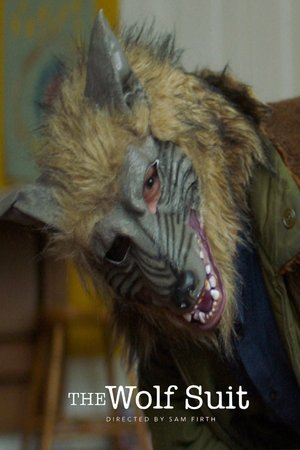
How much can you trust your childhood memories? Director Sam Firth investigates, sweeping her parents into the experiment and on a journey into the past.
The true story of Doug Bruce who woke up on Coney Island with total amnesia. This documentary follows him as he rediscovers himself and the world around him.