"Surrounded by dozens of soldiers like me, I was led by bus to a remote camp in the desert, a place I knew nothing about. As a military photographer, I collected fragments of moments in my photos, serving as solid evidence for me." Shivtown is the story of an ordinary soldier who, in an intimate and courageous act, revisits memories from his military service through the still images he captured with an analog camera.
Mel Schwartz escaped the Great Depression on a bicycle adventure he'd remember for the rest of his life... until Mel lost his memory to Alzheimer's. Now over seventy-five years later, his grandchildren set out to recreate his life-changing journey and find those memories before they slip away. Cycle of Memory explores the importance of intergenerational connection, healing painful pasts, and leaving a meaningful time capsule for the future.
L'Épopée des gueules noires
In the streets of Marseille, René Allio encounters, once again, the spaces of his childhood, and remembers his family history.
The lastest neuroscience discoveries show surprising results: false memories, distortion, modification, déjà vus. Our memory is affected in many ways, and deceives us every day. The very fact of recalling souvenirs modifies them. The everyday consequences are manyfold. To what extent can we rely on our souvenirs? How much credit can we give them during trials? Even more shocking, scientists have proved to be able to manipulate our memory: creating artificial souvenirs, deleting, emphasizing or restoring them on demand.
Seven strangers are interviewed to talk about the relationship they have with their mother.
Based on the best-selling book, Remember the Time: Protecting Michael Jackson in His Final Days, and told through the eyes of Jackson's trusted bodyguards, Bill Whitfield and Javon Beard. The movie will reveal firsthand the devotion Michael Jackson had to his children, and the hidden drama that took place during the last two years of his life.
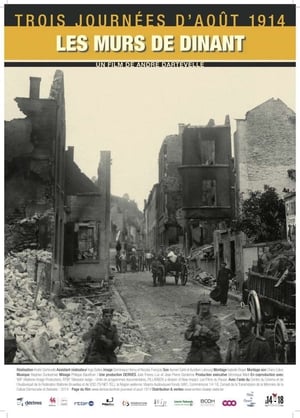
Documentary on the atrocities the germans committed at the start of WW I in Dinant.
Las Preguntas que Perdimos
This film is a poetic composition of recorded history and non-recorded memory. Filmmaker Rea Tajiri’s family was among the 120,000 Japanese and Japanese Americans who were imprisoned in internment camps after the attack on Pearl Harbor. And like so many who were in the camps, Tajiri’s family wrapped their memories of that experience in a shroud of silence and forgetting. This film raises questions about collective history – questions that prompt Tajiri to daringly re-imagine and re-create what has been stolen and what has been lost.
The Moscow Case is a 52 minute documentary with never-before-seen footage of Michael Jackson in Moscow during the "Dangerous" tour. This film tells the behind the scenes story of Jackson's ill fated concert in September 1993. It includes unique archival footage showing Michael close up and personal while meeting fans and playing with orphan children.
A family history archive as told by matriarch Azalu Mekonnen and her granddaughter Samira Hooks.
Can you remember what you were doing on 15th March 2003? Or what the weather was like on 30th May 2007? Twenty-year-old British student Aurelien can. He is one of a handful of people in the world baffling scientists with their ability to recall an incredible amount of their lives. This remarkable documentary explores the recently discovered phenomenon known as superior autobiographical memory.
On March 29, 1947, peasants armed with sticks and knives attacked the French garrisons in Madagascar. The revolt would end twenty months later with the death of the last insurgents, shot down by the expeditionary force. France, accustomed to memory lapses, knew nothing of this insurrection and its trail of torture and abuses. In Madagascar, well after independence, the events of 1947 were never discussed. For more than a generation, parents refused to speak of them to their children. It wasn't until the 1980s that the silence was broken.
Ergui as Mãos aos Céus e Não Havia Mais Luz
o som que falta
An intimate look into the life of icon Quincy Jones. A unique force in music and popular culture for 70 years, Jones has transcended racial and cultural boundaries; his story is inextricably woven into the fabric of America. Jones came to prominence in the 1950s as a jazz arranger and conductor before working on pop music and film scores. He moved easily between musical genres, producing major pop hits of the early 1960s and serving as an arranger and conductor for several collaborations in the same time period.
The short film is based on events surrounding a 1977 mining accident in the Donbas region that ultimately led to the mine’s closure. In the film, locals, artists, and curators traverse the surface, paralleling one of the underground routes of the Novator mine. The procession ends at the monument to the dead miners, which is located just above the site of the underground accident that led to the death of the workers. Participants walk across the postindustrial landscape of Donbas, over the plowed fields, by bushes and courtyards, connecting the ground and the underground spaces through the choreography of their bodies.
Aqueducts transport water. Images transmit the memory. Images of aqueducts are useless.
The living and the dead speak of the life of a three-year-old boy.