In Slovakia, they often and gladly honored those soldiers who refused to serve the fascist regime and stood against it. Lieutenant Kukorelli also rejected the tempting career of a pilot, instead helping the resistance fighters and later participating in the Slovak National Uprising.
The dramatic story captures the hard and dangerous life of the partisan group "Čapajev" led by Ľudovít Kukorelli during World War II. It retrospectively presents the course of the Slovak National Uprising in eastern Slovakia.
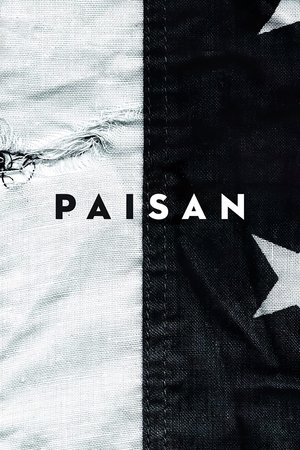
In WWII, a squad of U.S. African-American soldiers are sent on a rescue mission behind enemy lines to locate their lost commanding officer and a downed fighter pilot.
The passionate Merchant-Ivory drama tells the story of Francoise Gilot, the only lover of Pablo Picasso who was strong enough to withstand his ferocious cruelty and move on with her life.
A vaporwave psychological thriller about landmen traveling to North Dakota to obtain rights to undeveloped land, owned by a man who hates the oil industry.
Amal raises her brother Nasr after the death of her father and husband in an Israeli raid on Suez in 1956. Nasr grows up and joins the Egyptian intelligence and travels to Greece to obtain an important microfilm, but he disappears after being kidnapped. However, he manages to hide the microfilm. Amal decides to travel to Greece to search for her brother. Both the Egyptian intelligence and the Israeli intelligence (Mossad) monitor Amal to obtain the microfilm, and the events of the film continue.
A British Company in the WWI trenches await an inevitable German attack in this 1988 adaptation of R.C. Sherriff's play.
It was one of the great crimes of the Second World War: from 1941 to 1944, a total of 872 days, the siege and starvation of Leningrad by the German Wehrmacht on Hitler's orders lasted. Over a million people fell victim to the blockade, most of them dying of hunger. Countless of these starving people wrote diaries with the last of their strength, and cameramen filmed in the paralyzed city. Evidence from the hell of the siege, many of the film recordings, but above all the written memories on which this documentary on the occasion of the 80th anniversary of the liberation is based, remained under lock and key after the war. The voices of those who had suffered through this terrible time should not be heard by anyone, because they did not fit the pathos of the Leningrad heroic song that was officially sung. Most of the recordings come from women. The writers feared neither the enemy nor the Communist Party or Stalin, who often proved incompetent in providing for the population.
Hniezdo na ôsmom poschodí
A Game Without Love
The adventures of three friends running an air charter business in Africa during WW II and their race to prevent a Nazi Baron from escaping to Germany with vital radar equipment.
Two brothers seek to repair their strained relationship while visiting the gravesite of their parents.
During World War II, a Cockney woman marries a Canadian soldier and adjusts to life in Alberta.
A kind of modern dress "Donzoko" "The Lower Depths", about slum life in Osaka, where a greedy widow (Mimasu) takes advantage of her poor roomers, including her own son, who makes a meagre living stripping taxicabs.
The greatest secret of the Second World War has remained a mystery for the last 80 years: a Jewish Communist, Sandor Rado, led a spy network that proved essential to the victory of Allied Forces. Rado received details of strictly confidential strategies from the highest echelons of the Nazi State through Rudolf Roessler, a dedicated anti-Nazi he'd only known as code name "Lucy." Aided by key German industry leaders, Roessler transmitted timely information from high-ranking collaborators within the German army headquarters. Despite their achievement, Rado, Roessler and their sources remained unacknowledged heroes until today. Thanks to the recent declassification of secret archives, we are now able to step behind the scenes of this incredible story.
The film tells about the childhood of Yuri Gagarin, about that time of life, which, in his own words, played an important role in shaping his character: war, the occupation of their villages by the Germans, famine, the theft of the elder brother and sister to Germany, the expulsion of the Nazis from Smolensk, moving family in the city of Gzhatsk.
A Hungarian youth comes of age at Buchenwald during World War II. György Köves is 14, the son of a merchant who's sent to a forced labor camp. After his father's departure, György gets a job at a brickyard; his bus is stopped and its Jewish occupants sent to camps. There, György find camaraderie, suffering, cruelty, illness, and death. He hears advice on preserving one's dignity and self-esteem. He discovers hatred. If he does survive and returns to Budapest, what will he find? What is natural; what is it to be a Jew? Sepia, black and white, and color alternate to shade the mood.
A videotaped production of the Frederick Knott play in which three criminals play an elaborate scam on a blind woman who is in possession of a doll that, unbeknownst to her, is very incriminating. The play had already been famously adapted for the screen in 1967 starring Audrey Hepburn. This 1982 version was frequently shown on HBO in the 1980s.
Búrka
A TV film based on Karol Horák's novel. The story takes place in southern Gemer in the spring of 1945. It covers several days in the first months after the war. Matyla, a simple village woman, sets out into the world to get sugar for her daughter and her unborn child. A film about a mother, which is a testimony about people and an era from the perspective of the current middle generation.