Turkey's history has been shaped by two major political figures: Mustafa Kemal (1881-1934), known as Atatürk, the Father of the Turks, founder of the modern state, and the current president Recep Tayyıp Erdoğan, who apparently wants Turkey to regain the political and military pre-eminence it had as an empire under the Ottoman dynasty.
Story of 3 former political prisoners in the era of the anti-democratic Soeharto regime. They were a musician named MARKUS TALAM in a Buru Island concentration camp prison for 10 years, a radioman named SUKIMAN and an ordinary farmer named SUYATMAN both were detained in Blitar, East Java prison for 1 year, all without a judicial process. A military operation codenamed “TRISULA” was carried out in the South Blitar area, East Java, to purge the remnants of the members of Indonesian Communist Party (PKI). They weren’t communists, just ordinary farmers who had been caught in that military operation, some of their family members were killed and tortured. Trauma haunts them throughout their lives and justice never served them. Through whispered stories, they hope that in their twilight they will get justice to restore political and citizen rights that were seized by the regime. This film is a story of a long and winding road with a big question, will justice come to those who are oppressed?
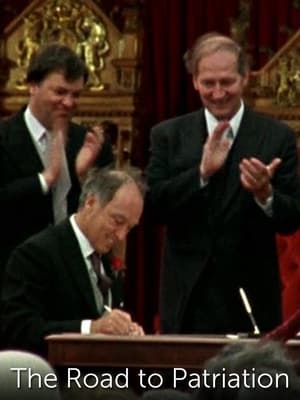
This feature documentary retraces the century of haggling by successive federal and provincial governments to agree on a formula to bring home the Canadian Constitution from England. This film concentrates on the politicking and lobbying that finally led to its patriation in 1982. Five prime ministers had failed before Prime Minister Pierre Elliott Trudeau took up the challenge in the early 1970s. Principal players in this documentary are federal Minister of Justice Jean Chrétien, Prime Minister Trudeau, 10 provincial premiers and a host of journalists, politicians, lawyers, and diplomats on both sides of the Atlantic.
A documentary on the rise and fall of Project Cybersyn, an attempt at a computer-managed centralized economy undertaken in Chile during the presidency of Salvador Allende.
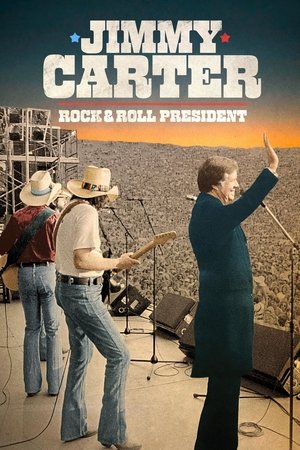
This rockumentary-style presidential portrait shows how Jimmy Carter reinvigorated a post-Watergate America—with the music of the counterculture, including the Allman Brothers, Bob Dylan, Willie Nelson, and Jimmy Buffett.
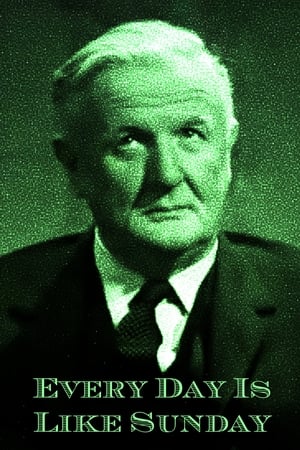
As we wait to see whether Rupert Murdoch will fall from power and lose control of News International, Every Day is Like Sunday tells the forgotten story of the dramatic downfall of Cecil King—the newspaper mogul who used to dominate British media in the 1960s, before Rupert Murdoch arrived.
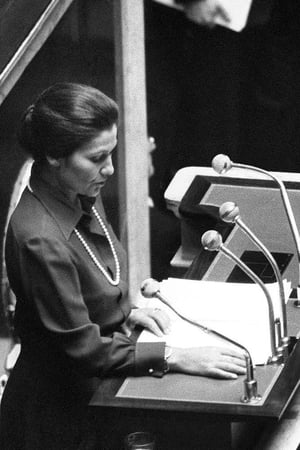
The debate in France about the abortion laws in 1974.
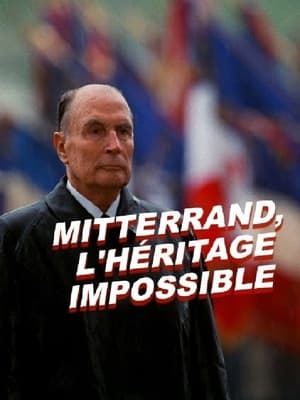
“I am the last of the great Presidents. After me, there will be no more ..." said François Mitterrand at the end of his life. What legacy left the first socialist president of the Fifth Republic? Documentary filmmaker Bertrand Delais and a host of French intellectuals such as Laurent Fabius, Hubert Védrine, Julien Dray, Dominique Bertinotti, Jean-Pierre Chevènement and Bruno Roger-Petit take a look into what that means.
The Conspiracy - Assasination in Beirut
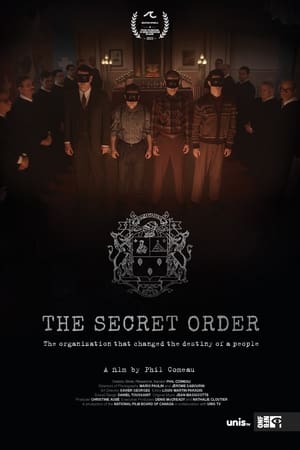
Phil Comeau shines a spotlight on the Ordre de Jacques-Cartier, a powerful secret society that operated from 1926 to 1965, infiltrating every sector of Canadian society and forging the fate of French-language communities. Through never-before-heard testimony from former members of the Order, along with historically accurate dramatic reconstructions, this film paints a gripping portrait of the social and political struggles of Canadian francophone-minority communities.
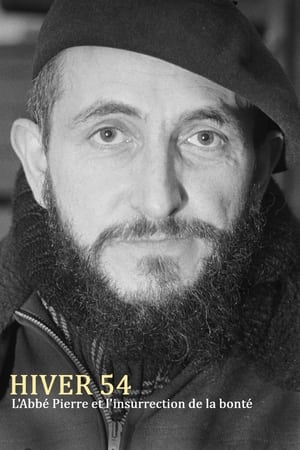
Hiver 54 : L'Abbé Pierre et l'insurrection de la bonté
44 Horas
Una festa per la città - Venezia 1973
Between February 4 and 11, 1945, three months before World War II ended in Europe, US President Roosevelt, British Prime Minister Churchill, and Soviet leader Stalin met in the Ukrainian city of Yalta to discuss how the continent should be politically reorganized after the imminent defeat of Nazi Germany.
A group of Israelis and Palestinians come together in Oslo for unsanctioned peace talks during the 1990s in order to bring peace to the Middle East.
Take a trip back to Utah in the ’70s, when a new emerging culture clashed with tradition and institution. More than just disco and drugs, the 1970s were a time of great upheaval, socially, politically, and economically. Hear it from the mouths of the people who lived it, and see how the 1970s helped define Utah as a place for growth and a groovy new outlook on life.
An examination of the United States’ involvement in war, focusing on its impact on political decisions, national identity, and the lives of its people.
On March 29, 1947, peasants armed with sticks and knives attacked the French garrisons in Madagascar. The revolt would end twenty months later with the death of the last insurgents, shot down by the expeditionary force. France, accustomed to memory lapses, knew nothing of this insurrection and its trail of torture and abuses. In Madagascar, well after independence, the events of 1947 were never discussed. For more than a generation, parents refused to speak of them to their children. It wasn't until the 1980s that the silence was broken.
In this visual essay, Charles Chaplin biographer Jeffrey Vance, author of "Chaplin: Genius of the Cinema", draws upon a wealth of photography as well as a wide range of interviews (Paulette Goddard, Sydney Chaplin, Chuck Jones, Leni Riefenstahl, Mel Brooks, Joan Collins et al.) to examine the production history of "The Great Dictator", the film's importance as a satire, and legacy.
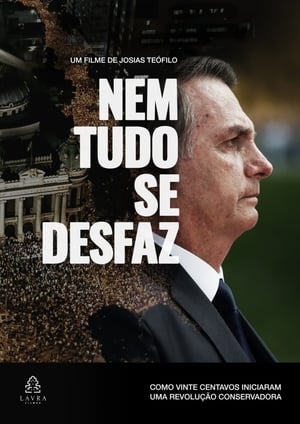
How twenty cents began a conservative revolution.