A police drama that chronicles the efforts of a police officer to uncover an unexplained murder case that blends the lives of two women and a theater actor, the victim of an "artistic" shot, part of a play.
La Cage aux Folles "The Cage of Madwomen") is a 1973 French farce by Jean Poiret centring on confusion that ensues when Laurent, the son of a Saint Tropez night club owner and his gay lover, brings his fiancée's ultraconservative parents for dinner.
Tío Vania
Each is dependent on the other. He breaks into the passport office to get a passport. He is surprised and ends up back in prison, where he is trained in military drill. After his release, he once again lodges with relatives, his sister and brother-in-law. Wearing a second-hand captain's uniform, he first takes over a guard unit and uses it to occupy Köpenick town hall, where all the employees of the town council submit to the supposed captain. The mayor is promoted to Berlin and Voigt presents himself to the authorities a few days later. At first, everyone present laughs at the prank, but then Voigt is made aware of the legal consequences. He is sent back to prison, but shortly afterwards he is pardoned by the Emperor.
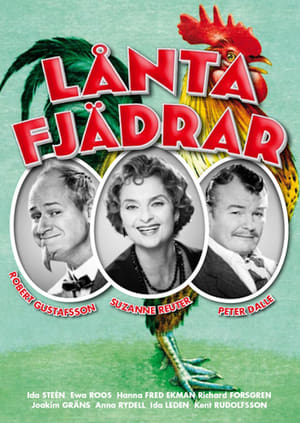
1927. The place is Kalmar and the Grossman family home. A hungover manufacturer Julius Grossman and his wife Solveig are waiting at home for their daughter Betty to arrive by train from the capital. To their great surprise, she arrives in a car with her suitor Greger in tow. What's more, she seems to be full of contemporary trends and modern ideas about marriage, among other things. Her father Julius would rather see her marry his business partner Hilding and thus retain control of the company. Hilding is a dull, somewhat dreary, and slightly overage bachelor who suddenly becomes every woman's dream prince when a rumor begins to circulate that he had a relationship with the famous movie star Rita Ray in his youth.
Dva buchy a tri šuchy
Albert Einstein
Theater play "George Dandin" played by the "Comédie française" in 1999.
L'entreprise
Fleur de cactus
45 year old Don Valter is a traditional priest who still wears an old fashioned black tunic out of nostalgia. One day young Claudio and his exuberant troupe of actors appear, proposing to perform an avant-garde show based on the Gospel's miracle of the rebirth of Lazarus*. The powerless priest is overwhelmed by this young upstart, who stirs within him emotions that will, whether he likes it or not, pull him into the modern era.
Subversive hero or vile predator? Don Juan has appeared throughout history in many guises. Macha Makeïeff highlights the psychological and societal aspects of the character: desire, domination, and human darkness, which she contrasts with liberating and destructive laughter.
Le Manège
Paul, a 45-year-old businessman, is about to radically change his life ... He organized everything down to the smallest detail the lucrative sale of his website to a Russian company, his divorce and his departure on a paradise island with his mistress .... The sole confidant of his stratagem and his plans for the next day: his friend Michel, a naive and blundering computer genius who follows Paul like a beacon ... But on the eve of this fateful day , everything changes: a short circuit causes the oven to explode just when Paul is in the kitchen. He came out unscathed, but against all odds, completely lost his memory ... Recorded at Théâtre des Bouffes-Parisiens
When a beautiful first-grade teacher arrives at a prep school, she soon attracts the attention of an ambitious teenager named Max, who quickly falls in love with her. Max turns to the father of two of his schoolmates for advice on how to woo the teacher. However, the situation soon gets complicated when Max's new friend becomes involved with her, setting the two pals against one another in a war for her attention.
Tiago Guedes returns to Dennis Kelly, the British playwright with whom he has already enjoyed success in his dizzying descent into the depths of human complexity. After Órfãos, the director and stage director now tackles The Ritual Slaughter of Gorge Mastromas, a 2013 text about the banality of evil in the person of the man that Kelly's play scrutinizes in retrospect: "Existence is not what you thought it was until now. It is not honest, it is not kind, it is not fair. Most of the world has no idea about this; they believe in God, or Daddy, or Marx, or the invisible hand of the market, or honesty, or kindness. They go through life with their eyes closed, getting beaten up and screwed over. He's like that. You're like that. But a tiny part of us, let's call ourselves the resistance, knows the true nature of life. The world is ours for the taking. We are powerful and rich and have everything, because we will do whatever it takes.
In occupied Paris, an actress wed to a Jewish theater owner must keep him hidden from the Nazis while doing both of their jobs.
Two young swordsmen, Akado Suzunosuke and Tatsumaki Rainoshin, arrive at the city of Edo in their quest to test and improve their skills. Soon they become involved in a conflict against a mysterious group of demonic criminals led by the king of hell, Taira no Masakado — a strugle to which both were destined since the moment they were born.
Les Bidochon - Telle est la réalité
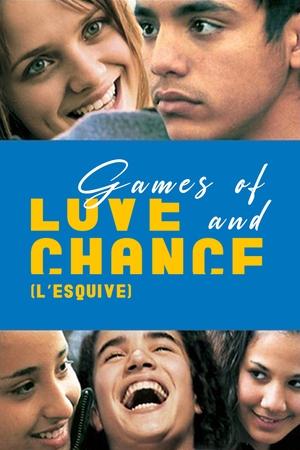
A group of teenagers living in a housing project in the outskirts of Paris rehearse a scene from Marivaux's play of the same name. Krimo is determined not to take part, but after developing feelings for Lydia, he quickly assumes the main role and love interest in the play.