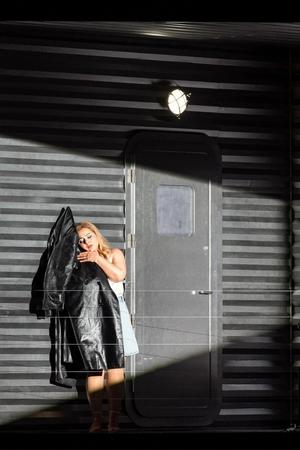
Diana Damrau’s reputation as the world’s leading coloratura soprano has been built on her extraordinary technical virtuosity, her sensitive musicianship and her acute psychological insight. In this DVD of Katie Mitchell’s sometimes radical production of Lucia di Lammermoor from London’s Royal Opera House, she is, as the Financial Times wrote, “brilliantly convincing”. The British award winning director Katie Mitchell – took a revisionist approach to the drama, updating the action to the mid-19th century and applying a feminist slant as she added new and unexpected elements. The Financial Times wrote: “Mitchell shows us on stage personal traumas that a self-respecting woman in the early 19th century was meant to keep to herself. It is a messy, bloody list — nocturnal sex trysts, a knife murder, a miscarriage, a suicide in the bath … In all this Damrau is brilliantly convincing. Her rebellious Lucia is a woman of modern attitudes stuck in a still feudal Victorian world.”
This set has Edita Gruberova singing in top form, all her scooping cast aside, which one finds in abundance in her Lucia under Richard Bonynge. Here, however, she makes ravishing use of those bits of tone that only she can produce: those instances of coloratura and dramatic legato with little asides and small florishes of style that suggest her intelligent approach and her high degree of musical involvement in this role. She does this in her I Puritani and her Anna Bolena, less so in Roberto Deveraux and Maria Stuarda(both sets). Listen to Addio del passato and the Sempre Libra...ravishing, yes, but there are again those nuances learned from Callas that she makes her own. A very singualr perform,ance, and extremely moving with its detail and cry for pity throughout..from the start even. Neil Schicoff is excellent, not an unworthy Alfredo at all! His is a great lyric tenor voice that should have been in the top line.
The hero Siegfried reforges his father’s shattered sword, embarking on a quest for the greatest prize of all – the love of the valkyrie Brünnhilde, who lies trapped in a ring of fire. Siegfried is the third opera in Richard Wagner’s four-opera cycle Der Ring des Nibelungen. Wagner broke off composition at the end of Act II of Siegfried to write Tristan und Isolde and Die Meistersinger von Nürnberg, returning to Siegfried seven years later. Longborough Festival Opera, known as the British Bayreuth, calls on renowned Wagnerian Anthony Negus to conduct and Amy Lane to stage this new production of Siegfried in the bucolic English Cotswolds.
Vita Dolce
André Rieu returns with an all-new blockbuster show from New York's iconic landmark theater Radio City Music Hall for his first-ever U.S. taped special. Features performances by the world-renowned Harlem Gospel Choir.
Set in a Siberian prison camp, Janacek's final opera centers on the experiences of recent arrival Alexandre Petrovitch Goriantchikov (Olaf Bar), a nobleman who finds relief from the harsh conditions in the friendship of the illiterate Alyeya (Eric Stoklossa). Recorded at the Grand Theatre de Provence, this stage production is directed by the well-respected Patrice Chereau and features famed conductor Pierre Boulez. Filmed at the Aix-en-Provence Festival on 20 July 2007.
Documents the interpretations of Gustav Mahler's compositions by conductors Bernard Haitink, Riccardo Chailly, Riccardo Muti, Claudio Abbado, and Simon Rattle, who detail the special relationship they have with Mahler's work.
German director Claus Guth´s Mozart-Da Ponte trilogy was concluded at the 2009 Salzburg Festival with Cosí fan tutte featuring a starry cast including Miah Persson, Bo Skovhus, Isabel Leonard as well as Patricia Petibon. Adam Fischer conducts the Vienna Philharmonics. Those familiar with Claus Guth´s previous work such as the psychoanalytic Nozze di Figaro, the Don Giovanni set amongst junkies in a wood in the middle of the night, the Ariadne who commits suicide on Naxos, Richard Wagners Tristan in love with Mathilde Wesendonck and a Walküre set in a miniature dolls house will know better than to expect a bubbly Mozartian comedy.
This fascinating musical exploration of Scotland retraces the journey taken in 1829 by acclaimed composer Felix Mendelssohn, which inspired some of his most famous works, such as the "Scottish" Symphony and "The Hebrides" overture. Travel from the majestic sites of the historic Edinburgh Castle, Scott Monument and Palace of Holyrood to the picturesque island of Staffa, home of the legendary Fingal's Cave.
La traviata in Paris is a film-opera of Giuseppe Verdi's La traviata filmed live on television and worldwide, directed by Giuseppe Patroni Griffi, conceived and produced by Andrea Andermann in 2000. A Traviata that takes place live, with a television reporter who, amid the events of the day that took place in France on June 3, 2000, connects live to the scene of the action but at the time exactly a century earlier, in the Paris of June 3, 1900 (the setting of the opera is thus postdated from the original, which was conceived for the 1850s).
Natalie Dessay and Rolando Villazón bring Jules Massenet's classic opera to the stage in this dazzling production. In 18th-century France, Manon (Dessay) faces life as a nun, despite catching the eye of many men. When she meets the handsome but penniless des Grieux (Villazón), she falls deeply in love. The pair elopes, but their future together is threatened by outside forces.
Věčný Faust
"Die tote Stadt" is a psychologically layered drama with Hitchcock-like features, about Paul who, after the loss of his beloved Marie, slowly but surely becomes entangled in a dream world of obsessions and delusions. This impressive opera is a passionate as well as a surrealistic plea for mourning. "He who cannot live with death has no life."
Pianomania takes the audience on a humorous journey through the secret world of sound and accompanies Stefan Knüpfer in his extraordinary work with the greatest pianists in the world. To select the instrument that corresponds to the vision of the virtuoso, according it to his desire and accompany him until he goes on stage, Stefan Knüpfer has developed nerves of steel, a boundless passion and above ability to translate words into sounds.
Since her thrilling, 1995 debut at the San Francisco Opera, soprano Anna Netrebko has starred with opera companies and orchestras worldwide. This video gathers some of her best moments in excerpts from Giacomo Puccini's "La Boheme"; Charles Francois Gounod's "Faust"; Wolfgang Amadeus Mozart's "Don Giovanni"; Vincenzo Bellini's "La Sonnambula"; and Antonin Dvorak's "Rusalka." Also included are interviews with Netrebko and her colleagues.
Narrated by cinema legend Franco Zeffirelli, this intimate made-for-television documentary traces the life and times of the mercurial Maria Callas, one of the most renowned and respected operatic divas of the mid-20th century. Rare authentic footage, candid interviews and breathtaking performances help paint a portrait of an artist remembered as much for her quick and explosive temper as she is for her immeasurable talent.
Musician Adam Lemp and his four equally musical daughters, Emma, Ann, Kay, and Thea, live happily together. Each daughter has an upstanding young man for whom she cares. However, the arrival of a cynical, slovenly young composer named Mickey Borden turns the household upside-down, and romantic and tragic complications ensue.
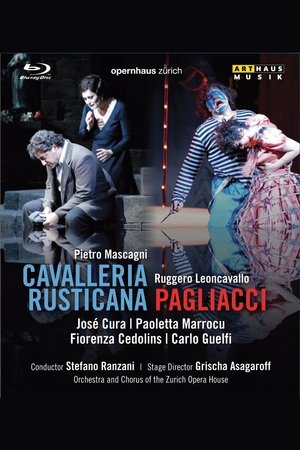
Opera's most popular double bill, fondly known as Cav and Pag, conducted by Herbert von Karajan. In 'Cavalleria rusticana', Turiddu returns from military service to find that his fiancée Lola had married the carter Alfio while he was away. In revenge, Turiddu seduces Santuzza, a young woman in the village. In 'Pagliacci', the drama unfolds as Canio (Pagliaccio) struggles with rage, despair, and desire on learning of his wife Nedda's intended infidelity with Silvio. Canio's tragic conflict increasingly mirrors the comedy of Pagliaccio.
As renowned for its harmonious overture as for its romantic storybook characters, this three-act masterwork features some of the composer’s most groundbreaking and unforgettable music, as well as a theme the young Wagner would revisit again and again later in his career—the redemptive and transcendent power of a woman’s love. The enchanting plot harks back to medieval history: Wolfram is a lovesick troubadour who desires the virtuous Elisabeth. She, however, has eyes for another: the rebellious knight Tannhäuser, who in turn cannot get over an overwhelming sensual experience in the realm of the goddess Venus, and is banished for singing her praises at court. Only saintly Elisabeth’s death can atone for his misdeeds.
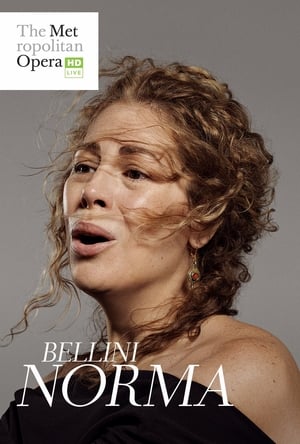
This new production of Norma, directed by Grammy Award-nominated opera, theatre and film director Kevin Newbury (winner of the Irish Times Theatre Award 2010) and starring Sondra Radvanovsky as a "powerful, elegant" Norma (New York Times) and Gregory Kunde as Pollione, is "something very special. The word 'historic' is used perhaps a little too often but tonight there really is no other adjective to describe the sensational performances offered to us by Sondra Radvanovsky and Gregory Kunde."