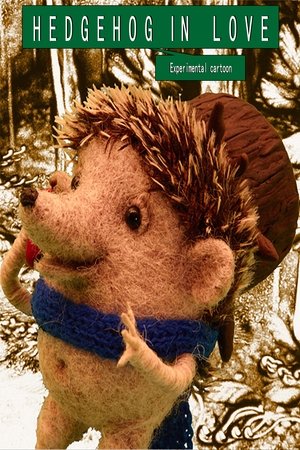
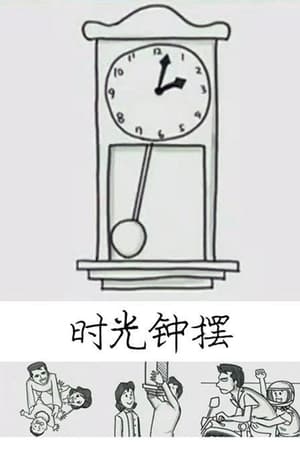
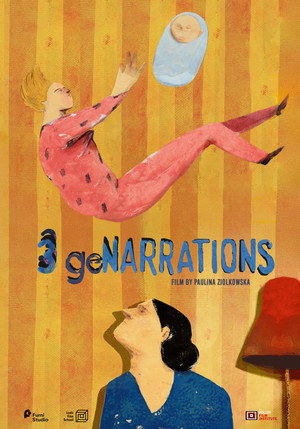
Koji Yamamura's allegory the immutability of time, love and devotion, and the unbreakable nature of the parent-child bond, into interlacing story.
Step back into the imaginative and frankly terrifying world of Becky & Joe with Don’t Hug Me I’m Scared. In this episode: Some things change over Time.
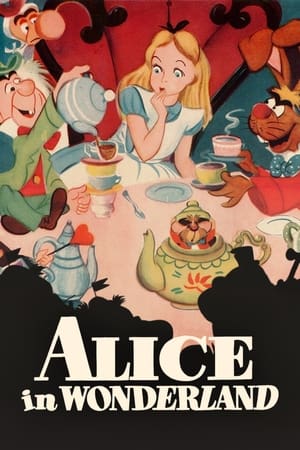
On a golden afternoon, wildly curious young Alice tumbles into the burrow and enters the merry, madcap world of Wonderland full of whimsical escapades.
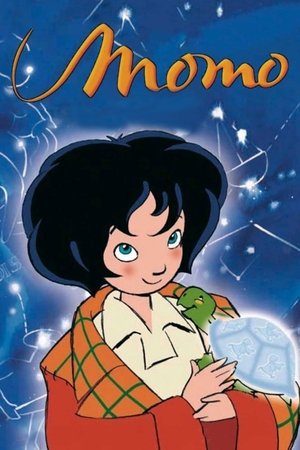
Momo is a young orphan girl who lives in the ruins of an old Roman amphitheater and becomes friends with everybody in the neighborhood. But when a powerful international corporation starts stealing everybody’s time, nobody has any time left for her, let alone their friends or families. Momo, together with Master Hora, the custodian of time, are the only ones who can go up against the time thieves before all is lost forever.
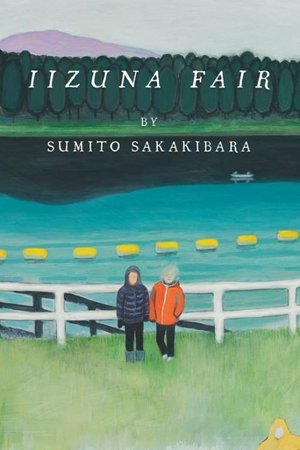
A story of a man with a very dense eyes who sees all the surrounding reality only after seven years. The consequence of the eye defect translates into the mental immaturity of the man, lack of understanding of the present and belated reflections on long-gone facts. The man is never mature enough for his age and constantly lingers on the past.
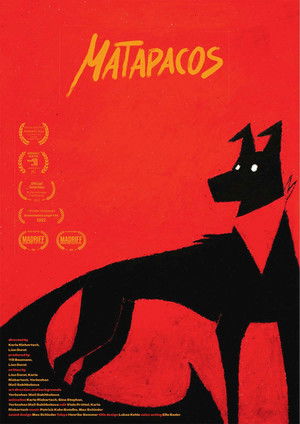
Based on the Chilean "Riot Dog" Negro Matapacos. A stray dog meets young protester María. Together they radicalize until María has to go to jail. When she gets out her courage has left. But then finds out that the dog got famous during the protests.
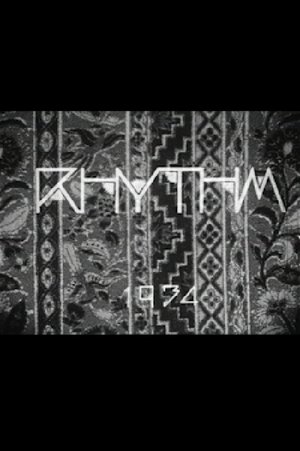
Colourful lines and geometric figures move and change to the notes of a disjointed Wilhelmus [Dutch national anthem]. As the film progresses the disjointed music finds its way back to the original and flowing performance of the national anthem. The colours and figures move simultaneously into the shape and the tricolour of the Dutch flag.
A narrative poem brought to life and an ode to a grandfather's passing, NAMOO—which translates to “tree” in Korean—follows the journey of a budding artist from beginning to end.
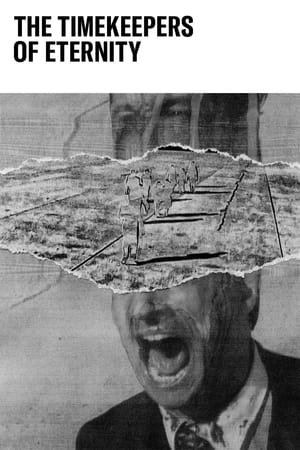
In a gargantuan city lurking in the sky, powerful immortals who have become jaded with eternal life. Most of their time is spent monotonously constructing bizarre and unusual objects while waiting for the ultimate gift to arrive.
This isn’t a film. It’s a leaked ritual. Somewhere between analog prayer and digital disease, a collection of gestures tried to become human again. They failed. Children orbit the fence like insects around an electric hymn. A figure holds a violin but never plays — his silence is louder than the sound. The man in the branches hasn’t fallen in years. The killer appears, or doesn’t — but you’ll feel him beneath the cuts, mouthing things you’ll wish you didn’t understand. There are bodies, sometimes clothed in flesh, sometimes not. There is scripture, mangled and reversed — not to mock it, but to unlock it. The voice speaks, but only when you stop listening. This is the place where lost footage remembers you. Where noise prays back. CHOKE ECHO was compiled under duress by 0xHamza in 2025 using material never meant to be rearranged. Watch it if you must — but it will keep watching after you close the tab.
An intense short movie showing a turbulent marriage. The wife is always smiling. The man gets angry time and again.
Tired of everyday monotony, a simple girl finds herself in an alternative universe. In the urban scenery of a music video from the 80s, she will try to breathe life into a world mired in routine.
Landscapes revealed themselves through text, paper through movement, while the sun gave them relief. This is a journey across found words, enunciating a discovery, their textures constructing the sea and the waves, in a travelogue from the first exploration, the first step over the sand towards the shore. “Amor” writes this joy to underline it in its time, captured on paper. This film has been composed through a scanner, and it’s the first chapter of the “Reír al Sol” series.
American cartoons are the starting point for Martin Arnold's new work. Sequences of short films form the basis of a process of fragmentation, deconstruction, dismantling and repetition. Arnold uses fun, family entertainment to create films with open-ended possibilities for association. His pieces, such as Hydra (2013), Charon (2013), Nix (2013) and Self Control (2011), feature characters whose anatomy is no longer recognizable as such, but rather resemble puppets, remotely controlled from the outside. Trembling hands, dancing tongues, blinking eyes and snoring mouths move like ghosts against an abyss-like deep black background, in which bodily elements constantly disappear, only to reappear once more.
The Hypergaussian Wars is an AI-generated feature-length audiovisual work exploring algorithmic warfare, obsolete media and the transformation of images through repetition, saturation and collapse. Built from thousands of generated images, synthetic landscapes and references to 14th–16th century painting, the film stages a continuous conflict between historical visual culture and contemporary computational systems. Fragments of obsolete video games, ruined architectures, military simulations and post-human figures circulate through increasingly unstable environments. Rather than telling a linear story, the film operates as an image system in which visual excess progressively erodes meaning. The Hypergaussian Wars reflects on memory, obsolescence, artificial intelligence and the persistence of images after their original function has disappeared.
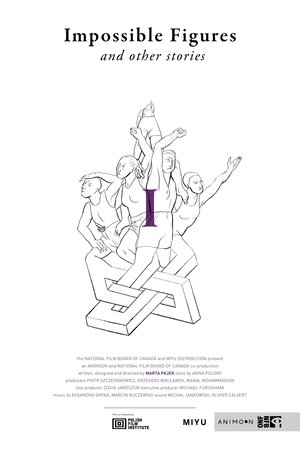
Reynivellir is a representation of the transit that is generated when approaching the art work, described with visual games that can well be evoked by the same brain when witnessing the impossible figures of Jose María Yturralde. Reynivellir is also a beach in a country that is a musical sonnet, and this is so because the mental image does not always connect the articulated parts of a sensation, it is systematic, but aleatory, and it is from these notions of the field of observation, that it approaches and moves away from understanding, linking and unlinking forms, movements, sounds, sensations and knowledge.
In this mesmerizing experimental film, a Stephen King television movie is compressed and transformed through hypnotic black and white collage animation that meticulously reconstructs and reshapes its supernatural drama to an eerie and profound effect.
X-ray images were invented in 1895, the same year in which the Lumière brothers presented their respective invention in what today is considered to be the first cinema screening. Thus, both cinema and radiography fall within the scopic regime inaugurated by modernity. The use of X-rays on two sculptures from the Bilbao Fine Arts Museum generates images that reveal certain elements of them that would otherwise be invisible to our eyes. These images, despite being generally created for technical or scientific purposes, seem to produce a certain form of 'photogénie': they lend the radiographed objects a new appearance that lies somewhere between the material and the ethereal, endowing them with a vaporous and spectral quality. It is not by chance that physics and phantasmagoria share the term 'spectrum' in their vocabulary.
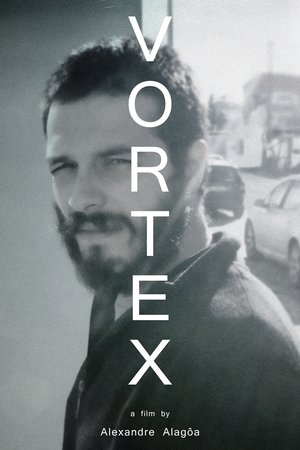
A corridor of an apartment is transformed into a claustrophobic and vertiginous vortex that swallows and imprisons you in an infinite fall through a mise en abyme: it’s a pure enclosure inside the image world, it’s the Descent into the Maelstrom.
A newly married bear couple will have to fight time and distance with love when hibernation tries to separate them.