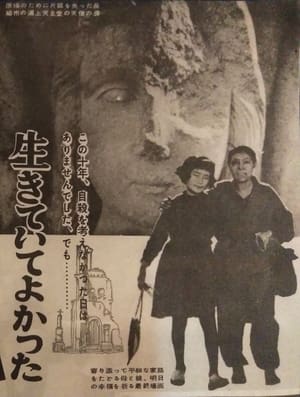
One of the first documentaries to focus on the aftermath of Hiroshima and Nagasaki, the film gives voice to survivors of the atomic bombings and documents the long-term effects of radiation on their lives. Combining testimony with stark images of destruction and recovery, it serves as an early cinematic appeal against nuclear war.
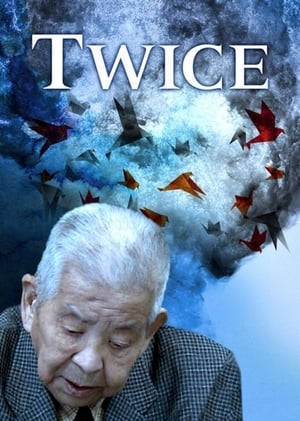
Tsutomu Yamaguchi is a hibakusha. A survivor of both atomic bomb blasts in 1945. First at Hiroshima, then again at Nagasaki. Now nearing 90, Yamaguchi finally speaks out. Breaking taboos of shame and sorrow, he responds to a call to fight for a world without nuclear weapons by telling his story, so that no one else will ever have to tell one like it again. Twice reconstructs Yamaguchi’s experiences in 1945 Japan, interviews him on the after-effects of exposure and documents the last five years of the late-blooming activist’s life.
Survivors of the 1945 bombings of Hiroshima and Nagasaki travel to New York for a UN conference on disarming nuclear weapons.
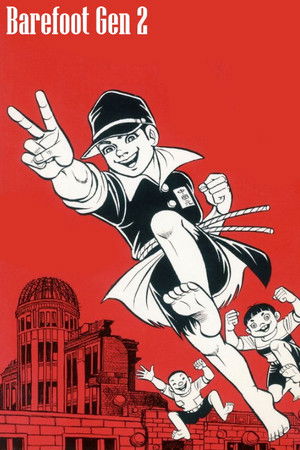
Three years after the Hiroshima bombing, a teenager helps a group of orphans to survive and find their new life.
Voices from Tsutomu Yamaguchi, who was twice exposed to the atomic bombs in Hiroshima and Nagasaki and later became a storyteller, as well as those who continue the storyteller activities with his daughters, grandchildren, and great-grandchildren, and other people who were twice exposed to the atomic bombs. How will a storyteller who was not involved in the story pass on the memories in the future?
Shigematsu Shizuma, who lives with his family in a village near Fukuyama, was in Hiroshima with his wife and niece just after the devastating atomic bombing, a tragedy that cruelly took the lives of thousands of people and forever marked the harsh existence of the survivors.
On the 70th anniversary of the atomic bombing of Hiroshima, Akihiro, a native Japanese filmmaker living in Paris, travels to Japan to interview survivors for a documentary commemorating the victims of the attack. Deeply moved by the interviews, he decides to take a break to wander through the city during which he meets Michiko, a merry, enigmatic young woman. Michiko takes him for a joyful and improvised journey from the city towards the sea where the horrors of the past are mingled with the simplicity of the present.
A group of people are standing along the platform of a railway station in La Ciotat, waiting for a train. One is seen coming, at some distance, and eventually stops at the platform. Doors of the railway-cars open and attendants help passengers off and on. Popular legend has it that, when this film was shown, the first-night audience fled the café in terror, fearing being run over by the "approaching" train. This legend has since been identified as promotional embellishment, though there is evidence to suggest that people were astounded at the capabilities of the Lumières' cinématographe.
A German Documentary about the “village of friendship” that was created by American Veteran George Mizo to help the Vietnamese kids suffering from the Vietnam War.
A day in the city of Berlin, which experienced an industrial boom in the 1920s, and still provides an insight into the living and working conditions at that time. Germany had just recovered a little from the worst consequences of the First World War, the great economic crisis was still a few years away and Hitler was not yet an issue at the time.
A film describing the political history of Dubrovnik and the history of its architecture, painting, literature and science until the end of Republic of Ragusa.
The Beauty of the Adriatic was created as a promotional tourist film, but through its unusual and even bizarre formal devices it overcomes the promotional function. The narrator of the film is constantly communicating with the viewer, exclaims and inserts jokes, and we also see him in the film as a guide entertaining us with various gestures and movements. In the film there are also interspersed humorous animated scenes, an interview with Hamlet, poetic sequences and stylized scenes such as one where the camera is "looking for" the lost guide.
Zvonimir Berković decided to present the Dubrovnik Summer Festival on film in an imaginative manner. He set scenes from the most popular plays of the Festival across various locations in Dubrovnik, so Pero Kvrgić acts Negromant's monologue from "Dundo Maroje" while interacting with vendors on the local marketplace, and in the dreamy atmosphere of Lokrum forest fairies are performing a scene from Držić's "Grižula".
The intellectual and the sensual are combined in this essay presentation of the work of the painter Ivo Vojvodić from Dubrovnik. Through the presentation of three frequent motifs of Vojvodić's painting - the sea, reefs and letters - Berković touches upon the emigratory fate of Vojvodić's family in desire for a home and the Ragusan ideal of freedom.
Mathieu Collette, a passionate blacksmith, renovates an abandoned heritage building belonging to the City of Montreal to create a blacksmithing school. Sixteen years later, after turning the building into an internationally renowned center for the transmission of living heritage, Mathieu is threatened with eviction for obscure administrative reasons, in the very year of Montreal's 375th anniversary. What could possibly justify putting one of Quebec's last blacksmiths out on the street, as the bearer of an unparalleled social and heritage project? Filmed over several years, this documentary traces Forges de Montréal's fight against the disappearance of a part of our collective memory.
Showcasing breathtaking footage of mountains and waves around the world, Shaka follows snowboarding world champion and renowned athlete Mathieu Crepel as he faces the biggest challenge of his life: to surf the legendary waves of Jaws Beach, Hawaii.
Peter Mansbridge travels the country to talk to Canadians about what's on their minds on the eve of an election.
Filmmaker Guillermo Del Toro in conversation with George Romero.
Documentary about Palenque de San Basilio, a town built by African slaves who espaced in Cartagena de Indias, and have preserved for centuries their rites, their music and their language.
A film director interviews Burmese refugees about their experiences encountering oppression and cruelty in their homeland, and reads aloud poetry about the destruction of Hiroshima by atomic bomb.