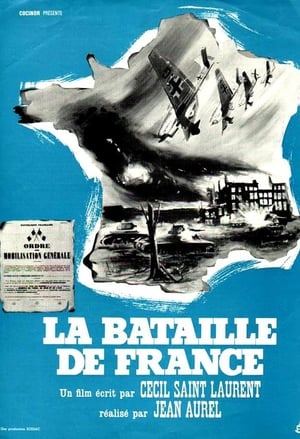
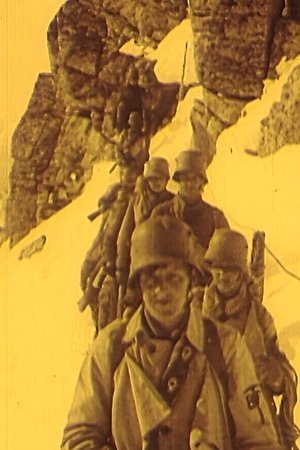
A montage of newscasts tracing the events of the "damned war" and the German invasion of 1940.
Spanish jurist and republican thinker Antonio García-Trevijano (1927-2018) expounds his political thought and reflects on the recent political history of Spain.
An exploration —manipulated and staged— of life in Las Hurdes, in the province of Cáceres, in Extremadura, Spain, as it was in 1932. Insalubrity, misery and lack of opportunities provoke the emigration of young people and the solitude of those who remain in the desolation of one of the poorest and least developed Spanish regions at that time.
Journalist Dermi Azevedo has never stopped fighting for human rights and now, three decades after the end of the military dictatorship in Brazil, he's witnessing the return of those same practices.
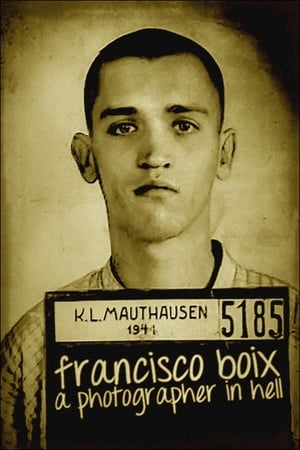
In 1939, just finished the Spanish Civil War, Spanish republican photographer Francesc Boix escapes from Spain; but is captured by the Nazis in 1940 and imprisoned in the Mauthausen concentration camp, in Austria, a year later. There, he works as a prisoner in the SS Photographic Service, hiding, between 1943 and 1945, around 20,000 negatives that later will be presented as evidence during several trials conducted against Nazi war criminals after World War II.
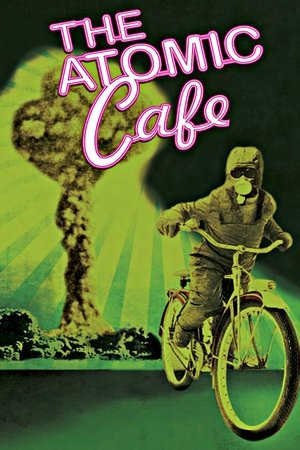
A disturbing collection of 1940s and 1950s United States government-issued propaganda films designed to reassure Americans that the atomic bomb was not a threat to their safety.
A documentary film that includes footage of past Olympics held in different countries with an particular emphasis on the activities and successes of Japanese athletes and how they are currently (circa 1963) improving themselves.
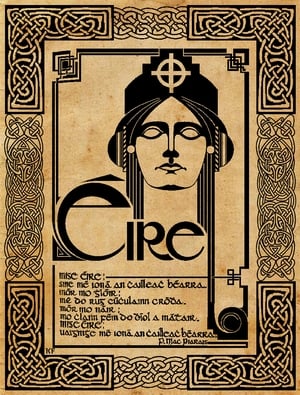
Mise Éire ("I am Ireland") is a 1912 Irish-language poem by the Irish poet and Republican revolutionary leader Patrick Pearse. In the poem, Pearse personifies Ireland as an old woman whose glory is past and who has been sold by her children. The poem inspired this 1959 film of the same name by George Morrison. Here, Morrison painstakingly assembled historical footage of the events surrounding the 1916 Rising from archives across Europe and deals with key figures and events in Irish Nationalism between the 1890s and the 1910s. The narration is by Liam Budhlaeir and Padraig O'Raghallaigh and the musical score is by Seán Ó Riada.
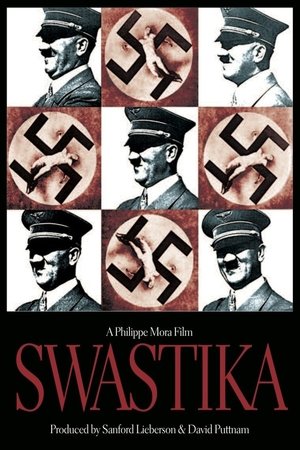
Comprised of video shot during the Nazi regime, including propaganda, newsreels, broadcasts and even some of Eva Braun's colorized personal home movies, we explore the way in which the Third Reich infiltrated the lives of the German population, from 1933 to 1945.
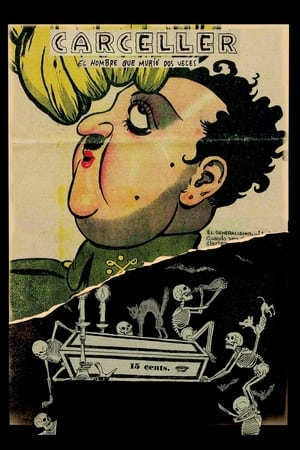
The life story of Vicente Miguel Carceller (1890-1940), a Spanish editor committed to freedom who, through his weekly magazine La Traca, connected with the common people while maintaining a dangerous pulse with the powerful.
Upon the outbreak of the Spanish Civil War in July 1936, the anarchist union CNT socialized the film industry in Spain, so in Madrid and Barcelona film workers took over the production assets and, between 1936 and 1938, numerous films on a wide variety of topics were released, composing a varied mosaic that gives rise to one of the most unusual and original moments of Spanish cinematography.
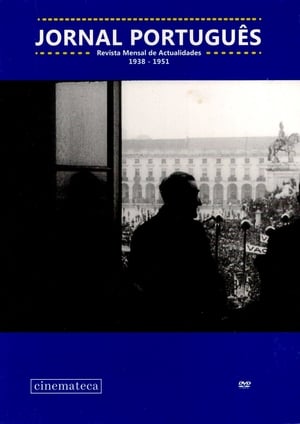
The newsreel series Jornal Português (1938-1951) was produced for the Secretariat of National Propaganda (SPN/SNI) by the "Portuguese Newsreel Society" (SPAC), under the technical supervision of António Lopes Ribeiro. It was conceived and employed as part of the propaganda machinery of Salazar's regime. Screened in cinema theatres prior to the main feature film, each issue of Jornal had approximately ten minutes in length and covered a variety of official government acts, national political news, major sports events and other assorted social and cultural affairs. Jornal Português is not only an indispensable document for the history of Estado Novo's propaganda, but also an unparalleled audiovisual archive of 1940s Portugal.
Archival film maestro Göran Hugo Olsson has assembled—from a vast catalogue of footage in the vaults of Sweden’s national television service SVT—accounts of the Israeli-Palestinian conflict as witnessed and represented by Swedish journalists. Stories of the beginning of the Israeli state interwoven with the Palestinian struggle for independence. News coverage with Yasser Arafat and interviews with Israeli foreign minister Abba Eban during a visit to Sweden unseen since first broadcast. From the tenth anniversary of Israel’s founding to the First Intifada, perspectives and encounters with statesmen, civilians, revolutionaries, and intellectuals tell the story from myriad angles of an evolving media landscape, revivifying a history of the ongoing conflict.
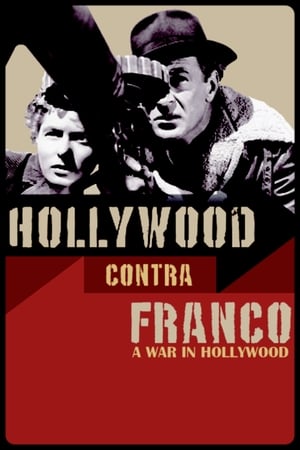
The Spanish Civil War (1936-1939) caused a great impression on the lives of most of the American artists of that era, so many movies were made in Hollywood about it. The final defeat of the Spanish Republic left an open wound in the hearts of those who sympathized with its cause. The eventful life of screenwriter Alvah Bessie (1904-1985), one of the Hollywood Ten, serves to analyze this sadness, the tragedy of Spain and its consequences.
The life of Paco Martínez Soria (1902-1982), one of the most famous and beloved Spanish actors, both on stage and screen; a comedian, a theatrical producer, an idol for the masses. A celebration of the uncommon gift of making people laugh.
Spain, April 14, 1931. The Second Republic is born. From the beginning, the writer Miguel de Unamuno is considered one of the ethical pillars of the new regime. Five years later, on December 31, 1936, a few months after the outbreak of the Spanish Civil War (1936-39), Unamuno dies at his home in Salamanca, capital of the rebel side, led by General Francisco Franco, and main center of dissemination of its propaganda apparatus.
A parade of supporters of the constructed auxiliary language Esperanto, which is intended to be a universal second language for international communication, or "the international language". The word Esperanto translates into English as "one who hopes".
Spanish Civil War, May, 1938. Four villages in Castellón, Benassal, Albocàsser, Ares del Maestrat and Vilar de Canes, were bombed from the sky and ravaged. 38 people died. Inhabitants never knew for sure who piloted the planes responsible for such atrocity, although the rebel propaganda attributed the act to the republican side. Now, 80 years later, the truth is finally exposed.
Newsreel footage from both sides of World War II make a case for convicting Nazi war criminals.
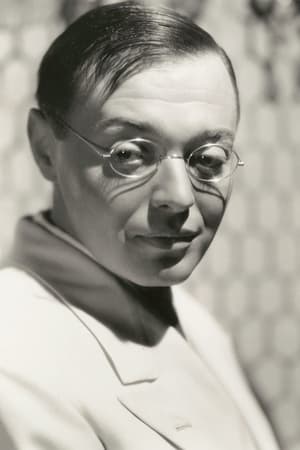
Featurette about the demise, during the early 1940s, of the once-popular Mr. Moto B-films series that starred Peter Lorre.