Shot live from a school auditorium, a group of storybook characters emerge from the book of Mother Goose.
When an old adversary threatens Rome, the city calls once more on her hero and defender: Coriolanus. But he has enemies at home too. Famine threatens the city, the citizens’ hunger swells to an appetite for change, and on returning from the field Coriolanus must confront the march of realpolitik and the voice of an angry people.
One of several collaborative dance films by the Brothers Quay & (dancer, choreographer) William Tuckett. Little enough info around on line, but there's briefly by way of Wikipedia entry. Adapted rather loosely from the works of the E.T.A. Hoffman. Familiar Quays' tropes, much in evidence: automata, trompe l'oeil effects, etc. No credit on the sound design (which is fairly elaborate), tho' that is possibly Larry Sider.
After losing at YouTube Warriors, Cyprien and Squeezie (the two biggest French YouTubers) must publicly act the famous tragedy.
Roberto Bolle smuggles himself as a stowaway on an ocean liner that of Hamburg gen New York sets sail. On board is also his lover Barbara Shadwell, whom he wants to marry, but who, at the request of her mother, the syrup millionaire Ceila Shadwell, should marry the oatmeal millionaire David.
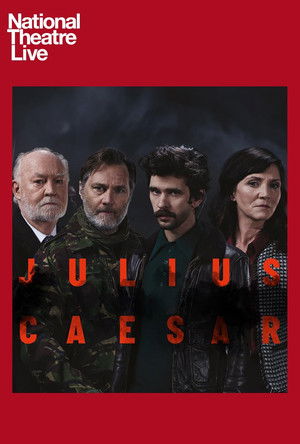
A ghostly visitor with a shocking secret, a daughter devastated by loss, a deadly duel – and the most famous question in all of drama. Just some of the reasons why Shakespeare’s iconic tragedy will hold you spellbound.
Hungry is the first in a three-play cycle introducing us to the Gabriels of Rhinebeck, New York. These three plays unfold in real time and track the lives of the Gabriels throughout the coming presidential election year. To the rhythm of peeling, chopping and mixing, Hungry places us in the center of the Gabriel’s kitchen. The family discusses their lives and disappointments, and the world at large and nearby. As they struggle against the fear of being left behind, the family attempts to find resilience in the face of loss.
Back in the kitchen of the Gabriel family, the country is now in the midst of the general election for President. In the course of one evening in the house they grew up in, history (both theirs and our country's), money, politics, family, art, and culture are chopped up and mixed together, while a meal is made around the kitchen table.
Eight months after we first meet the Gabriels, Patricia, the family matriarch, joins her children and daughters-in-law as they prepare a meal from the past and consider the future of their country, town and home. Paying tribute to the difficult year behind them, the Gabriels compare notes on the search for empathy and authenticity at a time when the game seems rigged and the rules are forever changing.
"Rose" is a filmed one-woman theatrical performance. A moving reminder of some of the harrowing events that shaped the century. It remains sadly relevant today as racial tensions escalate, and allegations of antisemitism are rife.
Grace has agreed to marry Sir Harcourt in return for his financial support of her family. At a house party in her father's place, Harcourt's son Charles also falls in love with Grace. When his father appears on the scene, he has to convince him that there is a case of mistaken identity and he is somebody else. Then Lady Gay Spanker, a married woman also visiting at the house, is persuaded by Charles to seduce his father and thus divert his attention from Grace. Much confusion and scheming ensues.
A stage director is driven to madness during a regional production of Julius Caesar.
When a pompous actor tells good girl Alexa that she hasn't lived, she embarks on a bold journey that takes her to mysterious bad boy Johnny. Envious, her shy best friend Ben also dares to pursue Johnny.
Later released on DVD, Kamen Rider Kiva: Final Stage is the final stage show and cast talk show of Kamen Rider Kiva. Recorded January 31st, 2009 at Nakano Sunplaza Hall.
Elyot Chase and Amanda Prynne are glamorous, rich, reckless…and divorced. Five years later, their love for one another is unexpectedly rekindled when they take adjoining suites of a French hotel while honeymooning with their new spouses. This chance encounter instantly reignites their passion, and they fling themselves headlong into a whirlwind of love and lust once more, without a thought for partners present or turbulences past. This Chichester Festival Theatre production of Noël Coward’s Privates Lives was filmed live at London's Gielgud Theatre.
Fabric of a Man is about a boutique owner who dreams of being a designer, but her insecure man doesnt believe in her abilities so puts her down every chance he gets. she meets a young drycleaner named joshua who also wants to be designer and falls for him, now she struggles to choose between security with her man or take a chance and go for what she really wants.
National Theatre Live’s 2010 broadcast of Alan Bennett’s acclaimed play The Habit of Art, with Richard Griffiths, Alex Jennings and Frances de la Tour, returns to cinemas as part of the National Theatre's 50th anniversary celebrations. Benjamin Britten, sailing uncomfortably close to the wind with his new opera, Death in Venice, seeks advice from his former collaborator and friend, W H Auden. During this imagined meeting, their first for twenty-five years, they are observed and interrupted by, amongst others, their future biographer and a young man from the local bus station. Alan Bennett’s play is as much about the theatre as it is about poetry or music. It looks at the unsettling desires of two difficult men, and at the ethics of biography. It reflects on growing old, on creativity and inspiration, and on persisting when all passion’s spent: ultimately, on the habit of art.
A bioterrorism incident occurs at a university in Western Australia. Chris and Piers from BSAA's anti-bioterrorism unit head to the scene to investigate, and they cooperate with former S.T.A.R.S. member Rebecca, who is teaching at the university. On the scene, they meet a mysterious young man named Tyler Howard…
Toymaker's Dream is a vibrant, high-energy theatrical presentation that retells the biblical narrative of creation, the fall of man, and redemption through the life and death of Jesus Christ. The story is presented as a fantasy allegory, portraying God as the "Toymaker," humanity as his beloved "toys" living in "Dreamland," and Satan as the "Dream Hater" who incites rebellion against the Toymaker.
Having seen the Seisho, Siegfeld, and Seiran Play Exchange Program's "The Wartime of Farewells" through to success, Stella and the others have taken a big step forward as Stage Girls. Then, another exchange program begins. The name of their partner school is Romana Drama School. It is a newly established school that was founded five years ago. With the rumors of them snatching up excellent students from exchange programs, they possess a shady history. The play Romana has chosen is Oscar Wilde's "Salome", which was once banned due to its content being deemed radical and degenerate. To play Salome, one must steal others' brilliance and be a pure egoist with infinite desires. Appearing before the bewildered Stella is none other than Mikoto Aragami, her old rival from her time in Munich, Germany... "Stella Takachiho. I will steal everything from you, and play Salome."