A documentary on the war between the Guatemalan military and the Mayan population, with first hand accounts by Nobel Peace Prize winner Rigoberta Menchú.
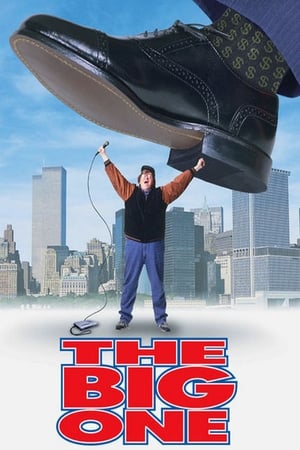
The Big One is an investigative documentary from director Michael Moore who goes around the country asking why big American corporations produce their product abroad where labor is cheaper while so many Americans are unemployed, losing their jobs, and would happily be hired by such companies as Nike.
71 years in the making, this feature documentary experience reveals the extraordinary life journey of Hollywood's most unlikely hero, Danny Trejo.
An account of the childhood and youth of the Peruvian writer Mario Vargas Llosa, Nobel Prize for Literature in 2010, and how the hard experiences he lived during these formative years led him to write and publish his first major work when he was only 26 years old.
Insight Prison Project, winner of the San Francisco Foundation 2005 Community Leadership Awards (John R. May Award) - for its dedication to breaking the cycle of incarceration through effective in-prison rehabilitation programming, and for being a model for catalyzing statewide prison reform.
When a depressed public defender ends his own life, he is sentenced to an eternity in Hell. However, after Satan takes notice of his skills, he is offered an afterlife-changing deal that may not fall in line with his own values.
A portrait of the life and career of the infamous American execution device designer Fred A. Leuchter, Jr. Mr. Leuchter was an engineer who became an expert on execution devices and was later hired by holocaust revisionist historian Ernst Zundel to "prove" that there were no gas chambers at Auschwitz. Leuchter published a controversial report confirming Zundel's position, which ultimately ruined his own career. Most of the footage is of Leuchter, working in and around execution facilities or chipping away at the walls of Auschwitz, but Morris also interviews various historians, associates, and neighbors.
The long fight over the land, which demolished the wall between master and serf, continues to divide Peru to this day. But the 1969 agrarian reform marked a before and after in the country's story - a profound change that Peruvian cinema reflected and encapsulated, creating great imagination we continue to discover today. 50 years after the social experiments of the revolution, we ask ourselves whether Peru really messed up or not with Juan Velasco Alvarado.
One decade after THE FARM: ANGOLA, USA (Oscar nominated 1999; two-time Emmy winner 1999), we go back inside Louisiana's maximum security penitentiary, to catch up with our characters' lives. While the theme of THE FARM was "to err is human, to forgive divine", we now delve more deeply and find hope for "reconciliation and release". Angola is America's oldest and largest prison, with 5,000 inmates, most of whom have received life -, or death-, sentences for violent crimes, and will never leave Angola. THE FARM continues to provide extraordinary opportunities for learning through storytelling.
Happily ever after never seemed so far far away when a trip to meet the in-laws turns into a hilariously twisted adventure for Shrek and Fiona. With the help of his faithful Donkey, Shrek takes on a potion-brewing Fairy Godmother, the pompous Prince Charming, and the ogre-killer, Puss In Boots.
Wallace's whirlwind romance with the proprietor of the local wool shop puts his head in a spin, and Gromit is framed for sheep-rustling in a fiendish criminal plot.
Pete and Toshi Seeger, their son Daniel, and folklorist Bruce Jackson visited a Texas prison in Huntsville in March of 1966 and produced this rare document of of work songs by inmates of the Ellis Unit. Worksongs helped African American prisoners survive the grueling work demanded of them. With mechanization and integration, worksongs like these died out shortly after this film was made.
After Megamind, a highly intelligent alien supervillain, defeats his long-time nemesis Metro Man, Megamind creates a new hero to fight, but must act to save the city when his "creation" becomes an even worse villain than he was.
Triggered by congressman Jair Bolsonaro’s homage to the torturer Carlos Alberto Brilhante Ustra, during president Dilma Rousseff’s impeachment hearing in 2016, Inês, a 70 year-old actress, starts a fragmented narrative of her own history, transforming the memories of her youth as an artist and guerrilla fighter during the military dictatorship into performances. Using as a starting point her participation in Teatro Oficina's 1967 production of the play "King of The Candle", by Oswald de Andrade, Inês creates a manifesto in defense of art's political strength, intertwined with memories of lost love and resistance.
An early Patwardhan documentary completed in 1978, Prisoners of Conscience focuses on the state of emergency imposed by Indira Ghandi from June 1975 through March 1977. During this time over 100,000 people were arrested without charge and imprisoned without trial. They were released only by the government that replaced Ghandi's. The film also shows that political prisoners existed in India before the state of emergency and continued after the new government was elected.
With confidential and unpublished documentation, the film shows the background and behind-the-scenes of the coup in Chile that took place on September 11, 1973 - and General Pinochet's dictatorship, which lasted 17 years.
An absurd game of “finding happiness” is being played by local Latvian coyotes* and illegal immigrants on the Russian and the European Union border. It is a game with no winner – all participants are driven to play by the sense of despair. While one side leaves home and undertakes a perilous journey to the other side of the globe, hoping to spend the rest of their lives in a free country, the other side risks their freedom to earn a chance to stay right where they are, in their homeland. *coyote – someone who smuggles illegal immigrants
A documentary about Goran Ivandic 'Ipe', the drummer of most popular Yugoslav rock band of all time, Sarajevo-based "Bijelo dugme" (White Button). Ivandic's fatal jump from the balcony of hotel Metropol in Belgrade in 1994 sparked much controversy around his fate.
In the documentary Last To Know political prisoners, sent to jail for openly opposing the East German regime that existed until the German reunification in 1990, talk about their times of trial and their lives today. Neither they, nor their families have come to terms with what happened.
Four young girls prepare for a special Daddy Daughter Dance with their incarcerated fathers, as part of a unique fatherhood program in a Washington, D.C., jail.