Researchers are pushing the boundaries of their fields to develop more accurate and efficient responses against international terrorism.
Take a mind-blowing journey through human history, told through six iconic objects that modern people take for granted, and see how science, invention and technology built on one another to change everything.
Popularis
Sir David shines the spotlight on some of nature’s evolutionary anomalies and reveals how these curious animals continue to baffle and fascinate.
Sir David discovers a microscopic world that’s invisible to the naked eye, where insects feed and breed, where flowers fluoresce and where plants communicate with each other and with animals using scent and sound.
They are some of the world’s all-time greatest building projects. Most have stood the test of time, but with today’s technology, could they be duplicated and done better?
Geologist Iain Stewart explain in three stages of natural history the crucial interaction of our very planet's physiology and its unique wildlife. Biological evolution is largely driven bu adaptation to conditions such as climate, soil and irrigation, but biotopes were also shaped by wildlife changing earth's surface and climate significantly, even disregarding human activity.
Carl Sagan covers a wide range of scientific subjects, including the origin of life and a perspective of our place in the universe.
2050 dans votre assiette
Science And Islam
O vědě a vědcích
Andrew Marr explores how Darwin's theory of evolution by natural selection has taken on a life of its own far beyond the world of science.
David Attenborough embarks on a remarkable 500 million-year journey revealing the extraordinary group of animals that dominate our world, and how their evolution defines our human bodies.
Scientists, researchers, and entrepreneurs are revolutionizing the way people see, touch, taste, hear, and smell with cutting-edge advances in technology.
Tales of the Unexpected is a new strand of provocative, confronting and thoroughly entertaining science documentaries. Each episode reveals a fascinating, sometimes awkward, and frequently unsettling world where peculiar ideas are put to the test. Come with us to where nothing is quite as it seems, where diseases are diagnosed by palm-readers, where paternity uncertainty drives the mating game, and where breasts are a toxic health hazard.
Tour de force
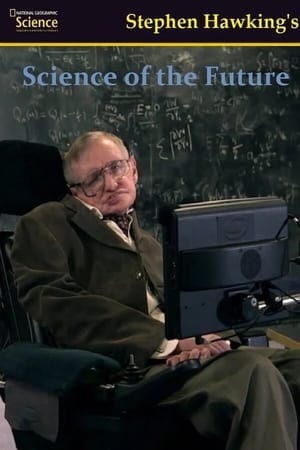
Stephen Hawking’s Science of the Future investigates the very latest game changing innovations. Each episode takes one area of progress and sends five top scientists out to actively test the inventions and breakthroughs that are driving it. The team explore human upgrades, the virtual world, bio-mimicry, high-tech emergency responses, and more. Featuring a wide range of examples, from advanced robotics and breathtaking digital actors, to cutting edge smart homes and electronic brain stimulation, the series reveals how science is delivering astonishing improvements to all our lives. Using the evidence they gather, the team reveals the year when each innovation will be rolled out for us all to benefit from, and Hawking then draws out his own uniquely insightful predictions about what our world will be like in the years to come.
From strange abductions, to mutated species, to bizarre occurrences, there are some phenomena that science cannot - or will not - explain. This summer Science Channel unveils some of these shocking and mind-boggling cases from around the world in the world premiere series THE UNEXPLAINED FILES. From mysterious disappearances and UFO encounters, to unidentified fanged predators and reported curses, THE UNEXPLAINED FILES investigates actual, inexplicable occurrences that have confounded scientists and inspired legends. Science Channel invites viewers on a mystifying journey that will challenge disbelief with THE UNEXPLAINED FILES.
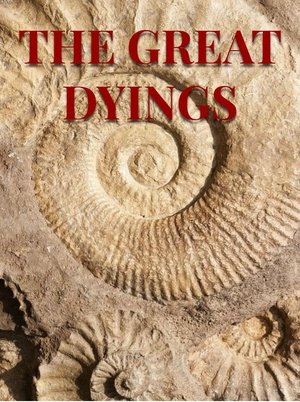
Life is a fragile thing. It changes and adapts so specifically to survive in the environment it's placed in. This ability to adapt is called evolution, and it's the reason that life has endured for the past few billion years. But evolution takes a long time, so when environments change too quickly for the inhabitants to keep up, the result is a drop in population or at the worst… extinction. And sometimes these changes can be so big that they affect the entire globe. Leading to some of the most catastrophic events in our planet’s history… mass extinctions. Content creator Angel of Death explores the five mass extinctions and the effects they had on life on earth in this five part miniseries.
Since the Big Bang 13.8 billion years ago, light has sculpted the cosmos. It traverses the void, interacts with matter, and dances with shadows. It multiplies and proliferates, offering the world ever more complex and luminous structures. If it could speak, what would it tell us?