Documentaries are broadcast every week on Dutch TV Channel NPO 2 under the name 2Doc: inspiring stories of the here and now.
An epic adventure that aims to unravel the mystery at the heart of our existence: the questions of our identity and our destiny. The series features some of the world’s most baffling real life stories and exciting findings in the fields of consciousness studies, near-death experiences and past-life memories. Adventurous researchers following the evidence where it leads them have discovered that the lines of evidence converge to a conclusion that is refreshingly new – yet perennially known.
A journey that tells the thought of the greatest protagonists of Western philosophy, from its origins to the great thinkers of the twentieth century, through the story of great contemporary philosophers.
Notre cerveau nous joue des tours
Are you spending hours of your day swiping left and right on Tinder? It’s normal as the app was created to be addictive by activating dopamine in your brain with every swipe drawing you in further.
Life Beyond explores humanity's future, the evolution of technology, and the mysteries of the universe. From AI and space exploration to philosophical reflections on existence, each chapter combines stunning visuals with emotional music, creating an immersive experience.
In Introduction to Nietzsche, an eight-hour course, Dr. Peterson embarks on a deep exploration of the life, philosophy, and enduring influence of Friedrich Nietzsche. Set against the backdrop of the late 19th century, we examine how Nietzsche's ideas challenged traditional moral and philosophical foundations, paving the way for new perspectives on the human condition. The course delves into key concepts such as the will to power, the critique of truth and morality, and the affirmation of life in the face of nihilism, while also exploring Nietzsche's complex relationship with religion, academia, and the works of other thinkers. Ultimately, we are invited to confront uncomfortable realities, embrace necessary struggles, and cultivate the courage and gratitude needed to realize our full potential.
In God, The Bible & Humanity, a five-hour course, Bishop Robert Barron explores the nature of God, the biblical narrative, and the life and teachings of Jesus Christ through the lens of Catholic theology. Drawing from the Old and New Testaments, he examines themes such as God's transcendence and immanence, the importance of right worship, spiritual liberation, and the roles of priest, prophet, and king. The course culminates in a profound reflection on the Sermon on the Mount and the transformative power of the crucifixion and resurrection of Jesus.
In The Philosophy of Science, an eight-hour course, Dr. James Orr traces the development of science from ancient Greece through the Scientific Revolution to today. He examines how theological, institutional, and philosophical forces shaped science, while tackling key issues like the demarcation problem of science versus pseudoscience, Hume’s problem of induction, Kuhn’s theory of paradigm shifts, and the realism debate. The course also engages fascinating unresolved questions raised by cosmology, neuroscience, and quantum mechanics, ultimately arguing that scientific progress does not eliminate philosophical inquiry but rather deepens it, revealing new mysteries that demand philosophical analysis.
In Maps of Meaning, a twelve-hour course, Dr. Jordan B. Peterson explores the foundations of human consciousness, perception, and the pursuit of meaning. Drawing from psychology, mythology, and neuroscience, he examines how we navigate the tension between order and chaos—not as passive observers, but as active participants guided by goals and values. Central to this exploration is the archetypal hero’s journey, which shows how voluntarily confronting suffering and taking responsibility can transform both the individual and society. Grounded in decades of research and personal experience, Dr. Peterson reveals how religious symbols, archetypal narratives, and social hierarchies shape both the individual mind and collective culture. Through powerful insights, the course demonstrates that proper orientation toward the highest good enables us to transform chaos into meaningful order.
In The Sermon on the Mount, an eight-hour course, Dr. Jordan Peterson explores the profound wisdom and symbolism embedded in this foundational biblical text, highlighting the transformative power of living by Christ-like principles. He offers a deep dive into key passages, such as the Beatitudes and the Lord’s Prayer, emphasizing the importance of humility, self-reflection, and the pursuit of meaning when facing life’s challenges. Throughout the lectures, Dr. Peterson masterfully integrates biblical narratives, Jungian psychology, and personal stories, illustrating the enduring relevance of these teachings for navigating the complexities of the human experience.
In Ancient Philosophy, a seven-hour course, Dr. Orr takes us on an exploration of the rich history of ancient Greek thought, beginning with the foundational ideas of the Ionian and Eleatic schools and voyaging through the transformative philosophies of Plato and Aristotle. The course also examines the emergence of Stoicism and Epicureanism during the Hellenistic period, emphasizing their distinct approaches to ethics, nature, and the human condition. Throughout the course, we trace the evolution of pivotal concepts in metaphysics, epistemology, and ethics that have shaped Western thought for millennia, underscoring the enduring relevance and transformative power of ancient Greek philosophy in modern times.
A series of films of patients talking about anxiety, PTSD, bipolar disorder, depressive disorder, among other psychological illnesses
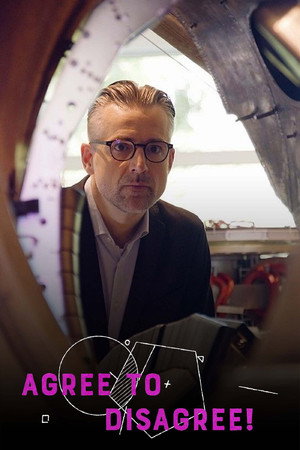
Is the modification of the human genome ethical? Is sustainable consumption at a low price possible? Are food intolerances just a passing trend? Professor of psychology Bertolt Meyer discusses controversial issues with specialists.
Demain, l'école
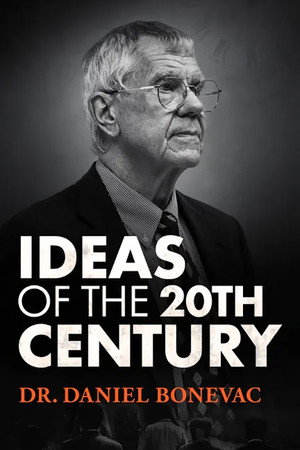
In Ideas of the 20th Century, Dr. Daniel Bonevac examines the major intellectual movements that shaped modern Western thought. Beginning with the Scientific, Agricultural, and Industrial Revolutions, the course explores how traditional beliefs came under pressure, creating tensions between human freedom and scientific determinism and contributing to cultural and political upheavals. Through the ideas of thinkers such as Nietzsche, Marx, Freud, and the existentialists, as well as debates over totalitarianism, liberty, language, truth, and justice, the course traces the search for meaning in the modern world. By connecting philosophy, politics, and culture, it reveals how the central ideas of the 20th century continue to shape contemporary society and the challenges facing Western civilization today.
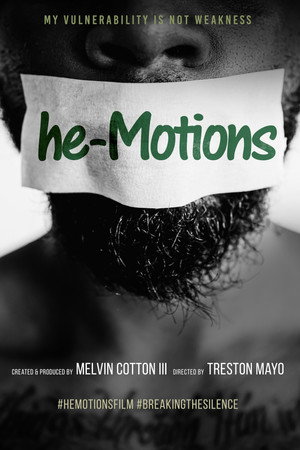
A two part film series exploring the struggles, strength & healing of Black men. “My Vulnerability is NOT weakness.”
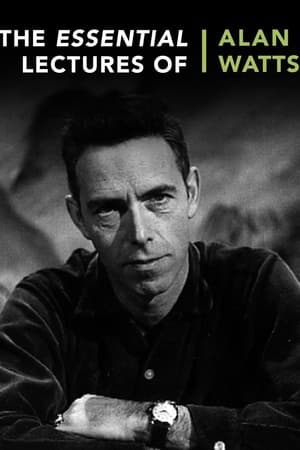
The Essential Lectures of Alan Watts video series was recorded in 1971 above Muir Woods, California, and in 1972 aboard the ferryboat the SS Vallejo in Sausalito. Produced by his son Mark and directed by long-time archivist Henry Jacobs, the series explores core philosophical themes that spawned over Watts' career.
Polish-Flemish philosopher Alicja Gescinska interviews national and international personalities with diverse philosophical and religious backgrounds.
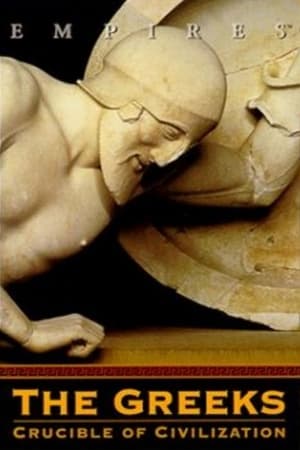
In the fourth and fifth centuries, B.C., the Greeks built an empire that stretched across the Mediterranean from Asia to Spain. They laid the foundation of modern science, politics, warfare and philosophy, and produced some of the most breathtaking art and architecture the world has ever seen. It was perhaps the most spectacular flourishing of imagination and achievement in recorded history.