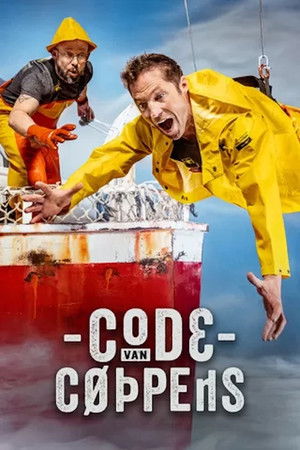
Every day we are inundated with information. Can facts still be distinguished from fables? With a nod to today's 'do your own research' internet culture, Marijn, Joep and Tim invent their own experiments, of which they are part. They have one goal: to find out the truth once and for all.
Newton's Apple is an American educational television program produced and developed by KTCA, and distributed to PBS stations in the United States that ran from 1983 to 1999. The show's title is based on the rumor of Isaac Newton sitting under a tree and an apple falling near him—or, more popularly, on his head—prompting him to ponder what makes things fall, leading to the development of his theory of gravitation. The show was produced by Twin Cities Public Television. For most of the run, the show's theme song was Ruckzuck by Kraftwerk, later remixed by Absolute Music. Later episodes of the show featured an original song. An occasional short feature appeared called "Science of the Rich and Famous" in which celebrities appeared to explain a science principle.
Exciting challenges and great stunts. That's how we know the Coppens brothers. Now they put special rooms full of scientific puzzles, tests and assignments that their famous friends have to bring to a successful conclusion. What familiar face cracks the Code of Coppens?
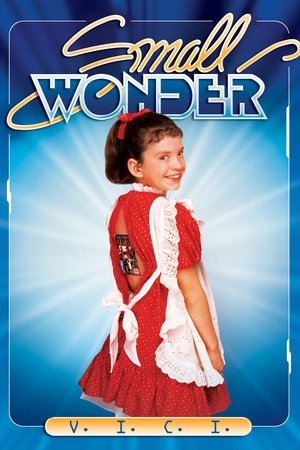
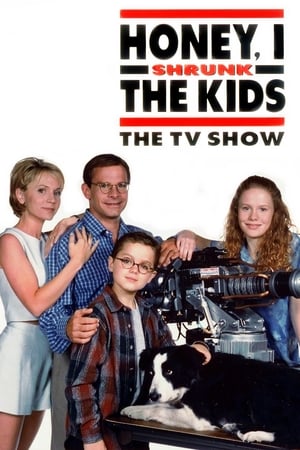
When genius cybernetics engineer Ted Lawson brings home his top-secret invention, a Voice Input Child Identicant or V.I.C.I., life becomes anything but mechanical for the Lawson Family. With his boss and his nosy family living next door, Ted, his wife Joan and their son Jamie must pass Vicki off as a real child. It is easy for Joan, who cannot help doting on her like a daughter, but harder for precocious Jamie, who uses Vicki to do his homework and to ward off Harriet, the annoying redheaded girl next door.
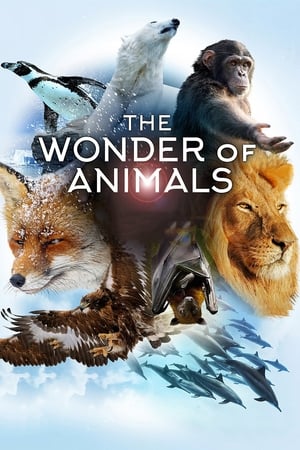
Chris Packham uses groundbreaking science and brand-new behaviour to delve deep beneath the skin and discover the unique features that have made certain animal groups successful.
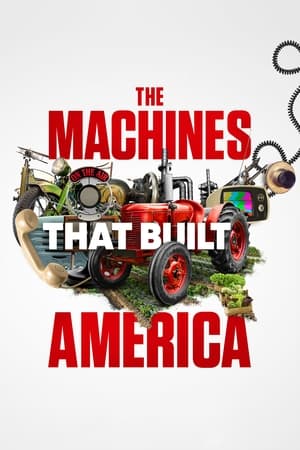
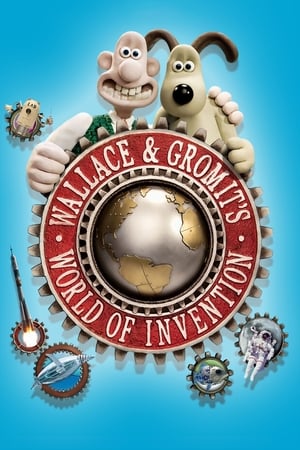
The stories behind innovations such as TV, radio, phones, airplanes, motorcycles and power tools as well as the inventors including Nikola Tesla, William Harley, Alexander Graham Bell, Duncan Black and Alonzo Decker.
斑马百科
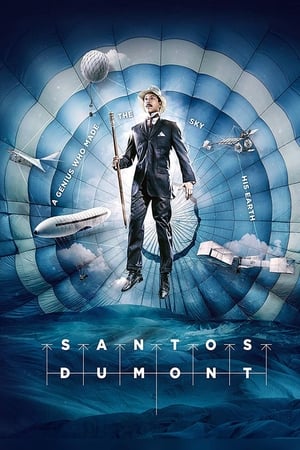
The story of the man who embodied the great transformations of the turn of the century, acclaimed almost worldwide as the first man to fly a plane - the 14 Bis. Set in France and Brazil in the late 19th and early 20th centuries, the production follows the aviator's trajectory, from his childhood at his family's coffee plantations in the interior of Minas Gerais, to the sophisticated Paris lounges and air clubs.
Professor Brian Cox asks the biggest questions we can ask. Are we alone? Why are we here? What is our future? Join him in a stunning celebration of human life as he explores our origins, our place and our destiny in the universe.
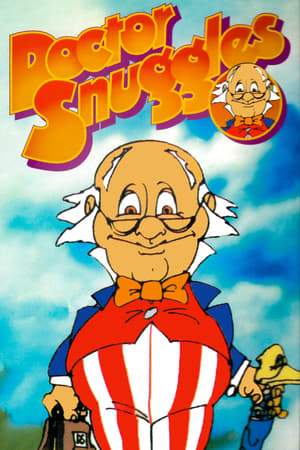
Doctor Snuggles is an animated television series created by Jeffrey O'Kelly based on original artwork by Nick Price, about a friendly and optimistic inventor named Doctor Snuggles who has unusual adventures with his friends. The show featured fantastical scenarios which usually involved Doctor Snuggles inventing something outlandish such as a robot helper or diamond-making machine, and had a variety of supporting characters who were mostly anthropomorphic animals.
Lifestyle related diseases, physical pain, and mental health. This program focuses on medical and health issues of interest, exploring effective countermeasures as well as methods of prevention.
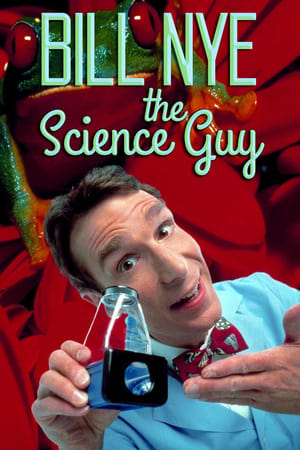
It's "Mr. Wizard" for a different decade. Bill Nye is the Science Guy, a host who's hooked on experimenting and explaining. Picking one topic per show (like the human heart or electricity), Nye gets creative with teaching kids and adults alike the nuances of science.
Since the Big Bang 13.8 billion years ago, light has sculpted the cosmos. It traverses the void, interacts with matter, and dances with shadows. It multiplies and proliferates, offering the world ever more complex and luminous structures. If it could speak, what would it tell us?
What would we be without mucus? Can we live on water? How much does life weigh? Finding out the answers is the aim of ARTE's new science show. In a nod to Douglas Adams's "Hitchhiker's Guide to the Galaxy", where the figure 42 is the ultimate answer to all questions, 42 tries to provide the answers.
Behind every great genius was a great rival - an unstoppable adversary whose incredible vision, determination, and ambition is their match. Out of their struggles came the world's most brilliant inventions, the spoils of the heated battle between competitors.
Richard Feynman, theoretical physicist, enjoys thinking aloud about the adventures science can offer. Here he uses physics to explain how the everyday world works, such as why rubber bands are stretchy, why tennis balls can't bounce forever, and what you're really seeing when you look in the mirror.
Exploring science, health and technology headlines with leading experts and professionals.
A mad scientist and his teenage friend get caught up in a lot chaos in this parody for the ages.
Professor Tim Spector and Dr Kandi Ejiofor help us navigate the world of ultra-processed foods and understand what effect they have on our bodies.
Data Science vs Fake