Alan Carr and Daisy May Cooper lead teams in a word association challenge. Packed with laughs and wild guesses, teams compete through multiple rounds, culminating in a thrilling Jackpot final with a cash prize on the line.
Masked Singer Suomi
The Big Bang
Eleven strategically minded players, chosen not just for their high intellectual prowess but also their social IQ, participate in never before seen games designed to not only test their intellect but encourage them to carefully and creatively use the art of manipulation to outfox their opponents and win a cash prize.
It tells the story of a modern-day actress who is accidentally reborn in ancient times. From then on, she becomes a proud princess and starts her journey to win the queen's throne.
Fout Maar Goud
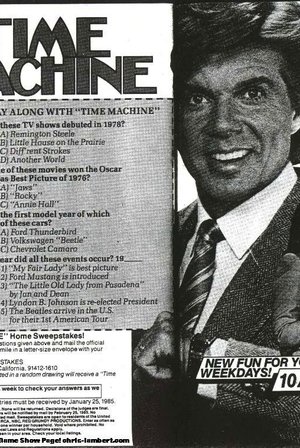
The five-day-a-week syndicated successor to the popular CBS game show, where two contestants compete to match fill-in-the-blank phrases with those of the celebrities.
Helicopter skyrunner Anneka Rice races against the clock to find directions to treasure at locations worked out by studio guests from cryptic clues.
Cash Cab: After Dark is a spin-off of the Discovery Channel series that aired in 2007. The contestants were picked up near or after sunset as well as overnight and the cash value of the questions was double that of the regular version of the show. The questions were usually more difficult than the daytime version.
Elite athletes will have the chance to win $1,000,000 every time they run the Million Dollar Mile course.
Based on the hit UK format, The Cube challenges players with what appear to be simple tasks all to be completed in — you guessed it — a 4m x 4m x 4m perspex cube. The games may sound simple, like bouncing a ball into a bucket within a timeframe, but once the clock starts counting down everything becomes a little bit more tense. Add to that the promise of $250,000 in prize money and you’ll be setting up your own practice Cube at home.
The second version of the American television game show.
Music quiz in which contestants try to recognise as many hit songs and artists as possible, under intense pressure.
Taxi
A game show following contestants as they travel through a massive maze, answering multiple-choice questions along the way. The maze consists of rooms filled with money; and the further in they go, the bigger the prize. But in order to collect the price, however, contestants must remember what they learned along the way as they find their way out.
The show is divided into several segments, each one offering contestants prizes in return for achieving a set of challenges or game tasks given by the host. The prizes offered range from cars and motorcycles to gold, cash, vacation packages and household items. The show is funded by sponsors, advertisers and commercial brands
膠戰
Battle Dome was a syndicated American television series that aired from September 1999 to April 2001. It combined elements of American Gladiators - inspired athletic competition with scripted antics more reminiscent of professional wrestling. Recurring character-athletes known as "Warriors" competed against weekly contestants in a variety of physically demanding events. The series was filmed at the Los Angeles Sports Arena and produced by Columbia TriStar Television. The entire first and second season of Battle Dome is available for purchase on iTunes and Amazon Instant Video.
In a Temple filled with lost treasures and protected by mysterious Mayan temple guards, six teams of two children compete to retrieve one of the historical artifacts in the Temple by performing physical stunts and answering questions based on history, mythology, and geography. After three elimination rounds, only one team remains, who then earns the right to go through the Temple to retrieve the artifact within three minutes and win a grand prize.
Card Sharks is an American television game show created by Chester Feldman for Mark Goodson-Bill Todman Productions. Two contestants compete for control of a row of oversized playing cards by answering questions posed by the host and then guessing if the next card is higher or lower in value than the previous one. The concept has been made into a series four separate times since its debut in 1978, and also appeared as part of CBS's Gameshow Marathon. The primary announcer for the first three series was Gene Wood.