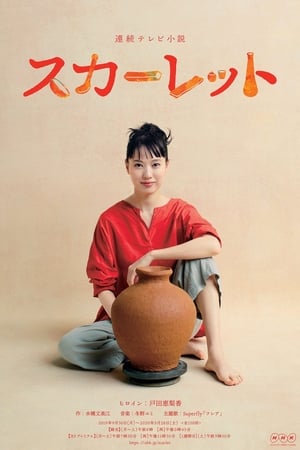
Born in 1937 in Osaka as the eldest daughter, Kawahara Kimiko moves to Shigaraki with her family at the age of 9. She works to support her family from a young age. Eventually, she jumps into the male world of pottery and becomes a pioneer of female ceramic arts. After marrying her husband who is also involved in ceramics and owning her own kiln, she raises her two children while struggling to create unique ware.
In the early Showa era, Japan’s first women’s law school opens, and the protagonist, Inotsume Tomoko, gains nationwide attention as one of the first female lawyers in the country. However, after facing wartime Japan’s harsh realities and losing everything, she becomes a judge with her legal knowledge and dedicates herself to establishing the family court. She stands passionately for the hardships that politics and economics cannot solve.
Massan is based on the lives of Masataka Taketsuru and his wife Jessie Roberta "Rita" Cowan, a Scotswoman Taketsuru met while studying abroad.
Aki Amano, a high-school girl from Tokyo moves to the Sanriku Coast in the Tohoku region to become a female diver. She becomes a local idol, then returns to Tokyo to try to become a real idol, and finally returns to Tohoku to help revitalize the area after the Great East Japan earthquake.
Suenaga Kokoro, an international flight attendant, lives with her mother and grandmother who operate a traditional restaurant in a lively downtown district of Tokyo where customs and traditions run deep and neighbors know each other like a big family.
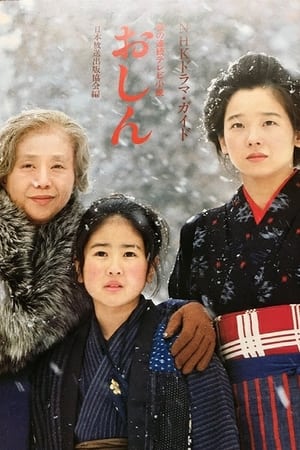
Oshin is a Japanese serialized morning television drama, which aired on broadcaster NHK from April 4, 1983 to March 31, 1984. The series follows the life of Shin Tanokura during the Meiji period up to the early 1980s. Shin was called "Oshin", which is an archaic Japanese cognomen.
This is the story of a young mother, Kitayama Nazuna, and her son Taiyo from Ohma, a small town at the tip of a peninsula in Aomori. Taiyo's father, Murai Kento had aspirations to be a professional boxer but due to a detached retina he was forced to abandon his dream. Leaving Nazuna behind, he left for America, with another woman, to get treatment for his eye-problem, unaware that Nazuna was pregnant. As his life is boxing he quickly returns to the ring after the operation turns out to be successful and once again he dreams of becoming a professional boxer. However, success eludes him and he returns home to Japan. Nazuna meanwhile has given birth to her son and moved to Tokyo to search for Kento. By chance she finds Kento. When discovers he has become a father, he tries to make up for lost time. The show picks up their story as Nazuna, Taiyo and Kento begin family life together. Of course things are not as simple as they appear.
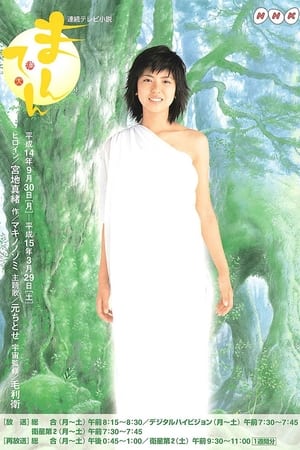
In 1930 and as a young child, Tsuneko Kohashi lives at Enshu in Shizuoka Prefecture. She has a happy life with her parents and two younger sisters. Things change after her father dies from tuberculosis. Her father asked Tsuneko Kohashi to take care of the family in his place. Due to financial difficulties, her mother Kimiko decides to move the family to Tokyo where Tsuneko's grandmother lives.
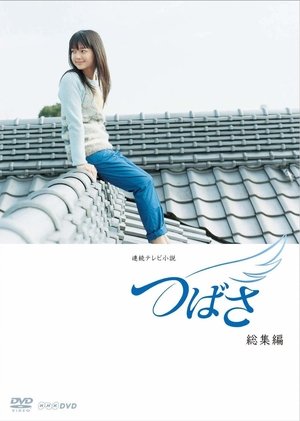
The story follows the 20-year-old Tsubasa who dedicates her life to her family and their shop. Her life is turned upside down when her mother who was missing came back home. To pay of her mother's debt she starts to work at a small radio station as a DJ.
Suzume is a girl born to a family running a small restaurant in Gifu Prefecture. She loses her hearing in one ear from a disease. Encouraged by her loving parents and childhood friend, she lives through an eventful life with a tenacious spirit.
In 1924, a time when both steam engine trains and early Showa Era's first train stations are just beginning. In the waiting room of Asumoe Station, a small country station, a passenger finds an abandoned baby and rushes to tell the station master, Tokiwa Jiro. The news quickly spreads and soon friends of Tokiwa's along with other townsfolk are saying that this baby must be a gift, it is Tokiwa's recently departed beloved wife reborn as a baby.
A passionate botanist dedicates his life to his love of plants, overcoming hardship across changing eras with the support of his devoted wife.
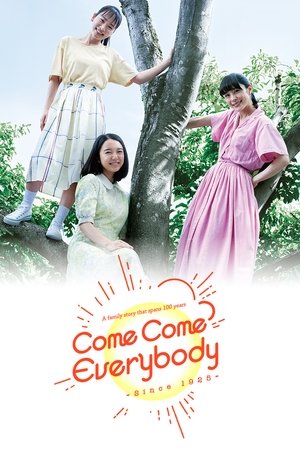
Come Come Everybody is a Japanese television drama series and the 105th NHK Asadora series, following Okaeri Mone.. It depicts the lives of three generations of women who have close links to the English lessons on radio which began in 1925.
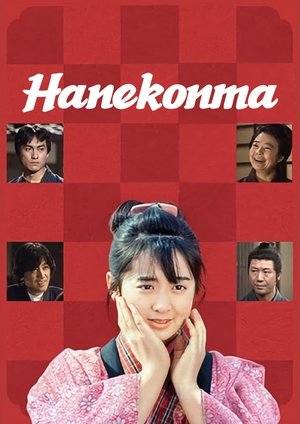
Rin Tachibana, nicknamed Hanekonma, grew up in Soma, Fukushima. Together with her parents, her sister and brother, and her grandparents, the story revolves around the Tachibana family and Rin's life throughout many years.
NHK's 102nd morning drama depicts the life of a famous composer. Koyama Yuichi with his wife Oto. They meet each other through music and overcome hardships together. Yuichi composes songs that became "Yells" for people all over Japan in the Showa Era (1926-1989) in which radical changes were going on.
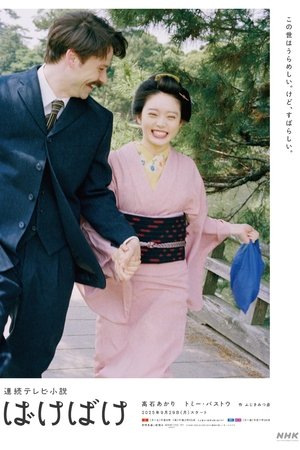
In Meiji-era Matsue, a fallen samurai’s daughter and a lonely foreign teacher connect through ghost stories and an unlikely friendship.
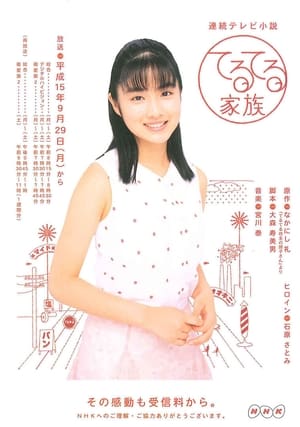
The 69th NHK Asadora Drama, based on Rei Nakanishi's novel, is about the Iwata family living in Ikeda, Osaka City between 1950s and 1960s. The story is told through the eyes of the youngest daughter, Fuyuko. The family runs a bakery. The mother, Teruko, is a very energetic woman who is determined to make her dreams come true. Responding to Teruko's expectations, the eldest daughter becomes a figure skater and the second daughter becomes a very famous professional singer. In contrast, Fuyuko finds her joy in bread making.
まんてん
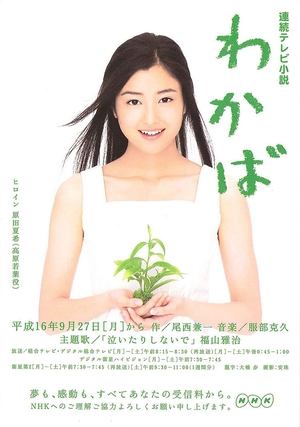
The story is about a young woman who becomes a landscape gardener following her father's wishes. Wakaba, born and brought up in Kobe, Hyogo Prefecture, lived happily with her parents and younger brother until the Great Hanshin Earthquake shook and destroyed the city in 1995. In the disaster, Wakaba loses her father, who was an architect and moves with her mother and brother to Obi, old castle town in Nichinan, Miyazaki Prefecture, where her grandmother lives with her uncle and aunt. Living in Obi's rich natural environment, Wakaba learns that plants can heal people's hearts. She makes a resolution to return to Kobe and reconstruct the city abundant in greenery.
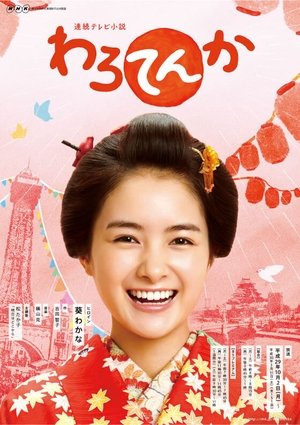
The 97th NHK asadora is about Ten who becomes the first female comedian.