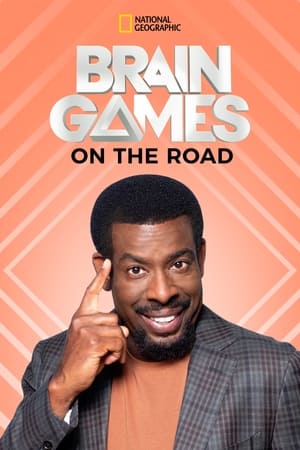
Brain Games out of the studio and on the road, giving average Americans the chance to test their brainpower as they take on friends and family in an epic battle of the brains.
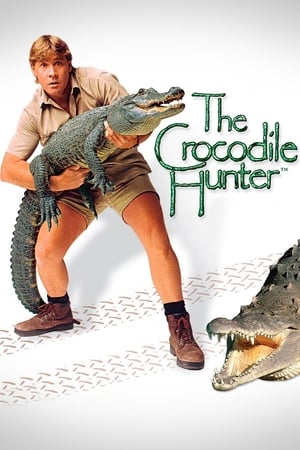
Australian host Steve Irwin and his wife Terri run a wildlife refuge. Their shared passion is educating the world about wildlife, including the much feared crocodile and numerous venomous snakes. Steve's specialty is the capture and relocation of crocodiles. No animal appears too threatening to Steve, his true respect for animals is the foundation for everything he does.
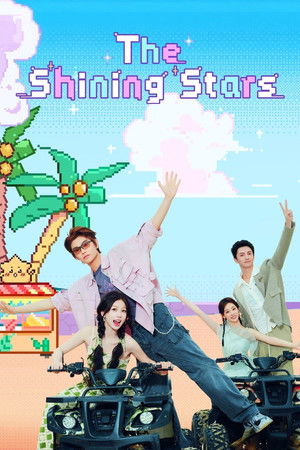
The Four Bamboo Masters come together once again to document their adventurous 3-day, 2-night trip to Weizhou Island. Together, they face a series of challenges designed by the "system" to test their teamwork and camaraderie.
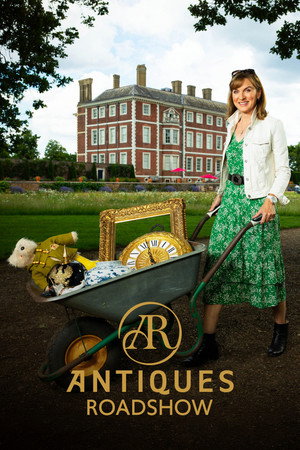
Antiques Roadshow is a British television show in which antiques appraisers travel to various regions of the United Kingdom to appraise antiques brought in by local people. It has been running since 1979. There are also international versions of the programme.
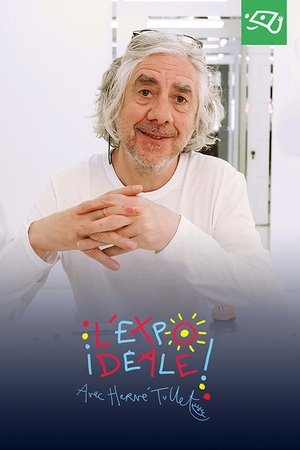
Hervé Tullet, an artist of playful and uninhibited creations, invites young and old to unleash their creativity. He offers a series of creation, recreation and inspiration workshops, so that anyone can put together their own Ideal Exhibition.
Academy Reincarnation is a web variety content based on the concept of a male protagonist from a web novel who was reborn from an idol to a student. With its host, TXT's Kang Tae-hyun, the show provides laughter and information at the same time, by attending various academies across South Korea.
Attention please! Are you ready for an adventurous tour through the human body? With a lot of humour, our physical appearance is being introduced from head to toe along cells and organs in an educational way. The heart, blood, nerves and kidneys, each single one is a miracle which renders life possible.
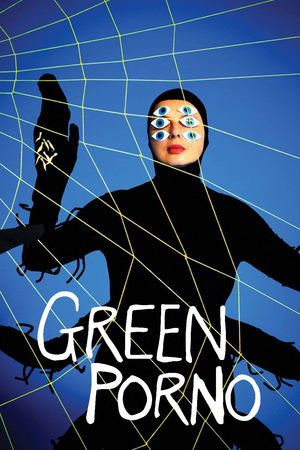
A series of very short films inspired by the amazing and often bizarre sexual practices of insects and other creatures.
Otcové průmyslu
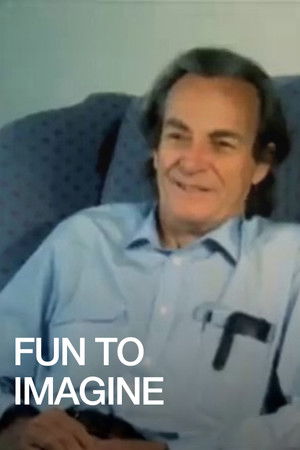
Richard Feynman, theoretical physicist, enjoys thinking aloud about the adventures science can offer. Here he uses physics to explain how the everyday world works, such as why rubber bands are stretchy, why tennis balls can't bounce forever, and what you're really seeing when you look in the mirror.
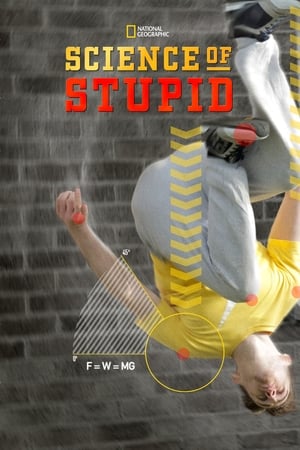
This show combines cold hard science with some of the craziest, most spectacular and painful user generated clips ever recorded. Richard Hammond introduces all manner of mishaps featuring brave, if misguided individuals from around the world and then explains the science behind their failure and humiliation with the use of bespoke animations and super slo-mo cinematography. Every episode features between 50 and 60 clips of misadventure – ordinary folk making extraordinary mistakes. Each week watch stunts involving weightlifting, shooting guns or jumping over cars, that have gone wrong, paused, re-wound, and re-played and analysed to determine exactly what went wrong and why. Richard explains the physics, chemistry and biology at play, then presents forensic details to explain the stupidity that resulted in failure. He’ll look at everything including weight, volume, momentum, combustion and even how the brain operates. This is misadventure explained. This is the Science of Stupid.
Zoboomafoo is an American children's television series that aired from January 25, 1999, to April 28, 2001, and is still shown today in syndication depending on the area, and it is regularly shown on PBS Kids Sprout. A total of 65 episodes were aired. A creation of the Kratt Brothers, it features a talking Coquerel's Sifaka, a type of lemur, named Zoboomafoo, or Zoboo for short, and a collection of repeat animal guests. Every episode begins with the Kratt brothers in "Animal Junction", a peculiar place in which the rules of nature change and wild animals come to visit and play. After January 16, 2004, the show was pulled from its weekday airing on most PBS stations, though some continue to air the show.
Newton's Apple is an American educational television program produced and developed by KTCA, and distributed to PBS stations in the United States that ran from 1983 to 1999. The show's title is based on the rumor of Isaac Newton sitting under a tree and an apple falling near him—or, more popularly, on his head—prompting him to ponder what makes things fall, leading to the development of his theory of gravitation. The show was produced by Twin Cities Public Television. For most of the run, the show's theme song was Ruckzuck by Kraftwerk, later remixed by Absolute Music. Later episodes of the show featured an original song. An occasional short feature appeared called "Science of the Rich and Famous" in which celebrities appeared to explain a science principle.
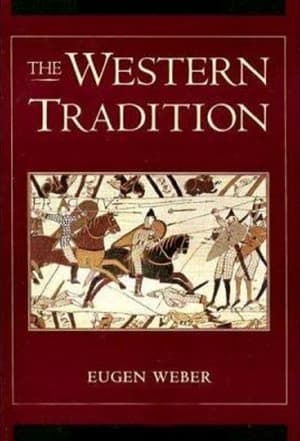
Covering the ancient world through the age of technology, this illustrated lecture by Eugen Weber presents a tapestry of political and social events woven with many strands — religion, industry, agriculture, demography, government, economics, and art. A visual feast of over 2,700 images from the Metropolitan Museum of Art portrays key events that shaped the development of Western thought, culture, and tradition.
Professor Moustache and his assistant Nathanaël go the extra mile to answer your questions scientifically. Do we really eat spiders in our sleep? Can we shrink children just like in a film? And what happens when a murder happens in space? All your queries are resolved by our favourite knowledgeable professor.
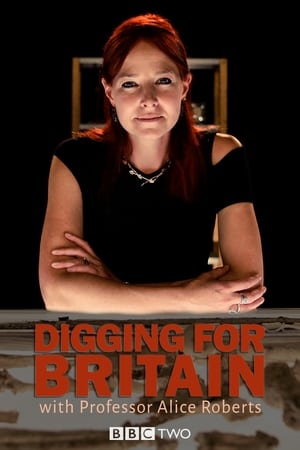
Dr Alice Roberts follows a year of British archaeology, joining up the results of digs and investigations the length of the country.
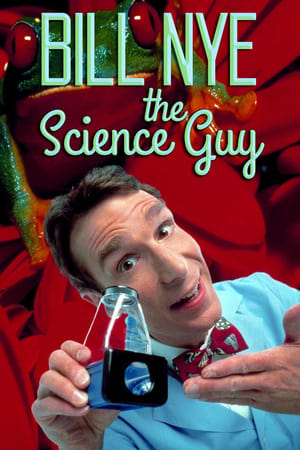
It's "Mr. Wizard" for a different decade. Bill Nye is the Science Guy, a host who's hooked on experimenting and explaining. Picking one topic per show (like the human heart or electricity), Nye gets creative with teaching kids and adults alike the nuances of science.
Did you know that behind a soccer ball, glasses or a spoon lie treasures of inventiveness and thousands of years of history? Each episode of this new series looks at an object. Through its creation and its developments, through the ages and civilizations, we approach all sciences, from physics to philosophy, including history. Each object of our daily life is the result of a long process and conceals a rich history of knowledge and human adventures. Never again will you look at your stairs, your pants or a computer the same way...
Nat Geo Lab Brasil
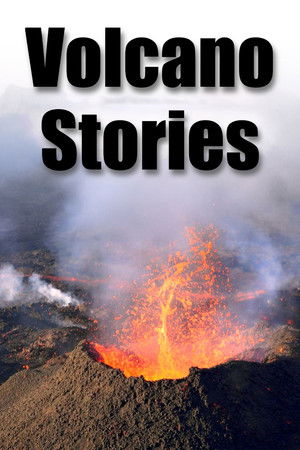
No two volcanoes are alike; each one has its own distinctive landscape, climate, and geological context. Just as unique are the people we meet along the way who help us comprehend how greatly our planet – and our lives – have been shaped by volcanic phenomena. For the scientific aspect of each episode, we explore the very diverse range of questions raised by volcanic phenomena in such varied fields as earth sciences, climatology, biodiversity, oceanography, geography, agronomics, and archaeology. The cultural part of the show delves into mythology, religion, philosophy, folk and artistic traditions, cooking, and ways of life.