In a futuristic city sharply divided between the rich and the poor, the son of the city's mastermind meets a prophet who predicts the coming of a savior to mediate their differences.
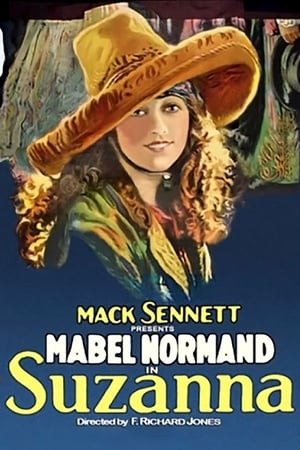
Hoping to consolidate their adjoining ranches, Don Fernando and Don Diego betroth their children, Ramón and Dolores, although Ramón is in love with Suzanna, the daughter of a peon on his father's ranch, and Dolores is interested in Pancho, a toreador. When Suzanna learns that she was kidnapped in infancy and is really Don Diego's daughter, she keeps silent; but Ramón finally rebels and steals Suzanna from the altar as she is about to marry Pancho. There are explanations, Ramón marries Suzanna, and Dolores marries Pancho. Suzanna (1923) has been mastered from a good quality but incomplete 35mm print.
Theater of Life: Youth Version
A melodrama about a painter who is infected with syphilis, refuses treatment, turns to the use instead of narcotics, and withers away.
When housewife Trina wins the lottery, her comfortable life with her dentist husband John slowly deteriorates, in part by her own increasing paranoia and partly by the machinations of villainous acquaintance Marcus.
When his ne'er-do-well brother embezzles the commissary funds of their cavalry unit stationed in the Sudan, a British soldier takes the blame for him. He winds up deserting his post and joining up with a traveling vaudeville troupe. He falls in love with a pretty young woman in one of the show's acts but finds that a local Arab sheik has his own plans for the young girl.
A policeman falls for a teacher, and befriends her students. A gang of bootleggers threatens his newfound joys.
A grease monkey discovers a defect in an auto engine being turned out by his employer. But since our hero discovers this only after losing an important race, his boss chalks up the loss to Fairbanks' supposed cowardice.
Billie Dove, as Elena, pulls out all stops as a Russian princess and a woman-of-the-streets in Paris in an exotic romance and hand-wringing drama set in two countries and the way-stations in between.
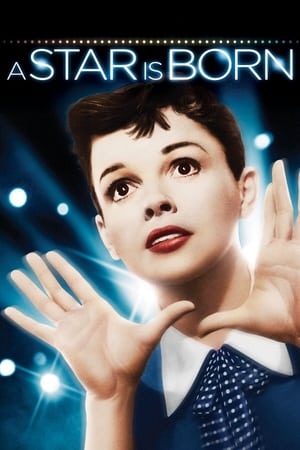
A movie star helps a young singer-actress find fame, even as age and alcoholism send his own career into a downward spiral.
A gang of crooks evade the police by moving their operations to a small town. There the gang's leader encounters a faith healer and uses him to scam gullible public of funds for a supposed chapel. But when a real healing takes place, a change comes over the gang. Lost film, only the most famous scene has survived.
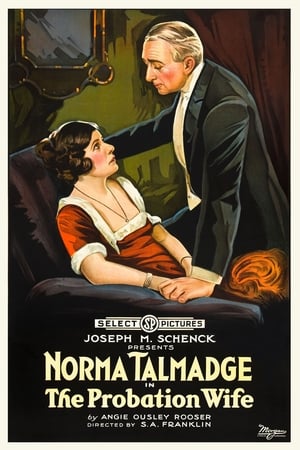
Myra Coningsby, a newlywed who is determined not to be a submissive wife but ultimately learns to find a balance in her marriage after a dramatic incident involving a faked drowning.
In 19th century Paris a hedonistic woman marries an aristocrat but has trouble keeping faithful to him.
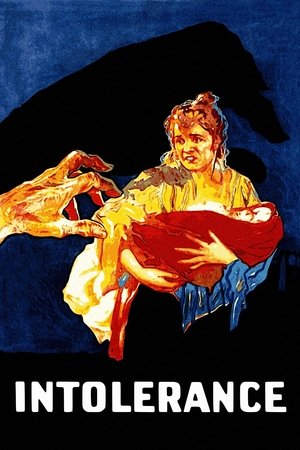
The story of a poor young woman, separated by prejudice from her husband and baby, is interwoven with tales of intolerance from throughout history.
Smarrita!
Just as Galeen and Wegener's Der Golem (1915) can be seen as a testament to early German film artistry, The Story of the Kelly Gang (1906) symbolizes both the birth of the Australian film industry and the emergence of an Australian cinema identity. Even more significantly, it heralds the emergence of the feature film format. However, only fragments of the original production of more than one hour are known to exist, preserved at the National Film and Sound Archive, Canberra; Efforts at reconstruction have made the film available to modern audiences.
Nancy Carroll stars in Manhattan Cocktail as Babs, a college coed who dreams of becoming a famous actress. Joining up with her campus chums Fred (Richard Arlen) and Bob (Danny O'Shea), likewise aspiring thespians, Babes heads to Broadway with stars in her eyes. The winsome threesome are quickly disillusioned by the heartless machinations of nasty producer Renov (Paul Lukas) and his harridan wife (Lilyan Tashman). Before the plot proper gets under way, the audience is regaled with a cute "mythological" prologue, featuring the same three leading actors. Manhattan Cocktail was a silent picture, except for two brief musical numbers showcasing Nancy Carroll.
When anarchist bombs disrupt the engagement ball of Princess Marie Pavlovna, her fiancé, Prince Michail Koloyar, helps her to escape in a carriage. Then Theo Kameneff, secretly in the pay of a foreign government, becomes dictator and, desiring the princess, issues an edict that all women between the ages of seventeen and thirty-two must register and become state property.
When We Grow Old
A dada