The film focused on a young black man who joins the Royal Canadian Mounted Police and becomes a hero by rescuing a captive mixed-race woman from a hostile American Indian tribe. The young man later purchases a ranch that becomes the foundation for great financial wealth.
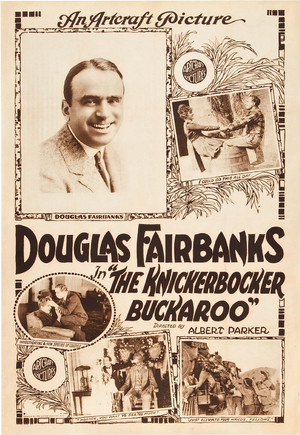
A lost film. Teddy Drake is a pleasure-seeking aristocrat who ends up expelled from his exclusive Fifth Avenue club for playing practical jokes and other rambunctious antics. He decides to reform his selfish ways and boards a train heading heading for the Southwest.
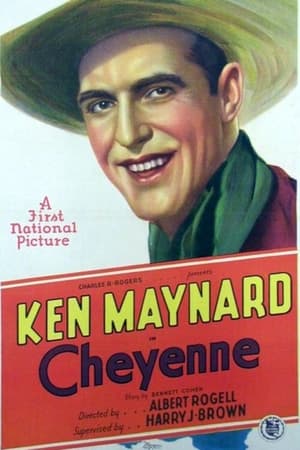
Cal Roberts can ride anything with four legs. He enters the contests held at big rodeo. He wins all honors and meets a girl who races horses to help her father clear pressing debts. Complications follow, but Cal wins the girl.
Cal Stanley goes undercover as a beef buyer in order to catch the gang responsible for stealing the area's cattle.
Buck Duane guns down the man who killed his father and flees from the law. He rescues a girl he once loved from outlaws, but the wife of outlaw chief has her own designs on him.
Nancy Burton, niece of the sheriff, is in love with Deputy Tom Farrell, but she as an aversion to bloodshed. She overhears that he shot and killed an outlaw three years in the past. He swears to her that it never happened but she does not believe him. Later her uncle tells he that it was he who killed the outlaw, Trevis, in the line of duty. She also learns that the brother of Trevis, seeking revenge, is on his way to kill Farrell.
Martin, the heroine's father is falsely believed to be in league with fur thieves, but the real villain, not content with robbing the old man of his furs, also plots the theft of his fair daughter. He nearly succeeds, but the resourceful Martin blocks both games.
Dave Collins is a young man who is bequeathed a ranch on the condition that he marry the late owner's granddaughter Lucille. But when he arrives at the ranch with young sidekick Spuds in tow, Dave finds that a distant relative of Lucille's, Ray Foster, has taken his place. Foster hires tough Bart Haywood to kill his rival, and soon our hero is hogtied to a handcar in the path of an approaching train.
Dean Randall is a hero of the Great War who comes home to his horse and his father's ranch. When back he saves a family in a wagon train -- a father, daughter Grace, and three orphan children.
The famous black cowboy Bill Pickett shows his prowess in rodeos. Only small parts of the film survive.
During a protracted drought, Larry Day and his riders from the Bar None find and rescue Professor Parkinson, an alleged rainmaker.
Full of booze, bluster, and fight "Black Pete," a big "bad man" of the wild west comes from the local saloon ready to put daylight through anybody and everybody within the range of his voice and the reach of his gun and, to further convince the crowd that he is the terror of the territory, lands on an inoffensive bystander knocking him down. "Billy" is an entirely different sort of a citizen; he is a young chap living with his sister whom he loves very dearly; their love is mutual. Billy has received a letter and stops on his way home in an opening in the woods to read it. While thus engaged, an Indian girl is making her way through the woods. "Black Pete" coming along the pass sees and attacks her. Billy springs to her defense and knocks "Pete" down; in falling he strikes his head on a stone and is killed.
In the mountain wilds of Tennessee there is no end to the manufacture of moonshine whiskey. Whole families live on this nefarious trade and many of them die by it. The men who work at this business are constantly hunted by United States revenue officers as violators of the law for manufacturing of liquor without a special license. The "Mountain wife" loves her husband and stands by and shields him from his enemies, the officers; when they are on his track she hides him, then throws them off his trail, giving him time to escape in the mountain fastnesses, as we are shown in this interesting and thrilling picture.
Nora, who is the president of the Bachelor's Club, receives a letter announcing the death of her uncle in the west and that he has made her heir to his immense fortune. Including a ranch at Grey Oaks. Nora decides to go west and take charge of the ranch and run it herself a la suffragette fashion. She invites all the girls to go with her and they start for their new home. Arriving at Grey Oaks they pay no attention to the cowboys who greet them at the station but go at once in the old stage-coach to the ranch. The cowboys follow, approach the ranch, offer their services and are rewarded by being driven from the premises. The boys make up their minds to "get next" to the girls and devise a scheme.
Denton, a young easterner, arrives in the gold-fields, looks about for a "find" and a partner. Entering a saloon, he partakes of some refreshment, watches the patrons of the place and studies their characters, while thus engaged a young miner, named Harper, somewhat prejudiced against easterners, engages in a quarrel with a Mexican who is about to plunge a knife into the miner when Denton seizes his wrist and wrenches the weapon from his grasp. Harper thanks Denton, and after learning the eastern man's desire to find a prospecting partner, Denton loins forces with him and they start in to work a lead and strike paying dirt.
A short silent film produced by Gaston Mèliès in San Antonio.
Lorna is a woman and she is all business when it comes to running the "L.L." Ranch and she has no trouble in handling it and the "boys" who work for her, especially "Jeff," her foreman, who gives her a hand. She evidently appreciates his services and thinks him a handy and pleasant fellow to have around, her "Runs" are the best in Texas. There is a question of title to her land. Finally the Supreme Court decides against her and she is obliged to turn the "L.L." Ranch over to Sir Reginald Coutts-Harcourt, in whose favor the decision has been made.
Two ranchers are rivals not only over cattle but also over a beautiful young Mexican girl.
Cyclone Pete, the Terror of the Plains, is feared alike by red men, yellow men and white man, but in an evil moment he advertises for a wife, and gets one with an amiable exterior but an iron will. The Terror of the Plains tries to tame his bride, but the glaring eye which strikes terror into every male heart simply amuses the new wife, and the things she does to that poor, innocent, helpless 'terror of the plains' are really a shame. Eventually they part company, and Pete becomes a highwayman and holds up a stage coach. He strips all the male passengers of their valuables. The last passenger is a woman. She will not give up a cent, and when the 'terror' insists, the heroine suddenly knocks 'him where he lives,' tears off his mask, and husband and wife are face to face. Then she leads Pete home by the ear, and finally turns him into a decent citizen.
A short silent western produced by Gaston Mèliès in San Antonio.