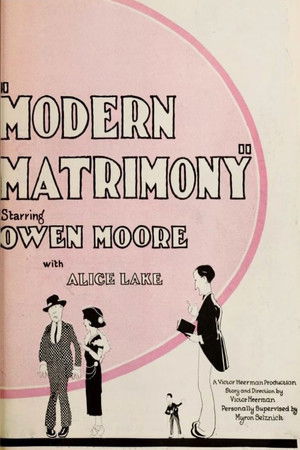
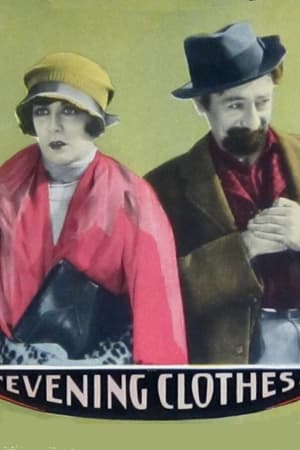
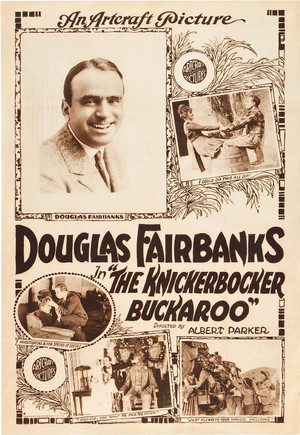
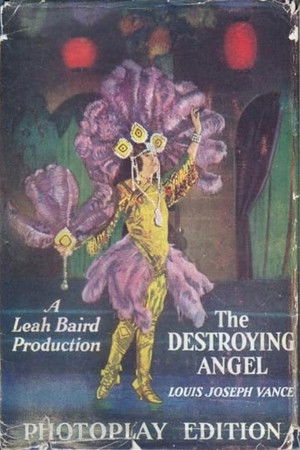
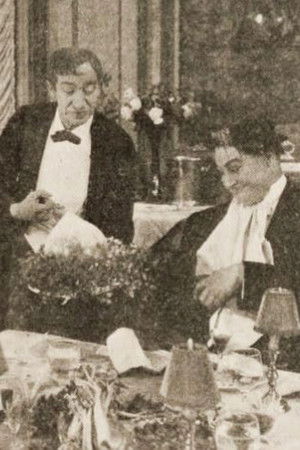
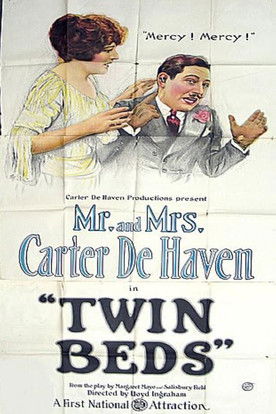
When two kleptomaniacs (including the brides’ father) and two actual thieves all attend a double wedding their light fingers cause no end of trouble for the mother of the brides to a dizzying degree!
Stan and Ollie are salesmen attempting to sell a washing machine; they fail constantly after several near misses. One would-be sale has them carrying the machine up a large flight of steps, only to find out that a young lady wants them to post a letter for her. The boys later get into an argument knocking off each other's hats, which eventually involves scores of others. A police van eventually carts all those involved away except Stan and Ollie, who afterwards try to find their own headgear amongst the hundreds of others lying on the street.
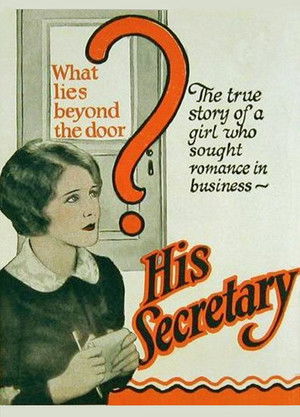
After graduating from college, rich girl Margery Carr decides to do some good in the world. Much to the chagrin of her father, she decides to open an office to help derelicts. For her secretary, she picks an ex-gangster named Bubbs out of the throng.
Colonel Faraday asks his daughter, Diana, to recover some letters he wrote to Yvette, an adventuress, when she tries to blackmail him.
Quota quickie comic short from Britain that is now lost.
Miles Machree (J. Warren Kerrigan) meets Irish-American Sheila Lynch (Fritzi Brunette) when she travels through Ireland with her father (James O. Barrows). Soon after the Lynch's return to the States, Miles follows, and through his uncle's connections, gets a job on the New York City police force.
The Misleading Widow is a 1919 silent film comedy starring Billie Burke as Betty Taradine. It was based on the 1917 stage play Billeted by F. Tennyson Jesse and H.M. Harwood. The film was produced by Famous Players-Lasky and distributed through Paramount Pictures. It appears to be a lost film.
A wife attempts to cure her husband Binks's addiction to alcohol by bringing the Misses Simms, identical twin sisters, to her home as part of a scheme.
The story tells of the adventures of an unusual young duke, whose father, the old Grand Duke of Kiev, coveted the wife of Count Dardinilis, his colonel of Huzzars; of the old Grand Duke's plot to get her for himself; of her accidental death at the hands of his Cossacks, and of the colonel's escape with his little daughter to America. The young Grand Duke, now an orphan, comes to America to complete his education.
Yano is a small delivery boy for his uncle, who keeps a curio shop in Chinatown. His loves are Tama, his sweetheart, and Bengi, his dog. Bengi is seized by dog catchers, but is rescued by Letty Stanford, for which Yano promises his fealty. Later Letty is kidnapped by Germans because of her war activities, and it is Yano who goes to her rescue and gets her free in spite of his diminutive size. The Little Japanese has paid his debt.
Rooly, Pooly and Dooly were "picture sandwiches," but hardly shining lights, even in that capacity. Consequently they were "canned" by the management. A brilliant idea; one would play the wild man in the village square, a real live show of their own. Rooly and Pooly then basked in the society of fair country belles, but Dooly at length was rescued by Miss Smart, looking for excitement. She was not disappointed.
Bob Sands' joy of life disappeared when his little brother arrived. It's not that his parents had neglected him on purpose, but of course the new baby claimed most of their attention. When Bob played noisily, he was warned not to wake the baby and forced to play away from the house. Hoping for sympathy, he tells his playmate, Hilda, about the new arrival.
When he strikes it rich in Oklahoma oil fields, Jimmie Farrell is talked into risking everything in a card game against notorious gambler "Ace High" Burdette. To everyone's surprise, Burdette loses HIS fortune to Jimmie, including his estate in Long Island, NY. Stunned, Burdette wanders aimlessly through a forest and trips over a rock, sustaining a head injury. A feeble-minded local named "Curio" Johnson finds Burdette and takes him to his cabin, for some company. Meanwhile, Jimmie--under the impression that a depressed Burdette has killed himself--goes to New York to inspect his new "estate" and meets Burdette's daughter, Cynthia. The girl, however, mistakes him for a new chauffeur. Complications ensue.
"'Boxcar' Simmons, a tramp, represents himself as a mining millionaire in a small town. The population accepts him at his own valuation, and two of the town's 'slickers' make desperate efforts to 'take him for his roll.' One of their schemes is to sell him a worthless ranch, but he turns the tables on them by making them believe that the ranch is a veritable bed of silver ore, and then, after they buy it, he presents the major part of the proceeds to the girl who owns the place and with whom he had fallen in love." (Moving Picture World, 24 Jun 1922, p. 736.)
A couple of rowdy gamblers, a cowboy, and a woman undercover.
In spite of their oversupply of energy, their Pa-to-be just doted on the kids. The fascinating traveling salesman, who won away their fickle Ma, did not, but through the widow's deception, the kids won the parent of their hearts.
To be a fond and devoted parent, and to be unable to play with the heaven of your heart is indeed a cruel decree. That was the case of Papa Binks, but he outwitted Mrs. Binks and the nurse in a very effective, yet unostentatious manner, while he and the baby had the time of their lives.
Returning to his father's cattle ranch after the excitement of serving in combat overseas, Bud McGraw becomes restless, and his father decides to send him to an old friend who commands the Border Police in Texas. On the way he meets Peggy Hughes, accompanying her Uncle Graham, a customs inspector, and he retrieves her hat from the rails of a train. At the headquarters, numerous scrapes and fights win him the admiration of, and friendship with, the men. Lazaro, a Secret Service agent, invites Mrs. Graham and Peggy, who are staying at the border station, for an automobile ride, and they are captured by bandits and held for ransom. Bud and his pals deliver the ransom and discover that Lazaro is the bandit chief. Lazaro refuses to release Peggy, but a jealous rival, Nita de Garma, causes his downfall and shoots him as the Border Police arrive to rescue the party.
Skelley buys a seat in the orchestra and determines to get his money's worth. No use. Mrs. Van Snoozeheim refused to remove her big hat. But it came off. Skelley did it. That started something with Mrs. Van Snoozeheim's escort. Over the stage they fought, and into the Rathbone Café, and into Higgin's saloon. He took them over to his arena. There were two rounds to the finish.
James Montgomery Flagg first draws his sketch of the girl, and then tearing it from its frame reveals the real girl lounging in bed with the pouting expression which is her wont. Then we are treated to an exposé of her various moods and selfish acts. For instance, she allows mother to bring breakfast to her in bed, and doesn't even greet her with a smile nor trouble to thank her. And it is nothing for father and mother to sit up until daylight to open the door for her as she returns from a dance. Finally she demands an automobile so that she will not have to bother with taxis, and in order to grant her wish, some of the household furniture has to be sold. In a tantrum she takes her car and goes to her lover, and the closing scene shows her in a home of her own, making life miserable for a husband.