Snub, the delivery man, and his assistant, Sunny, are returning from a delivery when they almost run over a lost woman. After she asks for directions, they accompany the woman to a dance school, where Snub is mistaken for the new professor.
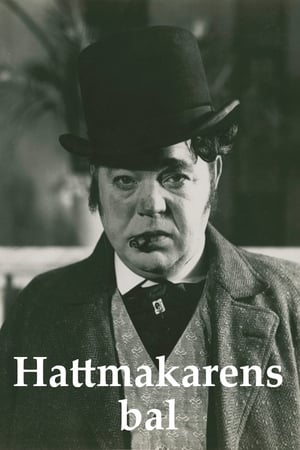
Out of the three-part burlesque, the only surviving one is the one called Pufi would buy a pair of shoes, with Hungarian inserts. The film is shot on a real-life location, in a Budapest shoe shop, and it portrays the mutual efforts of a puny sales assistant and Pufi, the bladder-of-lard customer, to find him a suitable pair of shoes. The content of the other two parts is not known.
A clueless man finds a bomb on the street and keeps throwing it to the crowd around him. The sketch then moves with the clueless nerd getting involved in all sorts of troubles until he accidentally gets into a hideout from a terrorist group that will complicate things for him more than he ever hoped.
A Harold Lloyd short featuring a young Snooky the chimp
The dashing but arrogant Prince Michael Fedor Lubimoff has to flee Tsarist Russia after falling into disgrace and settles in Monte Carlo, where he resumes his life of debauchery while World War I ravages the fields of Europe… (Partially lost film; reels 3 and 9 of a total of 11 are missing.)
El que la traga la paga
Taken from The Arabian Nights, a wicked sorcerer and the beautiful prince Achmed battle one against the other during a series of wondrous adventures.
In 15th century France, a gypsy girl is framed for murder by the infatuated Chief Justice, and only the deformed bellringer of Notre Dame Cathedral can save her.
A fisherman and a rising lawyer who grew up together as brothers fall in love with the same woman.
An 1895 British short black and white silent comedy film featuring two drunken men and a boy squabbling in a small bar.
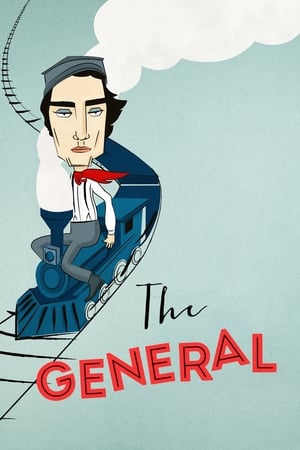
It's a classic boy-meets-girl story, boy-loses-girl, boy gets mistaken for an escaped convict and ruthlessly chased by armies of cops across the countryside in a thrill-packed stunt-addled climax.
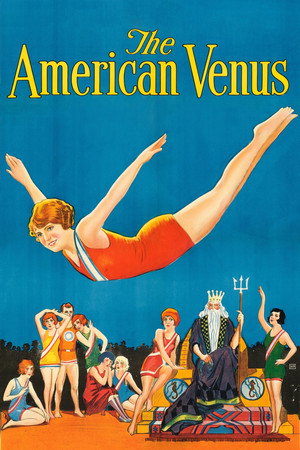
A lost film - Mary Gray, whose father manufactures cold cream, is engaged to sappy Horace Niles, the son of Hugo Niles, the elder Gray's most competitive rival in the cosmetics business. Chip Armstrong, a hot-shot public relations man, quits the employ of Hugo Niles and goes to work for Gray, persuading Mary to enter the Miss America contest at Atlantic City, with the intention of using her to endorse her father's cold cream should she win. Mary breaks her engagement with Horace. When it appears that she will win the contest, Hugo lures her home on the pretext that her father is ill, and she misses the contest. Chip and Mary return to Atlantic City, discovering that the new Miss America has told the world that she owes all her success to Gray's cold cream. On this note, Chip and Mary decide to get married.
Anita and Marion realize that an abandoned baby they sneaked into an orphanage was kidnapped from a millionaire. For the reward, they proceed to break into the institution at night, dressed as men to beat curfew, to get the kid out again. This film survives only in very fragmentary form.
The Count sets out to make a private room for him and his Countess, built in such a way no one can see, hear, and most importantly, disturb them. But unbeknownst to the Count, his wife has set her eyes on the court minstrel. Based on Edgar Allan Poe's “The Cask of Amontillado” and Honoré de Balzac's “La Grande Breteche”.
Nunu and Iago are in love with each other. The married guard Girgola wants to get hold of the woman. Girgola gets Iago arrested and makes Nunu marry his retarded brother. On one occasion he finds the woman alone and rapes her. Nunu jumps in the river to commit suicide but gets saved by Iago’s friends. Iago escapes from jail, but Girgola attacks his hideout and haves him killed together with his friends. Girgola also kills Nunu’s old father and accuses Nunu of the murder. Nunu is tied to a pole and dies in the exile.
Robin Hood is a 1912 film made by Eclair Studios when it and many other early film studios in America's first motion picture industry were based in Fort Lee, New Jersey at the beginning of the 20th century. The movie's costumes feature enormous versions of the familiar hats of Robin and his merry men, and uses the unusual effect of momentarily superimposing images different animals over each character to emphasize their good or evil qualities. The film was directed by Étienne Arnaud and Herbert Blaché, and written by Eustace Hale Ball. A restored copy of the 30-minute film exists and was exhibited in 2006 at the Museum of Modern Art in New York City.
Trilby parody with several key characters' names altered. Presumed lost.
Set during the 16th-century Spanish occupation of Flanders, the story concentrates on the fiercely patriotic Mark Van Ryke (Colman). Donning the guise of "Leatherface," a swashbuckling masked avenger, Van Ryke performs his derring-do on behalf of the Prince of Orange (Nigel de Brulier). Naturally, Van Ruke considers beautiful Spanish aristocrat Donna Leonora de Vargas (Vilma Banky) to be a bitter enemy, and the feeling is mutual. To no one's surprise, however, Van Ryke and Donna Leonara eventually fall in love (hence the title). The pulse-pounding climax finds Van Ryke riding hell-for-leather through a rainstorm to warn the Flemish troops about the Spaniards' plans to burn the city of Ghent to the ground. Two Lovers was based on Madame Orczy's novel Leatherface, and adapted for the screen by Alice Duer Miller.
Andrew Gibson inherits problems when his father dies and leaves shares of his piano manufacturing business to his workmen. To add to his troubles, Andrew's girl, Nora Gorodna, is being pursued by José Ferra, one of the workmen; and Lila Normand, a society girl, tricks Andrew into proposing.
A meek young man must find the courage within when a rogue tramp menaces his hometown.