The rise and inevitable fall of an amoral but naive young woman whose insouciant eroticism inspires lust and violence in those around her.
In 1921, we follow two women - Marie and Grete - from the same poor Viennese neighborhood, as they try to better the lives of themselves and their families during the period of Austrian postwar hyperinflation.
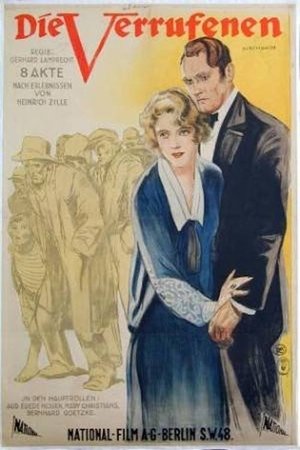
It was not just the children who were treated badly by the wealthy Weimar republic. Robert Kramer is released from prison but struggles to adjust to civilian life. His father disowns him, his wife has left him for another man. There is no work. He eventually arrives in a shelter for the homeless, and seeks salvation through Emma, a prostitute.
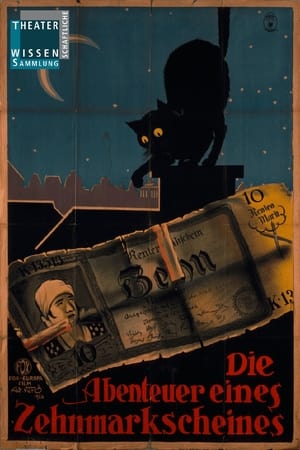
Anna receives her first weekly wage: a ten-mark note with the no. K 13513. She gives it to her mother, who hides it in her Bible. Anna's brother Robert steals the note and uses it to buy a knife with which he becomes a murderer.
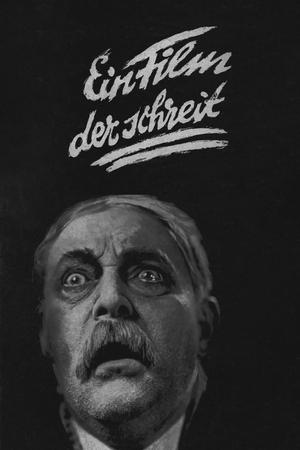
In this realistic, unsentimental portrait of Germany’s dire economic situation, a middle-aged payroll clerk loses his job due to technological advances and, unable to find another, descends into despair. The film’s director, Marie Harder, was one of only a few women directors of the time and was also the head of the German Social Democratic Film Office. She made only two known films before her accidental death in exile in Mexico in 1936.
Nine part documentary series on the advantages of the Neues Bauen architectural movement, particularly in addressing housing shortages.
When a woman dies in a supposed accident, her parents suspect their son-in-law of foul play. When the police begin to agree, the murder suspect vanishes.
Three Philly guys go to a party in the deep suburbs where gambling and alcohol will make it difficult to return home.
A lonely and forgotten trap artist throws a party in his futuristic mansion to give voice to the ghosts of his past as a singer.
An orphan (Richard Barthelmess) is adopted by Major Buford (Claude Gillingwater) is educated in Lexington and joins the Union Army as a Captain. He rediscovers his childhood sweetheart (Molly O' Day) and after his adopted father dies in the civil war, he gives up his inheritance in Kentucky for the girl he loves and moves back to be to his real birthplace to be with her. The Little Shepherd of Kingdom Come is a lost 1928 silent film drama directed by Alfred Santell and starring Richard Barthelmess. It was produced and distributed by First National Pictures. The film is a remake of a 1920 Goldwyn Pictures film with the same title starring Jack Pickford, also lost.
Four drifting souls seek answers: a tormented war veteran, guilt-ridden teen, resilient single mom, and a struggling pastor. Their intertwined journey explores faith, forgiveness, trauma, and resilience. Light in the darkness: God's love guides them.
After being separated for several years, a young woman invites her mother into her house. Reunions oscillate between reconciliation and violence, and reveals the personality of the girl and the one of powerful and overwhelming mother..
A man approaching a midlife crisis has a fantasy affair with a waitress.
A rich young man falls in love with a poor girl but his mother disapproves of their relationship. Meanwhile, a local goon also falls in love with the same girl.
Helen Thomas is an unhappily married woman. While spending Christmas alone at home, she forms a brief yet passionate relationship with Tarik El Bez, a quiet immigrant worker who comes to fix her computer on a cold December night. Trapped in a small living room, the two loners find themselves engaging in a gentle struggle between intimacy and privacy.
The annual Chinese spring festival dinner gets a little complicated when the family's only son brings home his Senegalese girlfriend.
Since the establishment of the bamboo weaving cooperative, the appearance of Zhulin Village has changed significantly. Visitors seeking to learn, inspectors, interviewers, and tourists placing orders have been coming in an endless stream. They eat all day and all month long, leading to frequent quarrels, fights, and cases of alcohol poisoning, causing the smart and capable cafeteria manager, Xiao Wangfa, to be driven to tears and indescribable suffering. Once, when Vice Secretary Guo of the Provincial Committee came to the village for an inspection, the lunch prepared for him was eaten by the leaders from the county. Xiao Wangfa had no choice but to serve simple home-cooked meals like mung bean porridge, steamed buns, and peanuts, anxiously preparing for punishment. Unexpectedly, Vice Secretary Guo was very pleased with the meal, and the villagers of Zhulin saw hope from this incident.
Facing either the wrath of her parents or a forced marriage to a man more than twice her age, fifteen year old Evie makes an impossible choice.
Luis
A young man is freed from prison. The communists are reforming him.