A drama set during World War II where a submarine carrying a secret weapon attempts to stop a planned third atomic bombing of Japan. Based on Harutoshi Fukui's novel Shuusen no Lorelei.
London, England, May 2000. The peaceful life of elderly Joan Stanley is suddenly disrupted when she is arrested by the British Intelligence Service and accused of providing information to communist Russia during the forties.
Jamie Graham, a privileged English boy, is living in Shanghai when the Japanese invade and force all foreigners into prison camps. Jamie is captured with an American sailor, who looks out for him while they are in the camp together. Even though he is separated from his parents and in a hostile environment, Jamie maintains his dignity and youthful spirit, providing a beacon of hope for the others held captive with him.
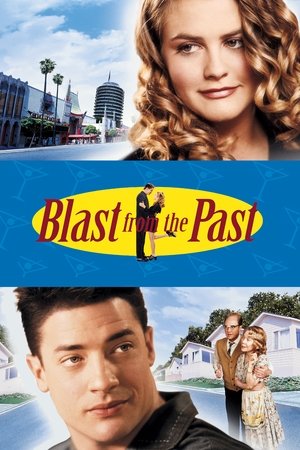
Following a bomb scare in the 1960s that locked the Webers into their bomb shelter for 35 years, Adam now ventures forth into Los Angeles to obtain food and supplies for his family, and a non-mutant wife for himself.
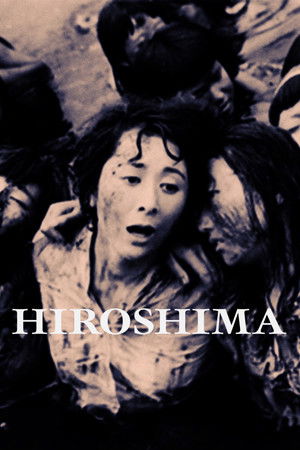
The deep conversation between a Japanese architect and a French actress forms the basis of this celebrated French film, considered one of the vanguard productions of the French New Wave. Set in Hiroshima after the end of World War II, the couple -- lovers turned friends -- recount, over many hours, previous romances and life experiences. The two intertwine their stories about the past with pondering the devastation wrought by the atomic bomb dropped on the city.
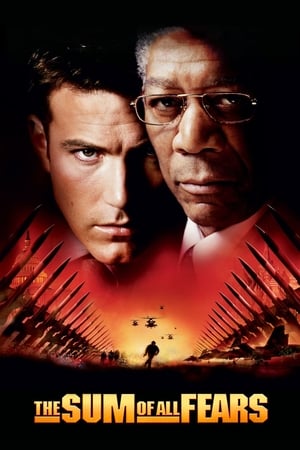
Chappy Sinclair is called to gather together a mixed Soviet/U.S. strike force that will perform a surgical strike on a massively defended nuclear missile site in the Middle East. Chappy finds that getting the Soviet and U.S. Pilots to cooperate is only the most minor of his problems as he discovers someone in the Pentagon is actively sabotaging his mission.
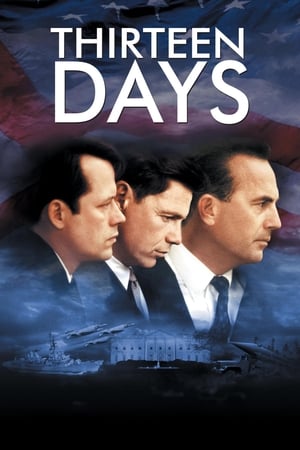
The story of the Cuban Missile Crisis in 1962—the nuclear standoff with the USSR sparked by the discovery by the Americans of missile bases established on the Soviet-allied island of Cuba.
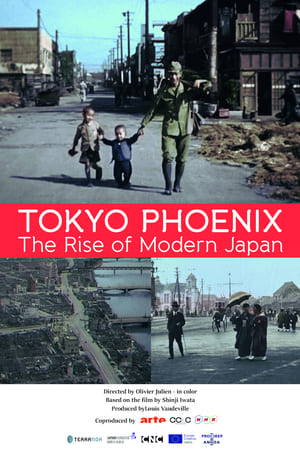
In 150 years, twice marked by total destruction —a terrible earthquake in 1923 and incendiary bombings in 1945— followed by a spectacular rebirth, Tokyo, the old city of Edo, has become the largest and most futuristic capital in the world in a transformation process fueled by the exceptional resilience of its inhabitants, and nourished by a unique phenomenon of cultural hybridization.
While on a fishing trip, Harry Baldwin and his family hear an explosion and realize that Los Angeles has been leveled by a nuclear attack. Looters and killers are everywhere. Escaping to the hills with his family, he sets about the business of surviving in a world where, he knows, the old ideals of humanity will be the first casualties.
To historians, physicist Lise Meitner deserves to be placed on a par with Einstein, Heisenberg and Otto Hahn. In the 1930s on the verge of World War II, she led a small group of scientists who discovered that splitting the atomic nucleus of uranium releases enormous energy. This extraordinary film tells the story of a woman who was far ahead of her time as a scientist and a pioneer of feminism.
Assigned to oversee the development of the atomic bomb, Gen. Leslie Groves is a stern military man determined to have the project go according to plan. He selects J. Robert Oppenheimer as the key scientist on the top-secret operation, but the two men clash fiercely on a number of issues. Despite their frequent conflicts, Groves and Oppenheimer ultimately push ahead with two bomb designs — the bigger "Fat Man" and the more streamlined "Little Boy."
A disturbing collection of 1940s and 1950s United States government-issued propaganda films designed to reassure Americans that the atomic bomb was not a threat to their safety.
Austin, Texas, is an Eden for the young and unambitious, from the enthusiastically eccentric to the dangerously apathetic. Here, the nobly lazy can eschew responsibility in favor of nursing their esoteric obsessions. The locals include a backseat philosopher who passionately expounds on his dream theories to a seemingly comatose cabbie, a young woman who tries to hawk Madonna's Pap test to anyone who will listen and a kindly old anarchist looking for recruits.
A story about the effect of the atomic bombing of Hiroshima on a boy's life and the lives of the Japanese people.
Three years after the Hiroshima bombing, a teenager helps a group of orphans to survive and find their new life.
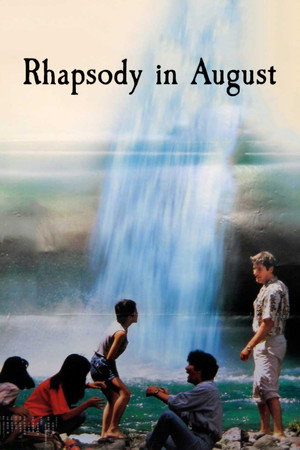
An elderly Nagasaki hibakusha spends a summer caring for her four grandchildren, whose curiosity about the 1945 bombing stirs buried memories and moral questions. When an American nephew from Hawaii visits, the family confronts grief, guilt, and the possibility of reconciliation across generations.
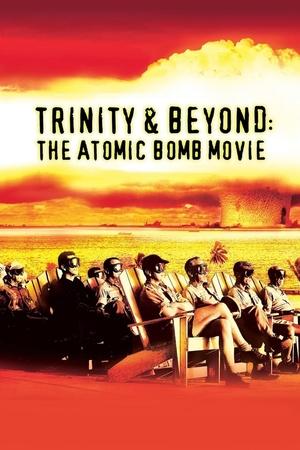
"Trinity and Beyond" is an unsettling yet visually fascinating documentary presenting the history of nuclear weapons development and testing between 1945-1963. Narrated by William Shatner and featuring an original score performed by the Moscow Symphony Orchestra, this award-winning documentary reveals previously unreleased and classified government footage from several countries.
Set in German-occupied Norway, resistance fighter Knut Straud enlists the reluctant physicist Rolf Pedersen in an effort to destroy the German heavy water production plant in rural Telemark.
An educational film that instructs people on how to survive atomic bombs and the radiation they emit while following a family facing nuclear attack who calmly prepare for the aftermath. Shows the various modes of Civil Defense that were being developed to protect the American population in the event of a nuclear war.
The story of J. Robert Oppenheimer's role in the development of the atomic bomb during World War II.