Unemployed Antonio is elated when he finally finds work hanging posters around war-torn Rome. However on his first day, his bicycle—essential to his work—gets stolen. His job is doomed unless he can find the thief. With the help of his son, Antonio combs the city, becoming desperate for justice.
Two small children and a ship's cook survive a shipwreck and find safety on an idyllic tropical island. Soon, however, the cook dies and the young boy and girl are left on their own. Days become years and Emmeline and Richard make a home for themselves surrounded by exotic creatures and nature's beauty. But will they ever see civilization again?
A Nazi propaganda movie from 1941 directed by Max W. Kimmich, covering a story of Irish heroism and martyrdom over two generations under the occupation of the British.
Communist Szczęsny juggles between his revolutionary activities and love to a fellow party member Madzia in this sequel to "Cellulose".
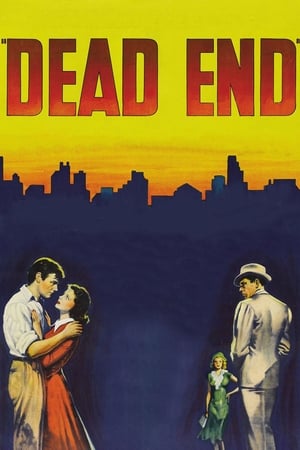
A former Prohibition-era Jewish gangster returns to the Lower East Side of Manhattan over thirty years later, where he once again must confront the ghosts and regrets of his old life.
In a run-down South American town, four men are paid to drive trucks loaded with nitroglycerin into the jungle through to the oil field. Friendships are tested and rivalries develop as they embark upon the perilous journey.
A bumbling tramp desires to build a home with a young woman, yet is thwarted time and time again by his lack of experience and habit of being in the wrong place at the wrong time...
After the death of a United States Senator, the idealistic Jefferson Smith is appointed as his replacement in Washington. The naive and earnest new senator soon finds himself battling political corruption.
Bambi's tale unfolds from season to season as the young prince of the forest learns about life, love, and friends.
Follows the Bulgarian people's struggle for national independence in the period from 1875 to the Liberation from Otoman bondage.
The film is an adaptation of Henrik Ibsen's play A Doll's House. The film uses Ibsen's alternate ending where the unhappy couple are reconciled at the end
The course of an organized strike by workers from North Moravian steelworks in 1931 to resist mass layoffs during the economic crisis.
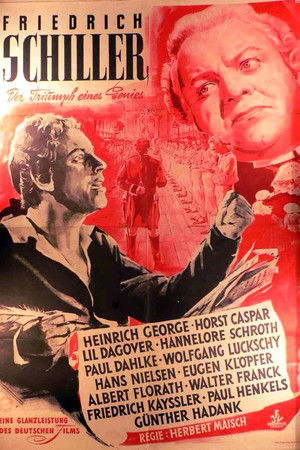
The young Schiller, whose heart and soul are writing and poetry, is forced into the military academy (the pride and joy of the Duke of Württemberg). Schiller is disgusted by the everyday routine of the military, always back and forth between breeding and drills. Conversation, conflict or even critique are discouraged – the oppression insufferable for the young rebel. Disgusted by the brutality, he writes his drama "The Bandit", which he would later publish anonymously. But following a frank conversation with the Duke, Schiller is dishonored and must leave the land.
At the end of the 18th century, the wealthy French scholar Saussure comes to a small Alpine village and offers 1,000 pieces of gold to anyone who can lead him to the summit of Mont Blanc. The young farmer's son Jacques Balmat wants to take on the dangerous task, even though his father has told him from an early age about the mighty mountain spirits who guard a legendary treasure of gold on the mountain peak.
Non-musical account of Puccini's opera: Tosca and Cavaradossi are in love, but the tyrant Scarpia desires Tosca and oppresses Cavaradossi who is fighting for freedom.
An English peace judge in an Irish district is married to an Irishwoman. She is a caring patriot. He is heavily indebted by a life of luxury, and doesn't shy away from dark deeds to maintain his lifestyle. Anti-Britsh propaganda film.
Professor Sonnenbruck is a scientist who is not particularly interested in politics. Even the meeting in 1943 with his former assistant Peters does not change him. He does not betray Peters, who has escaped from a concentration camp, but that is already enough for him. But after the war Sonnenrbruck gets into a conflict of conscience. He thought that science was finally free of politics again only to find the opposite happening at his university in Göttingen. A medical congress in the GDR brings him together with Peters, who is working on a major research contract there. Sonnenbruck decides to visit Peters.
In the south of France, in a vast plain region called the Camargue, lives White Mane, a magnificent stallion and the leader of a herd of wild horses too proud to let themselves be broken by humans. Only Folco, a young fisherman, manages to tame him. A strong friendship grows between the boy and the horse, as the two go looking for the freedom that the world of men won’t allow them.
A female worker in Socialist Hungary gains the acceptance of her male colleagues.
A musical film based on biographical facts about Clara Wieck's love for composer Robert Schumann (1810-1856), her marriage against her will, Schumann's triumph, and his tragic end due to mental illness. The film is beautiful and entertaining, full of noble spirit and beautiful words about art and love, which only conflict in a theoretical context; not least thanks to its solid cast, this film is quite serious and far from kitsch. Completed in 1944, during World War II, the film was rejected by the Nazi leadership, but was eventually released and enjoyed success with an audience already weary of war.