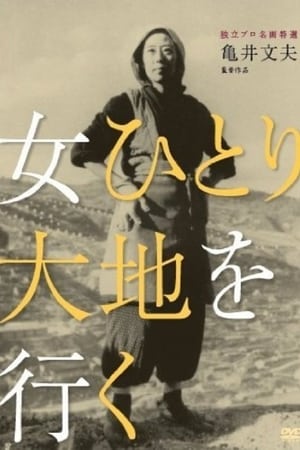
Onna Hitori Daichi wo Yuku (A Lonely Woman in a Lonely Land, Kinuta Production, 1953) was the second feature film directed by Kamei Fumio, who is known as a master of documentary films, and followed his “Haha Nareba Onna Nareba(Become a Mother, Become a Woman)” (1952).
Occurring at the time of the Chinese Civil War, following the victory over Japan, Nationalist agents fail in trying to destroy the student movement in Beijing.
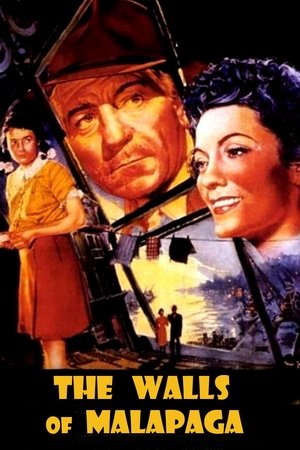
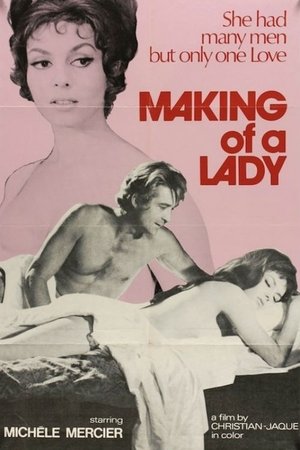
After murdering his mistress and being hunted by the authorities in France, Pierre stows away aboard a ship bound for Genoa. Though he's immediately robbed after arriving, things look up for Pierre when he meets kindhearted Cecchina, who introduces him to her mother, Marta. Pierre and Marta fall in love, but police are closing in and the new couple may not have much time left.
A detective drama set just before the unification of our physical education system. Criminal investigators investigate the murder of a football club official, bribery, and manipulation of match results.
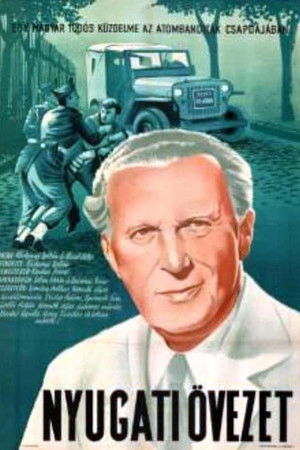
Prof. Laurent Akush from the Institute of Geophysics is working on a device that can be used to locate coal underground. For successful work he needs a tube XCX13, it is available in the West, but foreign firms sabotage the supply of the device. In his institute there is an enemy engaged in sabotage, but the professor does not believe in enemies. He believes that this is propaganda, science is above ideology, and that "scientists are made of a different dough." Laurent Akush receives an invitation to the international geological congress in Berlin, there he hopes to meet an old American friend, the scientist McLane. He takes with him his assistant Ferenc Ervish and a young Stakhanovite worker, Ishvan Kadosh. The professor does not yet know that in Berlin, Colonel Thompson of American intelligence is preparing a trap for him.
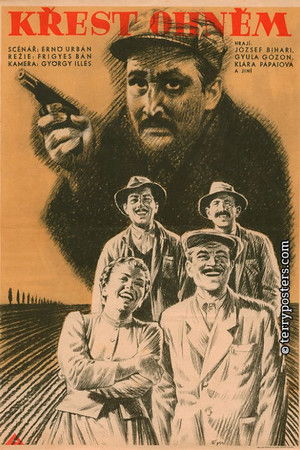
This propaganda film from the early years of socialist transformation in Hungary depicts kulak sabotage in production cooperatives. The prosperous peasant Ignatz Hato, one of the best farmers in the village, joins the Two Octobers cooperative, and soon all the small peasants follow him. The village rich, led by Lili Sohar, watching the great expansion of the cooperative, try to break up the cooperators with each other. Sohar's attempt bears fruit and Hato leaves the cooperative. Next, Lili Sohar tries to convince Ignatz Hato that she is planning to create a rival team of new rich people and urges him to join her. Ignatz refuses and does not give in to the blackmail. Lili's lover, a former gendarme, shoots party secretary Bozhine. At the wounded Božine's bedside, Ignác admits his mistake and asks to be accepted back into the cooperative. Sándor, the president of the cooperative, realizes that the collective should not prevent those who want to work honestly from joining.
This adaptation of Stendhal's timeless masterpiece of French literature tells the tale of Fabrice Del Dongo (Grard Philipe) a young archibishop who gives his heart and soul to romance rather than to the Church creating upheaval in the lives of evergone around him the Countess of Sanseverine (Maria Casares) is but one of the may women who love him. In turn she incurs jealous retributions from those in high places who desire her. For his crimes Fabrice is thrown in Prison where from Crimes Fabrice is thrown in prison where form his lonely window he falls in love with his jailer s daughter and plans a daring escape she however calls his plan insane and takes a vow to the Virgin Mary to never see him again ever if his escape succeeds the Charterhouse of Parma explodes with conflicting desires man s desire form God vs. his desire for romance.
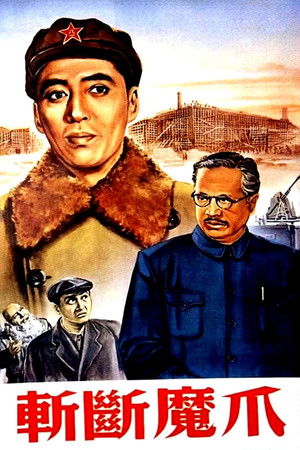
Cut the Evil’s Claw
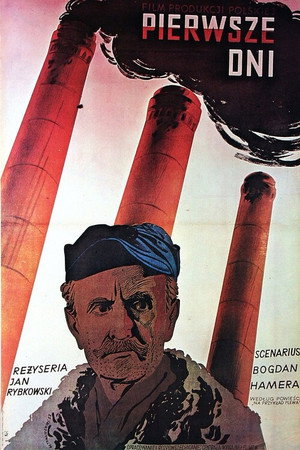
An old worker secures the future of his steel mill during the war.
Film shows the struggle of the Czechoslovak armed forces against groups of Ukrainian Insurgent Army (UPA) under command Burlak, who tried to pass through the territory of Slovakia.
A spy film about how saboteurs obtain important data about the activities of a key company, while also trying to thwart the plan and undermine work morale. But vigilant security agencies intervene in time and stop their heinous raids.
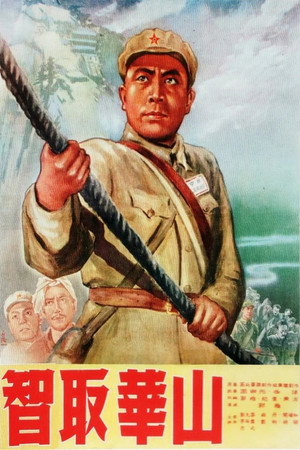
After the major campaigns, the Liberation War’s focus shifted to the northwest. Hu Zongnan retreated south, and Fang Zhiqiao led his remnants to Mount Hua, known for its rugged terrain. Fang deployed forces at key passes, but a military intelligence officer, with herbalist Chang Shenglin’s help, cut off enemy communication by reaching the North Peak. A political offensive led to the surrender of the enemy at Qianshi Zhuang, controlling all passages between the North and West Peaks. Trapped, Fang Zhiqiao’s troops, with shattered morale, launched a futile counterattack, leading to his despairing lament.
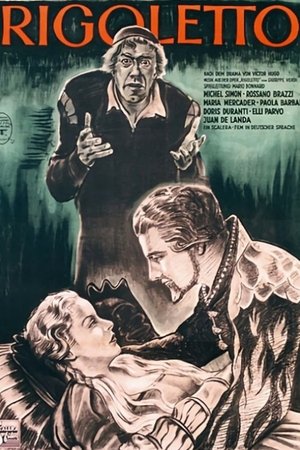
Based on a Victor Hugo play, and scored with music from the later opera by Giuseppe Verdi, the film tells about a hunchbacked clown whose beautiful daughter falls in love with the lecherous king.
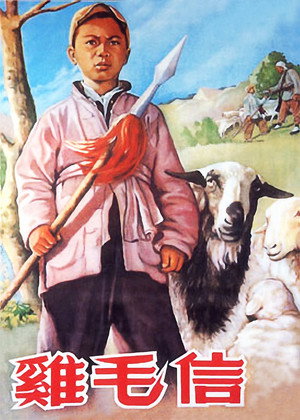
Twelve-year-old Hai Wa sends a secret letter containing Japanese military information to the Eight Route Army during the anti-Japanese war.
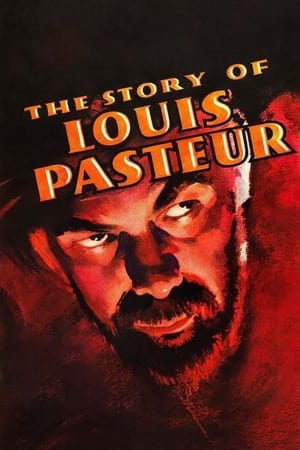
A true story about Louis Pasteur, who revolutionized medicine by proving that much disease is caused by microbes, that sanitation is paramount and that at least some diseases can be cured by vaccinations.
In the second half of the 18th century, the young shepherdess Emma accidentally catches the eye of the English painter George Romney. She becomes his model in London, where she also has several love affairs. After she is temporarily forced to work as a prostitute, she marries the much older Lord William Hamilton, who is stationed as British ambassador in Naples. There she meets Admiral Nelson again, whom Emma, now Lady Hamilton, had met years before...
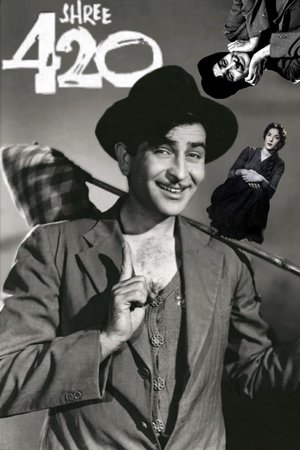
The story of a small-town man who comes to make it big in the city, where he is almost instantly relieved of all his possessions. Homeless and penniless, he is taken in by a woman who looks after him.
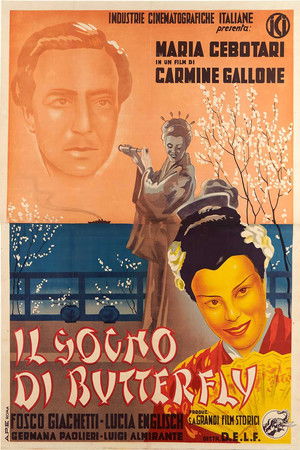
Italian filmmaker Carmine Gallone was still in his "operetta" mode when he helmed 1938's Il Sogno di Butterfly (Dream of the Butterfly) Maria Cebotari plays opera diva Rosa Belloni, currently starring in a production of Puccini's Madama Butterfly. The plot thickens when Rosa's backstage life begins to mirror the travails of the character she is portraying. The climax comes when Harry Peters (Fosco Giachetti), the American father of Rosa's illegitimate child, returns after four years with his new wife in tow, leading inexorably to a doleful ending both on- and offstage. Critics complained about the substandard photography in Il Sogno di Butterfly, but this might have been due to poor laboratory work.
A kung fu fanatic, Yu Ting (Alexander Lo Rei), searching for the ultimate master, saves a young Shaolin monk, Hsu Shi (William Yen), from a group of mobsters and sees it as a golden opportunity to enrich his kung fu skills. He persuades the young novice monk to smuggle him into Shaolin, but Ting's presence isn't welcome and he is driven out, but remains close to the temple, keeping in touch with Hsu Shi. When Ting rescues a girl from the clutches of the Flying Eagle gang, the Golden Wheel Lama and sworn enemy of Shaolin finds the perfect excuse to lead an assault on the Temple. Realizing Ting's devotion, the abbot decides to bring Ting into the Shaolin order and teach him the deadliest techniques to prepare him for the Lama's merciless fury.
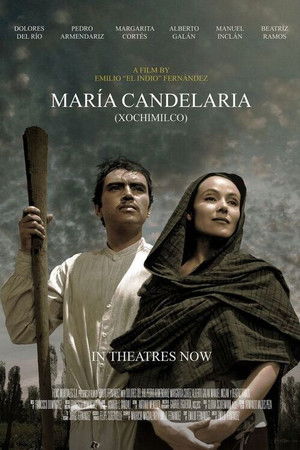
A young journalist asks an old artist about the portrait of a naked Indian woman that he has in his study. The artist tells the story of Maria Candelaria, a young Indian woman who was rejected by her own people for being the daughter of a prostitute. She is protected by a young Indian man, Lorenzo Rafael, who has fallen in love with her.