The lifelong friendship between Rafe McCawley and Danny Walker is put to the ultimate test when the two ace fighter pilots become entangled in a love triangle with beautiful Naval nurse Evelyn Johnson. But the rivalry between the friends-turned-foes is immediately put on hold when they find themselves at the center of Japan's devastating attack on Pearl Harbor on Dec. 7, 1941.
Based on a true incident that occurred in 1942 when nine Nazi saboteurs were put ashore on the coast of Long Island, New York, by submarine, with orders to blow up various defense installations.
A Jewish woman named Jettel Redlich flees Nazi Germany with her daughter Regina, to join her husband, Walter, on a farm in Kenya. At first, Jettel refuses to adjust to her new circumstances, bringing with her a set of china dishes and an evening gown. While Regina adapts readily to this new world, forming a strong bond with her father's cook, an African named Owuor.
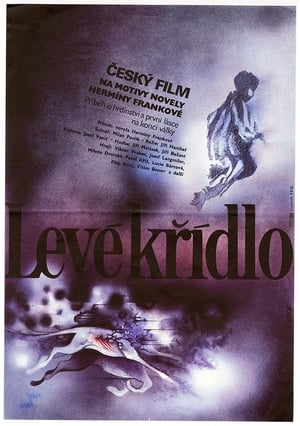
Svědomí
12 American military prisoners in World War II are ordered to infiltrate a well-guarded enemy château and kill the Nazi officers vacationing there. The soldiers, most of whom are facing death sentences for a variety of violent crimes, agree to the mission and the possible commuting of their sentences.
During a war that plagues everything around, a lumberjack's wife finds an abandoned baby girl. This meeting transforms the lives of the couple and those whose destinies intertwine with that of the child.
One day, just before Christmas in 1942, Gerda's and Otto's parents are arrested for being part of the Norwegian resistance movement during the Second World War, leaving the siblings on their own. Following the arrest, they discover two Jewish children, Sarah and Daniel, hidden in a secret cupboard in their basement at home. It is now up to Gerda and Otto to finish what their parents started: To help Sarah and Daniel flee from the Nazis cross the border to neutral Sweden and reunite them with their parents.
Deník psaný na vodu
Television film about people who are actively involved in the Slovak national uprising in 1944. A screen adaptation of the novel by Rudo Moritz in 1951.
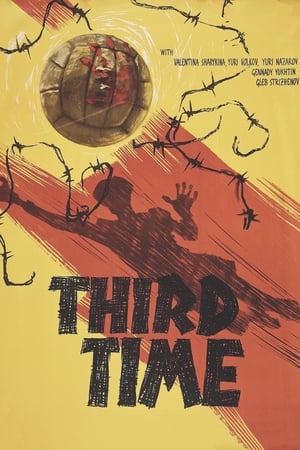
The film is based on the real fact — football «The Death Match» between the German team and a team of Soviet prisoners of war, former "Dinamo". It happened in Kiev on June 22, 1942. Anticipating the possibility of losing, the Germans made a condition — defeat or death. If the Germans won, the Soviet footballers were promised freedom...
Based on a real-life story, this drama focuses on a small group of Allied soldiers in Burma who are held captive by the Japanese. Capt. Ernest Gordon, Lt. Jim Reardon and Maj. Ian Campbell are among the military officers kept imprisoned and routinely beaten and deprived of food. While Campbell wants to rebel and attempt an escape, Gordon tries to take a more stoic approach, an attitude that proves to be surprisingly resonant.
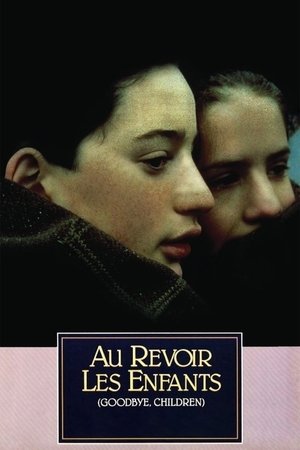
Au revoir les enfants tells a heartbreaking story of friendship and devastating loss concerning two boys living in Nazi-occupied France. At a provincial Catholic boarding school, the precocious youths enjoy true camaraderie—until a secret is revealed. Based on events from writer-director Malle’s own childhood, the film is a subtle, precisely observed tale of courage, cowardice, and tragic awakening.
The war will also affect children's games. The children hide a French boy who has managed to escape from a prison transport. Language differences certainly don't matter when sporting talent is on display. The refugee becomes a welcome addition to the schoolboy football team, which is about to play against the German soldiers.
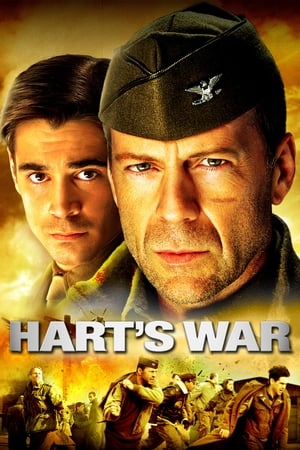
When Col. William McNamara is stripped of his freedom in a German POW camp, he's determined to keep on fighting even from behind enemy lines. Enlisting the help of a young lieutenant in a brilliant plot against his captors, McNamara risks everything on a mission to free his men and change the outcome of the war.
Professor Sonnenbruck is a scientist who is not particularly interested in politics. Even the meeting in 1943 with his former assistant Peters does not change him. He does not betray Peters, who has escaped from a concentration camp, but that is already enough for him. But after the war Sonnenrbruck gets into a conflict of conscience. He thought that science was finally free of politics again only to find the opposite happening at his university in Göttingen. A medical congress in the GDR brings him together with Peters, who is working on a major research contract there. Sonnenbruck decides to visit Peters.
An American intelligence agent attempts to kidnap a top Nazi general.
It is 1943, and the German army—ravaged and demoralised—is hastily retreating from the Russian front. In the midst of the madness, conflict brews between the aristocratic yet ultimately pusillanimous Captain Stransky and the courageous Corporal Steiner. Stransky is the only man who believes that the Third Reich is still vastly superior to the Russian army. However, within his pompous persona lies a quivering coward who longs for the Iron Cross so that he can return to Berlin a hero. Steiner, on the other hand is cynical, defiantly non-conformist and more concerned with the safety of his own men rather than the horde of military decorations offered to him by his superiors.
Starting in late May 1944, during the German retreat on the Eastern Front, Captain Stransky (Helmut Griem) orders Sergeant Steiner (Richard Burton) to blow up a railway tunnel to prevent Russian forces from using it. Steiner's platoon fails in its mission by coming up against a Russian tank. Steiner then takes a furlough to Paris just as the Allies launch their invasion of Normandy.
12-year-old Renato experiences three significant events on the same day: the beginning of the Second World War, getting a bike, and witnessing the arrival of the gorgeous Malèna. Through his eyes, we see the curse of beauty and loneliness of Malena, whose husband is presumed dead, and, through his soul, we see his love for her.
A team of allied saboteurs are assigned an impossible mission: infiltrate an impregnable Nazi-held island and destroy the two enormous long-range field guns that prevent the rescue of 2,000 trapped British soldiers.