Iranian Iradj Azimi directed this French historical drama re-creating events depicted in the famous 1819 painting The Raft of the Medusa by Jean Louis Andre Theodore Gericault (1791-1824). The ill-fated voyage of the frigate Medusa begins when it departs Rochefort for Senegal in 1816. After striking a sandbar off the African coast, 150 civilians row safely to shore, but Captain Chaumareys (Jean Yanne) orders 140 soldiers and sailors onto a raft (minus supplies) and has it cut loose. Only 14 survive from the 140, creating a scandal back in France. Gericault (Laurent Terzieff) later talks to three of the survivors while researching his painting. Work on this film began in 1987, but sets destroyed by Hurricane Hugo caused delays, so the film was not completed until 1990. However, it then remained undistributed until an incident in which writer-director Azimi slashed his wrists in front of French Ministry of Culture officials.
In 19th-century France, doctor's wife Emma Bovary seeks to escape her dull provincial life through various extramarital affairs and extravagant spending, leading to tragic consequences.
Eric and Sarah are detectives who are investigating the murder of a professor which it seems like a gay hate crime. Married Eric becomes attracted to the pathologist, Emmanuel.
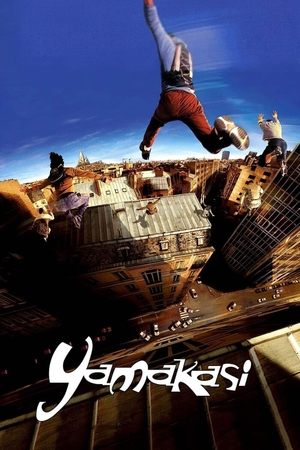
Young Africans in Paris face insecurity and vague future. Should they stay in France, or return to their homes?
It's night on a Paris bridge. A girl leans over Seine River with tears in her eyes and a violent yearning to drown her sorrows. Out of nowhere someone takes an interest in her. He is Gabor, a knife thrower who needs a human target for his show. The girl, Adele, has never been lucky and nowhere else to go. So she follows him. They travel along the northern bank of the Mediterranean to perform.
Les Aliénés
Lucas, a wealthy, 43 year-old divorced businessman, is irresistibly attracted to Elsa, a 38 year old renowned sculptor from whom he has commissioned a piece to decorate the reception at his office.
While visiting her sister in Paris, a young woman finds romance and learns her brother-in-law is a philanderer.
Danielle, a vibrant young woman, was forced into servitude after the death of her father when she was a young girl. Danielle's stepmother, Rodmilla, is a heartless woman who forces Danielle to do the cooking and cleaning, while she tries to marry off the eldest of her two daughters to the prince. But Danielle's life takes a wonderful turn when, under the guise of a visiting royal, she meets the charming Prince Henry.
When her grandson is kidnapped during the Tour de France, Madame Souza and her beloved pooch Bruno team up with the Belleville Sisters—an aged song-and-dance team from the days of Fred Astaire—to rescue him.
The French Democracy is a short film by French filmmaker Alex Chan. The film was made in the 2005 PC game "The Movies," a business simulation game that allowed users to create their own films using pre-rendered scenes and tells the story of three Moroccan immigrants in France who turn to rioting after facing different forms of discrimination. The film was made as a response to the 2005 French riots which resulted from the deaths of two young boys who were electrocuted while hiding from police in a power substation. The civil unrest called attention to racism in France and abusive policing tactics. On its release, The French Democracy sparked controversy in mainstream media both as a political statement and as an example of the then-emerging Machinima genre tackling mature, political themes.
Vincent Miles, a gunsmith and shooting instructor at the National Police, is an expert in combat shooting who stubbornly refuses to join a field brigade, a choice which his colleagues do not understand. When he meets Milo Cardena, a mysterious and skilled cop, his life changes in such way that he cannot ignore his true nature anymore.
In 1955, 60-year-old Marcel Pagnol is a well-known and acclaimed playwright and filmmaker. When the editor-in-chief of ELLE magazine commissions a weekly column about Pagnol's childhood, he sees this as a great opportunity to go back to his artistic roots: writing. Realizing his memory is failing him and deeply affected by the disappointing results of his last two plays, Pagnol starts doubting his ability to pursue his work. That is until Little Marcel - the young boy he used to be - appears to him as if by magic. Together, they will explore Marcel Pagnol's incredible life and bring back to life his most cherished encounters and memories...
Jeanne dreams of leaving her life as a farmer behind to become an actress, but her path is troubled because she tirelessly tends to her mother, who’s battling inner demons.
Lisa and Julien are married and lead a happy uneventful life with their son Oscar. But their life radically changes one morning, when the police comes to arrest Lisa on murder charges. She's sentenced to 20 years of prison. Convinced of his wife's innocence, Julien decides to act. How far will he be willing to go for her?
In 1958, in the French Alp, the young servant Anna Jurin arrives in Saint Ange Orphanage to work with Helena while the orphans moved to new families. Anna, who is secretly pregnant, meets the last orphan, Judith, left behind because of her mental problems, and they become closer when Anna find that Judith also hear voices and footsteps of children.
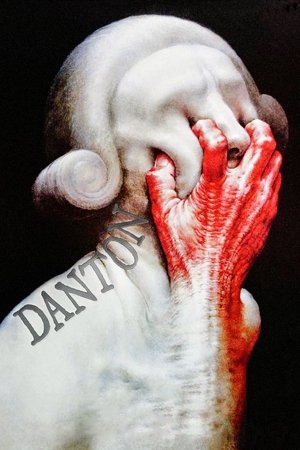
Danton and Robespierre were close friends and fought together in the French Revolution, but by 1793 Robespierre was France's ruler, determined to wipe out opposition with a series of mass executions that became known as the Reign of Terror. Danton, well known as a spokesman of the people, had been living in relative solitude in the French countryside, but he returned to Paris to challenge Robespierre's violent rule and call for the people to demand their rights. Robespierre, however, could not accept such a challenge, even from a friend and colleague, and he blocked out a plan for the capture and execution of Danton and his allies.
A history of the French Revolution beginning from the decision of the king to convene the Etats-Generaux in 1789 in order to deal with France's debt problem. Part one spans the event until August 10, 1792 (when the King Louis XVI lost all authority and was imprisoned). Part two carries the story through the end of the terror in 1794.
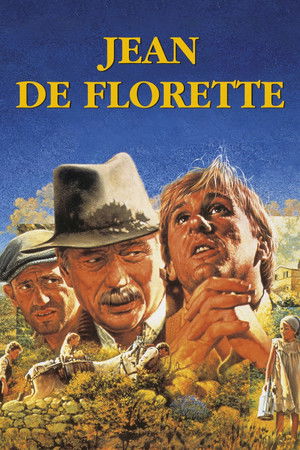
In a rural French village, an old man and his only remaining relative cast their covetous eyes on an adjoining vacant property. They need its spring water for growing their flowers, and are dismayed to hear that the man who has inherited it is moving in. They block up the spring and watch as their new neighbour tries to keep his crops watered from wells far afield through the hot summer. Though they see his desperate efforts are breaking his health and his wife and daughter's hearts, they think only of getting the water.
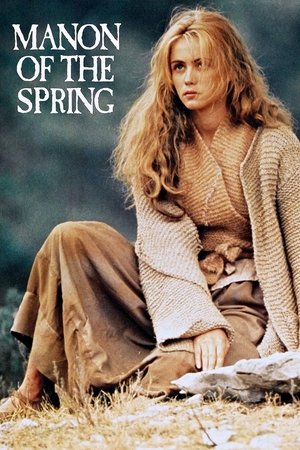
In this, the sequel to Jean de Florette, Manon has grown into a beautiful young shepherdess living in the idyllic Provencal countryside. She plots vengeance on the men who greedily conspired to acquire her father's land years earlier.