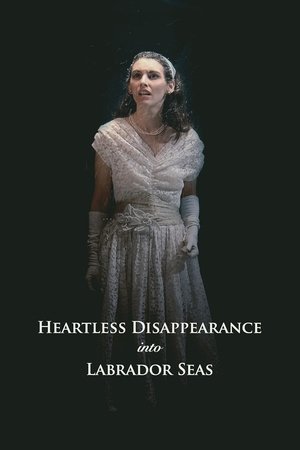
Hate Mail is an epistolary play something like Love Letters, with two actors reading letters and other correspondence, but it's a little wilder and more hysterically funny. It tells the story of Preston, a spoiled rich kid who meets his match in Dahlia, an angst-filled artist. Their worlds collide when Preston sends a complaint letter that gets Dahlia fired from her job, and then there's no turning back. The play stays with their increasingly crazed correspondence as they move from hate to love, and then right back again.
Jejich den
Lanford Wilson's prize-winning drama about life in a played-out coal town in the Midwest. Against the background of a murder trial, the people recall their lives.
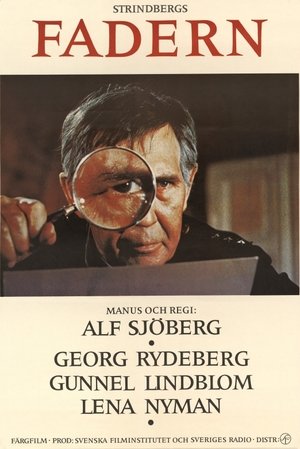
The film tells the tragic fate of railroad guard Thiel at the end of the 19th century. Thiel, who spends his days in the dull, monotonous fulfillment of his duties, has lost his gentle, quiet wife Minna. He remarries out of concern for his young son Tobias. His second wife Lene, with whom he also has a child, is superior to him in vitality and has a rough passion. He discovers that his child from his first marriage is being discriminated against and tormented by her - Thiel withdraws more and more into himself and becomes lonely. When Tobias is killed in an accident, he blames Lene, and disaster is inevitable...
A very clever parrot lives in a Hindu palace, surrounded by many beautiful girls, but the parrot escapes, and is trapped far from the palace. One day, when its new owner is sleeping, the bird convinces a young boy to open the cage door. In return, it shows the boy a secret passage to get into the palace.
Aarne marries Martta because his mother tells him it is his duty as the eldest son to marry a wealthy girl. However, the attractive school teacher Ilona arrives in the village and causes complications when Aarne falls in love with her.
This omnibus release consists of three playlets filmed and aired during television's Golden Age, and starring some of the legends of film and television. The collection originally ran as a two-hour segment on December 14, 1959, on the anthology series The Play of the Week, broadcast locally in New York City via the independent radio station WNTA. Each "tale" in the anthology was adapted from a single tale by the inimitable Sholom Aleichem, regarded by many as the "Yiddish Mark Twain". Included are: "A Tale of Chelm" starring Zero Mostel and Nancy Walker in the story of a bookseller attempting to buy a goat; "Bontche Schweig" about a poor man (Jack Gilford) whose recent arrival in Heaven makes the angels cry; and "The High School" about a Jewish merchant (Morris Carnovsky) persuaded by his wife (Gertrude Berg) to let their son attend a particular high school despite the enforcement of quotas for Jewish students.
Divorce lawyer Peter Ullrich’s seemingly perfect life shatters when his wife Katja suddenly leaves with their children. To shield his reputation, he hides the split and asks his clerk Thomas - himself reeling from family turmoil - to care for the kids. Amid comedic and touching moments, Thomas bonds with Peter’s children while both men grapple with love, loss, and unexpected emotional upheaval.
A criminal fleeing a bank robbery has a chance encounter with a banker and his wife and takes a locket with both their pictures in it as a remembrance of the wife's stunning beauty. After enlisting for WWI to escape prosecution, his face is disfigured in combat, and plastic surgeons mistakenly give him the banker's face. As the banker is conveniently MIA, it gives the criminal the opportunity to plan a bank heist from the inside and also to get closer to the banker's wife.
Young lovers living under an oppressive state-rule flee their home-city to change their lives, and end up changing the world. After all, love changes everything.
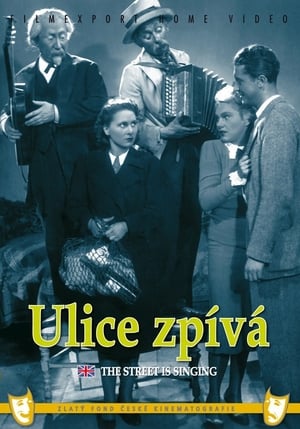
Five oddball criminals planning a bank robbery rent rooms on a cul-de-sac from an octogenarian widow under the pretext that they are classical musicians.
A curious toddler creates trouble when he finds bank robbers' loot
Amy Lindel, a church choir singer, goes to the city to pursue a singing career, but finds herself only able to get cabaret gigs. She then becomes entangled in a situation involving stolen diamonds, and is saved by the "good guy" whom she later marries.
Glimpses of Chaucer penning his famous work are sprinkled through this re-enactment of several of his stories.
Every night while the city sleeps, Ahmad, a former Pakistani rock star turned immigrant, drags his heavy cart along the streets of New York. And every morning, he sells coffee and donuts to a city he cannot call his own. One day, however, the pattern of this harsh existence is broken by a glimmer of hope for a better life.
When cocky military lawyer Lt. Daniel Kaffee and his co-counsel, Lt. Cmdr. JoAnne Galloway, are assigned to a murder case, they uncover a hazing ritual that could implicate high-ranking officials such as shady Col. Nathan Jessep.
The rise and inevitable fall of an amoral but naive young woman whose insouciant eroticism inspires lust and violence in those around her.
The life of a Russian physician and poet who, although married to another, falls in love with a political activist's wife and experiences hardship during World War I and then the October Revolution.
Dictator Adenoid Hynkel tries to expand his empire while a poor Jewish barber tries to avoid persecution from Hynkel's regime.
Sal is the Italian owner of a pizzeria in Brooklyn. A neighborhood local, Buggin' Out, becomes upset when he sees that the pizzeria's Wall of Fame exhibits only Italian actors. Buggin' Out believes a pizzeria in a black neighborhood should showcase black actors, but Sal disagrees. The wall becomes a symbol of racism and hate to Buggin' Out and to other people in the neighborhood, and tensions rise.