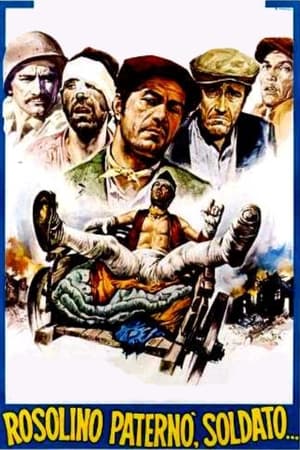
World War II soldiers enter Sicily to seize German arms supply only to discover there is not a gun in sight.
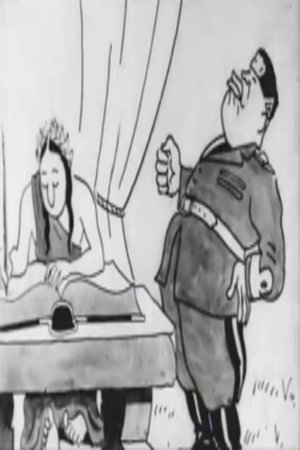
The first Greek animated film was shot by the cartoonist Stamatis Polenakis (1908-1997) with the title "The Duce tells...". The seven-minute "Mickey-Mouse-style" film, as its creator mentions in the credits, satirizes the Italian invasion of Greece on October 28, 1940, and especially Mussolini, who recounts his exploits, but reality constantly contradicts him. Stamatis Polenakis, one of the leading Greek cartoonists of the 20th century and a pioneer of animation in our country, began drawing the sketches for the film in 1942 in his hometown, Sifnos, where he had taken refuge during the Occupation. He worked under the boot of the Italian conqueror, risking arrest. The film was lost during the Civil War and it was not until 1980 that a negative was found and restored.
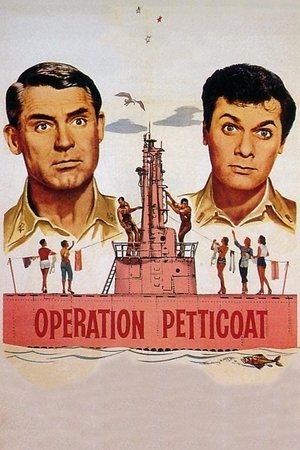
A World War II submarine commander finds himself stuck with a damaged sub, a con-man executive officer, and a group of army nurses.
In an effort to end family feuding, a young gypsy travels back in time to kill mammoths to ensure Hungary becomes rich by killing mammoths in order to create a massive oil reservoir. Things don't go entirely according to plan...
An inept British WWII commander leads his troops to a series of misadventures in North Africa and Europe.
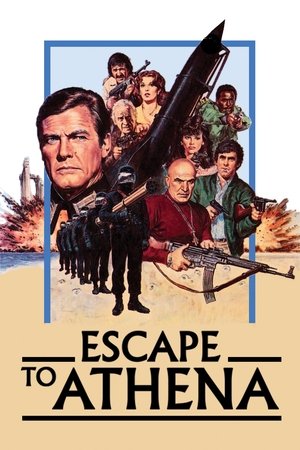
During the World War II, the prisoners of a German camp in a Greek island are trying to escape. They not only want their freedom, but also seek an ineffable treasure hidden in a monastery at the summit of the island's mountain.
Some college students manage to persuade the town's big businessman, A. J. Arno, to donate a computer to their college. When the problem- student, Dexter Riley, tries to fix the computer, he gets an electric shock and his brain turns to a computer; now he remembers everything he reads. Unfortunately, he also remembers information which was in the computer's memory, like Arno's illegal businesses..
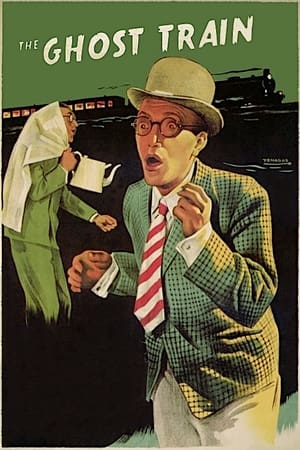
Mismatched travellers are stranded overnight at a lonely rural railway station. They soon learn of local superstition about a phantom train which is said to travel these parts at dead of night, carrying ghosts from a long-ago train wreck in the area.
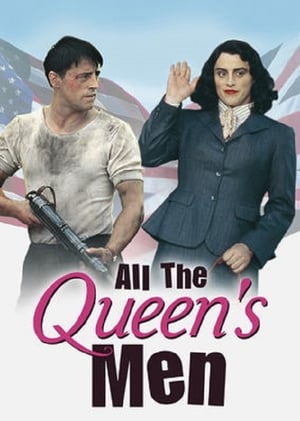
A mismatched team of British Special Services agents led by an American must infiltrate, in disguise, a female-run Enigma factory in Berlin and bring back the decoding device that will end the war.
It is 5 May 1945 and the uprising against the hated German occupiers has broken out in Prague. The Czech guards open the gate of the Pankrác prison to allow the prisoners to escape en masse. Many of them are shot dead by the German guards but young Ruda (Jaromír Hanzlík) manages to run away. He is taken care of by one of the Prague fighters, concierge Kytka. Kytka hides him in the flat of the house's owner where only the young maid Karla (Jana Brejchová) is left, ordering her to take care of Ruda.
An ordinary couple offer refuge to a Jewish perfume salesman during the Nazi occupation of the Netherlands, where the challenge of cohabitating with a stranger unfolds in unexpected ways.
Former Nazi Klaus Abard survives to the 1990s by taking anti-ageing pills. He plans to use a time travel trip to return to Germany in 1944 and present Hitler with a hydrogen bomb, so that he can win the war. Unfortunately the pilot, woman-chasing Karel Bures, dies on the morning of the trip and his earnest twin brother Jan impersonates him, without knowing about the plot.
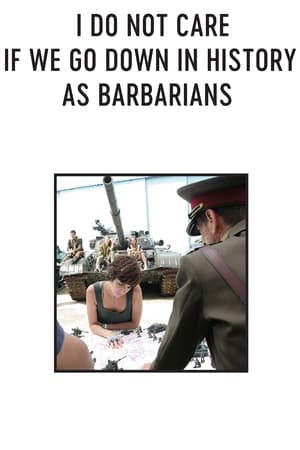
"I do not care if we go down in history as barbarians." These words, spoken in the Council of Ministers of the summer of 1941, started the ethnic cleansing on the Eastern Front. The film attempts to comment on this statement.
American GI Ernie Williams, admittedly weak-kneed, has an uncanny resemblance to British Colonel MacKenzie. Williams, also a master of imitation and disguise, is asked to impersonate the Colonel, ostensibly to allow the Colonel to make a secret trip East. What Williams is not told is that the Colonel has recently been a target of assassins. After the Colonel's plane goes down, the plan changes and Williams maintains the disguise to confuse the Nazis about D-Day.
Set against the summer of 1942, as war rages in Europe, the period comedy follows the family of a teenage boy who is away fighting at the front. In a bid to secure his safety, they welcome his volatile commanding officer into their rural village home. The sociopathic army major rapidly forces them to abide by his insane obsessive rules and the family is pushed to absurd and devastating extremes in the name of love.
On Saturday, 5 April 1941, one day before the Invasion of Yugoslavia of the Kingdom of Yugoslavia, a colourful group of random passengers on a country road deep in the heart of Serbia board a dilapidated bus, headed for the capital Belgrade. The group includes two gypsy musicians, a World War I veteran, a Germanophile, a budding singer, a sickly looking man, and a hunter with a shotgun. The bus is owned by Krstic senior, and driven by his impressionable and dim-witted son Misko.
The time is 1945-46. 10 year old Eda and his friend Tonda live in a small village outside Prague. In school, their class is so wild and indisciplined that their teacher quits and is replaced by the militant Igor Hnidzo. He is very strict – but also very fair. His weakness though, is his interest in young women.
A Jewish teenager sets three goals: lose his virginity, become a writer, and survive World War II.
Marlin (Joe Wilcox) and his slightly crazy but loving wife Elvira (Lauren Campbell) are having money troubles in the 1940’s. Marlin seems to have caught his lucky break when a powerful person in the war is interested in him making a propaganda movie for him. Unfortunately the couple may have bitten off more than they could chew.
During the bombing of Naples in World War II, a cynical businessman helps a naive prostitute, who spends the next two decades desperate to have him reciprocate her feelings.