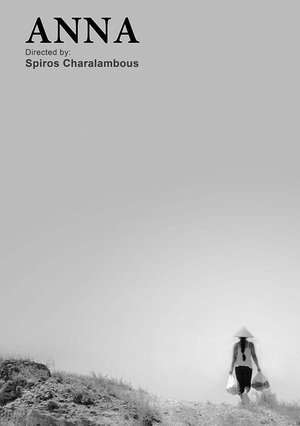
A small army outpost on an offshore island of the Aegean. Its mission – area surveillance and the collecting of information on the enemy.
Experimental film, white specks and shapes gyrating over a black background, the light-striped torso of Kiki of Montparnasse (Alice Prin), a gyrating eggcrate. One of the first Dadaist films.
The titles tell us this film is based on an incident in the Boxer Rebellion. A man tries to defend a woman and a large house against Chinese attackers. They attack with swords, guns, and paddles. He's over-matched. What will become of the mission, its defenders, and its occupants?
Firefighters ring for help, and here comes the ladder cart; they hitch a horse to it. A second horse-drawn truck joins the first, and they head down the street to a house fire. Inside a man sleeps, he awakes amidst flames and throws himself back on the bed. In comes a firefighter, hosing down the blaze. He carries out the victim, down a ladder to safety. Other firefighters enter the house to save belongings, and out comes one with a baby. The saved man rejoices, but it's not over yet.
A barmaid plies a swell with smiles and with cherries from a box that's just been delivered. When she refuses a cherry to a roughly-dressed tradesman who runs a tab at the bar, he pays off his debt in a huff, using all his week's pay. He then storms penniless and without provisions into his ill-furnished house where his wife and two children, ill-clad and ill-fed, cower. Is there any hope for him and for his family? If he does realize how low he's sunk, what help is there to lift him up? Will the family ever know the taste of cherries?
A child borrows his grandmother's magnifying glass to look at a newspaper ad for Bovril, at a watch, and then at a bird. The child shows grandma what he is doing. The child looks next at grandma's eye, then at a kitten.
This short, otherwise unremarkable feature is of some interest because of the way that it unabashedly caters to the tastes that it perceived in its audiences. Besides combining the elements of the risqué 'blue' movies of the era with the popularity of movies about fires, it also attempted to use the combination to get extra mileage out of it. The movie's title summarises the setup, and most of the footage shows firefighters using ladders to rescue stage girls, clad in portions of their costumes, from an upper level. Although it all seems pretty tame by today's standards, it no doubt provided its male viewers with some brief moments of excitement as the various women hurried down the ladders with their costumes in disarray.
In a surreal meeting filled with countless individuals from a variety of backgrounds, nine people recount how sex and sexuality have been used to exert control over their lives. Regardless of race, sexual orientation, nationality, social class, religion, or gender, all are equally shattered and all are equally victims. Those that recount their experiences show that the power / sex dynamic can come in many forms. Whether the power is taken away by physical or psychological means, and regardless of whether it is perpetrated by an individual, institution, or society, the results are equally devastating.
Visions of characters by the seaside from one's memory are erased by the filmmaker's hand.
As a family goes on with their day, the shadows on their walls lead a completely different life.
The world of Arthur suddenly was taken by assault by two strangers. Incapable to recognize the two figures presented in front of him, Arthur is trapped in his own chair. A delicate situation, where the intensity increases gradually to it's boiling point.
Bandidas
A wealthy real estate investor is forced to watch the rape of his girlfriend and then is sent a film showing the fact. He hires a hitman, Sho, and shows him the film, so that the detective can get rid of the criminals. But the boss of the criminal band is Ko, Sho's archnemesis, who raped and murdered his girlfriend.
A six-year-old boy in pre-hippie 1960s United States endures ridicule from his schoolmates and worry from his father over his fixation with a TV star named Dottie.
A sensual coming-of-age drama direct — It depicts a precarious relationship between a homosexual woman and a man who was picked up by her and ends up living with her
Georges Méliès's first attempt at Cinderella was in 1899. That film was extraordinary then for having multiple scenes and a semblance of a narrative; additionally, the use of dissolves as transitions in it influenced other filmmakers for years to do the same. Méliès was the cinema world's preeminent leader then. By 1912, however, that was no longer the case; frankly, as evidenced by this feature, his style had become dated. Moreover, Méliès had begun to adopt techniques from other filmmakers, such as direct cuts instead of dissolves, and there's even a match on action shot during the slipper trying-on scene.
A young girl living in Salem attracts the attentions of The Puritan. After he's brushed off by the girl, he becomes furious and desiring revenge, declares to a council of elders that the girl and her mother are witches.
Based on characters from Shakespeare's play: When Juliet's father refuses to let Romeo see her, Romeo resorts to extreme measures.
Two lovers perform a fandango dance. A jealous quarrel follows and the heart-broken swain decides to end it all. He throws himself from the window of his room, but instead of falling to his death, the anchor of a passing balloon intercepts his flight and he is taken high into the clouds. Laughing at his plight, the moon arouses the anger of the desperate lover and a battle between the two ensues.
As Poe's lover is slowly dying, he struggles to make money to care for her.